
You sit down to gather your notes for an upcoming project, and as you open OneNote, you can't shake the feeling that you're losing control of your notes. The app has become cluttered and unmanageable, and finding what you need within the ever-growing mass of information is challenging. You think to yourself, "There must be something better."
If you can relate, you're not alone. Many people struggle with personal knowledge management or P.K.M. It can be a real challenge to organize and retrieve your notes when needed efficiently. This guide discusses several OneNote alternatives to help you achieve your P.K.M goals.
AI notes manager, a solution by Constella, can help you achieve your objectives, like efficiently noting down and managing your notes. Instead of creating files and folders to organize your information, which can be time-consuming and ineffective, the AI notes manager automatically organizes your notes using artificial intelligence. So, when you need to retrieve your information, you can type in a query, and the app will find your notes and display them in seconds.
What is OneNote?
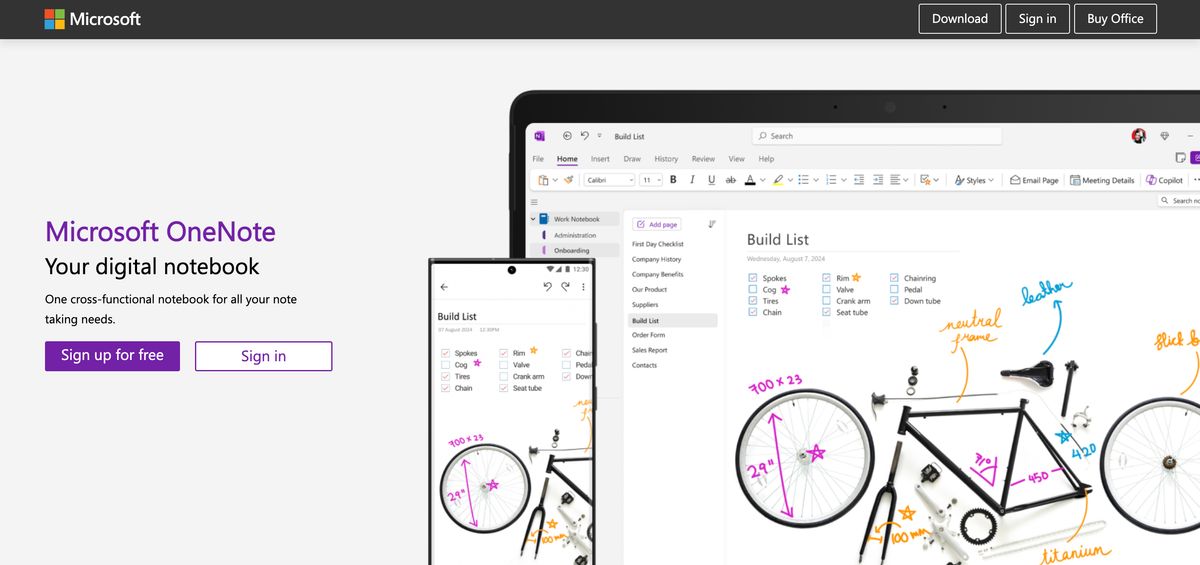
OneNote, an electronic notebook, has been part of Microsoft Office since 2003. It allows you to organize notes, files, articles, pictures, and more information in a single digital notebook. It is available for all devices such as mobile, laptops, desktops, and all operating systems (iOS, Mac, Windows, and Android).
Organizing Data: OneNote’s Notebook Approach
OneNote’s notebook approach allows users to organize data in a personalized way that works for them. The notebook structure lets you store information in the form of notebooks. Each notebook comprises one or more sections and contains individual pages or subpages. In OneNote, you can store information through text, images, audio, and video.
OneNote’s Web Clipper
The OneNote web clipper allows you to extract information from a web page and send it to OneNote. You can access clipped web pages on any computer, tablet, or phone.
Using Templates in OneNote
OneNote has several built-in templates to help you get started. These are pre-designed layouts with decorative page backgrounds, uniform appearances, or a consistent design.
Searching for Text in OneNote
OneNote has a robust search feature that allows you to find specific text. Simply press the Ctrl + E keys to enable the search panel, and type what you want to see.
Recording Audio and Video in OneNote
OneNote allows you to record audio or video notes. To start a recording, click Insert, then Record Audio or Record Video. This feature can help you capture any interview or essential notes in your voice for later reference.
Protecting Your OneNote Sections with Passwords
OneNote provides password security for each section in a notebook. To protect a section with a password, right-click on the section and select Password-Protect this section.
Tagging in OneNote
Tags in OneNote help you organize content, remember tasks, or find content based on the tags attached.
Translating Notes in OneNote
OneNote allows you to translate notes from one language to your preferred language, which is easily understandable by you.
Converting Handwritten Notes to Typed Text in OneNote
OneNote can convert handwritten notes into typed text. This feature can help you write formal documents, resumes, and reports.
Converting Handwritten Equations to Typed Text in OneNote
OneNote can convert handwritten equations to typed text. This feature can help you write formal documents, resumes, and reports.
Related Reading
- PKM Tools
- Personal Knowledge Management Tools
- Second Brain Apps
- Second Brain Method
- Heptabase Alternative
- Zettelkasten Note Taking
OneNote Pricing

Unpacking the Pricing of OneNote
OneNote is free to use. However, you need a Microsoft account to access it, and the account doesn't have to be paid. Free accounts can access almost all OneNote features except for a few stickers and the ability to store files locally on Windows. Free users are also limited to 5GB of OneDrive storage, which is shared among other applications. OneNote's free version is similar to or better than the competition's.
Apple, which offers a Notes app on iPhone and Mac, gives users with Apple devices 5GB of free storage, identical to Microsoft. Evernote, once a leading competitor, offers a free version with a severe limitation—you can only sync between two devices and upload 60MB of data each month. You can get more storage by paying for Microsoft 365, which starts at $19.99 per year or $1.99 per month for a Basic plan that includes 100GB of storage for one person.
It also comes with access to web and mobile Word, Excel, PowerPoint, OneNote, OneDrive, and an ad-free version of Outlook. It's a good value, though, and so is the $69.99-per-year Personal plan, which gives you desktop versions of the apps and 1TB of storage.
Introducing Constella: One of the Best OneNote Alternatives
Constella reimagines note-taking with an infinite canvas that lets you capture and connect ideas effortlessly, powered by AI search that makes finding information instantaneous. Whether you're a researcher trying to draw connections across numerous papers or someone who wants a more intuitive way to organize your thoughts and files, Constella's AI assistant helps you build and navigate your knowledge base without the constraints of traditional folder structures.
Constella transforms how you capture, find, and connect your ideas, perfect for busy knowledge workers and researchers limited by conventional note-taking tools. Research 10 times faster with Constella's AI notes manager.
19 Best OneNote Alternatives for Note-Taking
1. Constella: The Future of Note-Taking
Constella reimagines note-taking with an infinite canvas that lets you capture and connect ideas effortlessly, powered by AI search that makes finding information instantaneous. Whether you're a researcher trying to draw connections across numerous papers or someone who wants a more intuitive way to organize your thoughts and files, Constella's AI assistant helps you build and navigate your knowledge base without the constraints of traditional folder structures.
Constella transforms how you capture, find, and connect your ideas, perfect for busy knowledge workers and researchers limited by conventional note-taking tools. Research 10 times faster with Constella's AI notes manager.
2. Evernote: The Classic PKM Tool
Evernote is a comprehensive personal knowledge management (PKM) and note-taking tool designed to help professionals capture, organize, and access information smoothly across devices. As the name suggests, it lets you jot down random thoughts and store important files and documents to develop a knowledge base. What I like about Evernote is its functionality to record audio notes for personal and professional purposes.
Evernote's best features
- Digitize physical documents directly into Evernote to easily access relevant documents, papers, and lists.
- Quickly locate information within your notes using natural language queries
- Easily sync data across devices to access it anytime from anywhere
Evernote limitations
- Some users find the mobile app to be less user-friendly than the desktop version
- The free version offers a limited storage capacity.
Pros
- Effortless note-taking and syncing
- Powerful search OCR for images AI-enabled plain language search
- Excellent and customizable organization options
Cons
- The expensive Free version isn't worth using
3. Notion: The Flexible PKM Tool
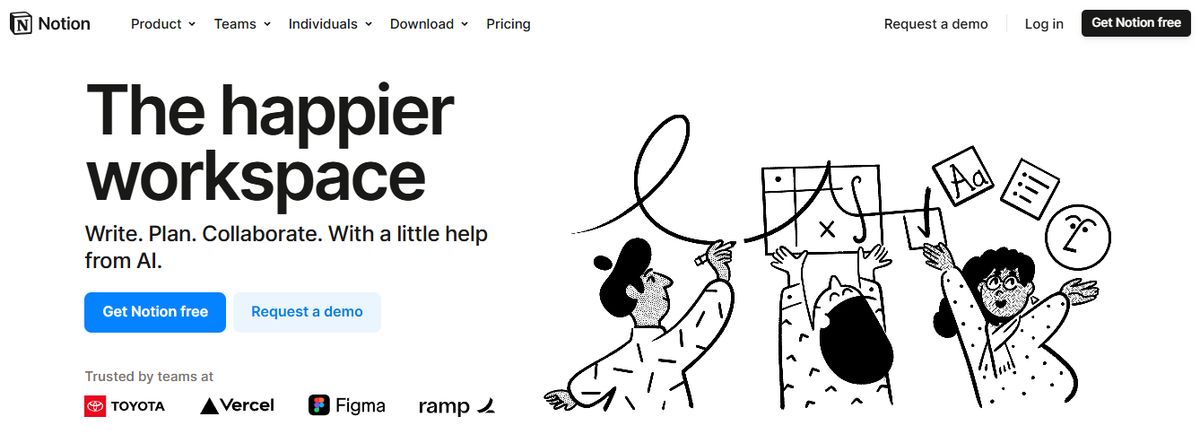
Notion offers a flexible workspace for note-taking, task management, and database creation, making it ideal for various projects. Known for its versatility, Notion allows users to customize their workspaces to fit their needs, whether for personal use, small teams, or larger organizations.
Key Features
- Customizable Templates: Use and create templates for different workflows, helping to standardize processes and save time.
- Integration with Various Tools: Connect with apps like Slack, Google Drive, and more, ensuring a smooth workflow across different platforms.
- Collaboration Features: Work with your team on shared documents and projects, enhancing teamwork and communication.
Pros
- Highly Customizable: Users can tailor Notion to meet their needs, from simple to complex workflows.
- Versatile: Suitable for various applications, from project management to note-taking and database creation.
- Great for Creative Projects: Offers flexibility and tools particularly useful for creative professionals.
Cons
- Steeper Learning Curve: New users might find Notion overwhelming due to its extensive features.
- Can Be Overwhelming for New Users: The vast array of features may take time to master.
4. Bear: A Beautiful Note-Taking App for Apple Users
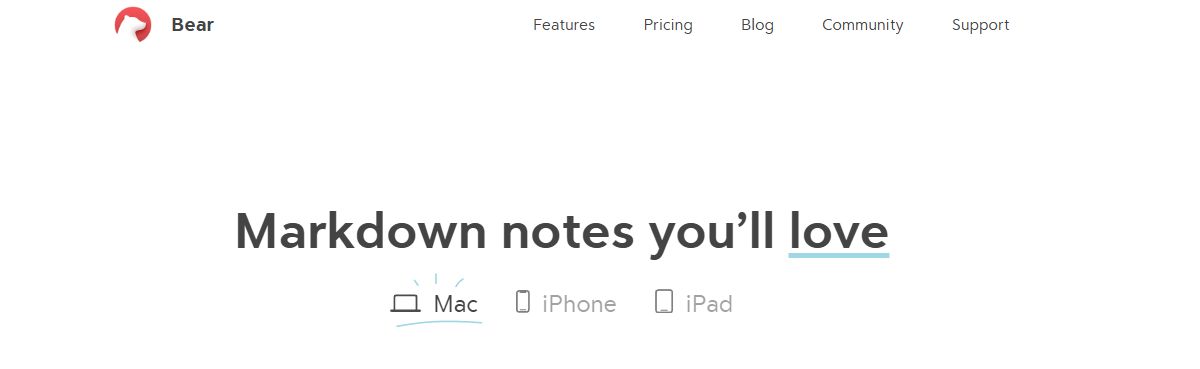
Bear is a flexible note-taking app for macOS and iOS that features rich text editing, organization tools, and markdown support. Users can create notes in various formats, including text, images, links, and files, and organize them using tags, folders, and search functionality. Bear also offers themes, focus mode, and encryption for secure note-taking.
Pros
- Excellent Markdown Support: smooth integration with Markdown formatting allows quick and efficient note-taking with minimal distractions.
- Smooth Apple Ecosystem Integration: As an Apple-centric app, Bear syncs flawlessly across Mac, iPad, and iPhone devices using iCloud.
- Intuitive Tagging System: An easy-to-use hashtag system for effective note organization and retrieval.
- Good Export Options: Ability to export notes in various formats like plain text, HTML, and PDF.
Cons
- Limited Platform Availability: Bear is only available on Apple devices, making it inaccessible for users on Windows or Android.
- No Web Interface: Users cannot access Bear notes through a web browser.
5. Roam Research: The Unique PKM Tool for Networked Thought
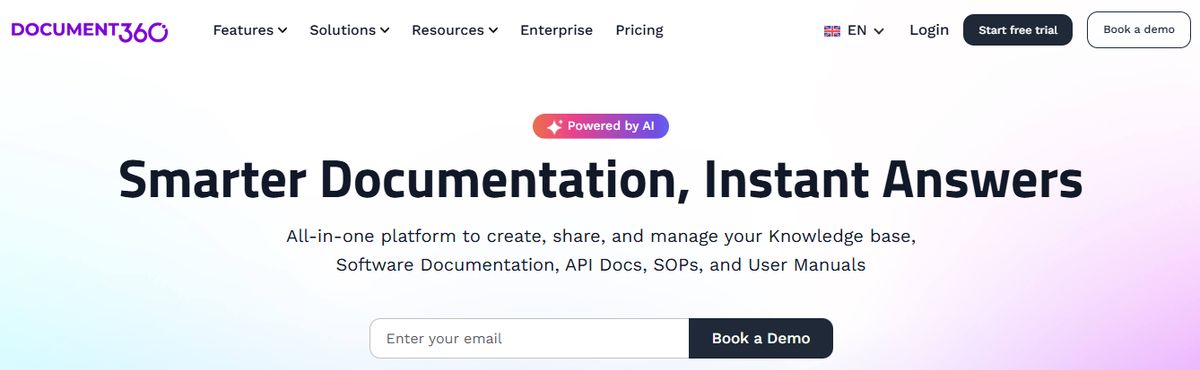
Another great note-taking PKM tool is Roam Research. Popular among researchers, writers, and lifelong learners, this tool is designed for non-linear thinking and idea organization. Roam helps students create a ‘networked thought’ system, connecting concepts and notes to mirror how the brain naturally works.
Bidirectional linking on Roam enables you to create a web of interconnected notes and quickly identify relationships between disparate pieces of information.
Roam Research's best features
- Generate a daily note to help you keep track of your thoughts and ideas on a day-to-day basis - Refer to and reuse pieces of text across different notes
- Store your notes as plain text files, making it easy for you to read and share them
Roam Research limitations
- Roam Research’s design is not aesthetically pleasing
- Some users may find its pricing costlier than other tools due to no free options
Pros
- The first thing you need to know about Roam Research is that it focuses on creating interconnected knowledge.
- This platform uses a Directed Acyclic Graph (DAG) structure for flexible information organization, allowing you to create a web of knowledge that connects concepts, ideas, and information smoothly.
- It's like having a neural network for your thoughts!
- Roam Research offers a daily note-focused approach, reducing cognitive load and organizational overhead.
- By creating a new daily note every day, you can focus on what matters most to you in the moment without getting bogged down by trying to organize everything all at once.
- Roam supports many file extensions, allowing you to incorporate text, images, audio, and video into your notes. Plus, there's no cap on data usage, so you can store as much information as you want without worrying about running out of space.
Cons of Roam Research
- One downside to Roam Research is its higher price than alternatives like Obsidian.
- While Roam offers many features and functionality, the cost might be a barrier for some users.
- Another potential con is the perceived slow development of Roam Research.
- Some users feel that Roam doesn't release as many significant improvements as its competitors, which could be frustrating for those looking for the latest and greatest features.
6. Document360: The Best Wiki Software for Knowledge Bases
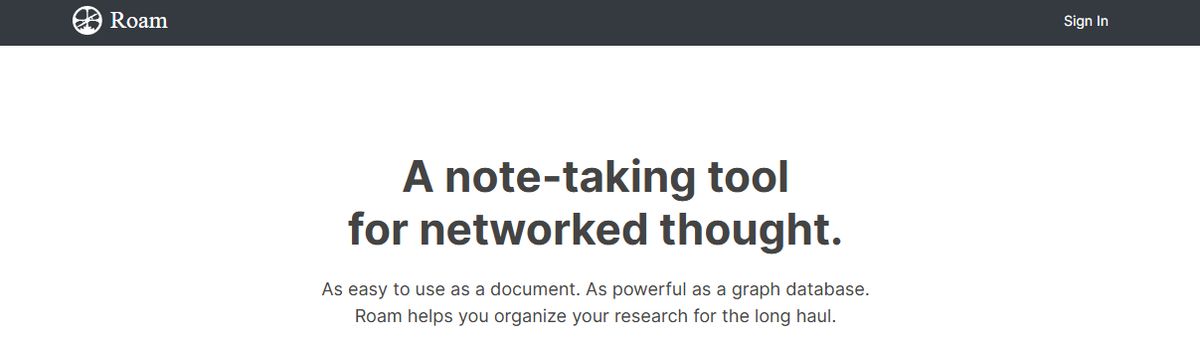
Another all-in-one workspace software for building customizable knowledge bases is Document360.
This software helps you personalize your knowledge base with branded colors. It helps create dynamic, searchable, multilingual user manuals, SOPs, how-to guides, and other documents.
Ideal for professionals seeking to streamline documentation processes, Document360 offers a user-friendly interface that caters to technical and non-technical users. Plus, it gives AI functionalities to simplify tackling all documentation needs.
Document360 best features
- Improve the context and relevance of documentation with real-time AI feedback
- Get insights into user behavior and content effectiveness to optimize knowledge management strategies
- Connect with popular tools like Slack, Microsoft Teams, Zendesk, and Intercom to build a cohesive workflow across platforms
Document360 limitations
- A few features are only available through costly add-ons
- New users might require time to leverage the platform’s extensive capabilities fully
Pros
- Great Editor
- Reliable Version
- Control Smart
- File Management
- Powerful Reports and Analytics
Cons
- A few features are only available through costly add-ons
- New users might require time to leverage the platform’s extensive capabilities fully
7. Logseq: An Open-Source Knowledge Management Tool
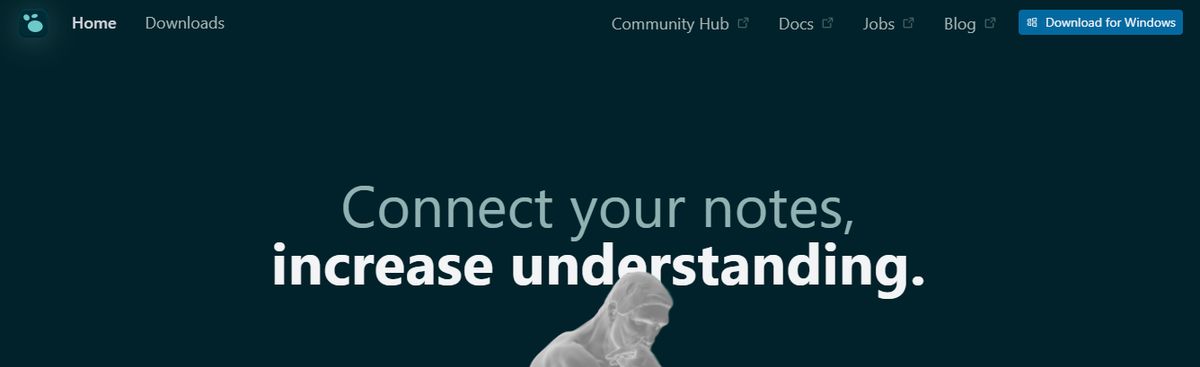
Logseq is an open-source note-taking and knowledge management app that uses a graph database to help users organize and connect their notes. Users create and link notes using markdown and visualize their connections using graph view. Logseq also offers features like backlinks, search functionality, and synchronization across devices for easy access to information.
Pros
- Visualize notes with a whiteboard
- Custom themes developed by the community
- Privacy-focused note-taking
- Great for building backlinks between notes
Cons
- Can be difficult to learn and embrace
- Not best for basic note-takers
8. Apple Notes: The Best Free Alternative for Apple Users

Apple Notes is available on all Mac and iOS Apple devices. In recent years, Apple Notes received considerable upgrades, making notes more accessible across all devices within the Apple ecosystem. Apple Notes is the most secure for note-takers on the go, along with FaceID, TouchID, or password.
While Apple Notes might be the first obvious choice for Apple users, if you’re looking for a better notes hierarchy experience, it’s pretty limited compared to Microsoft OneNote’s notebooks, sections, and pages.
Apple Notes Pros
- An Apple Pencil with a compatible iPad can create an instant note from the Lock Screen Gallery view, allowing users to find the note they’re looking for easily
- Automatic iCloud sync across all Apple devices
Apple Notes Cons
- Limited formatting options Not a full-fledged note editor
- Low storage space (additional space available at an extra cost)
9. Milanote: The Visual Thinker’s Notepad
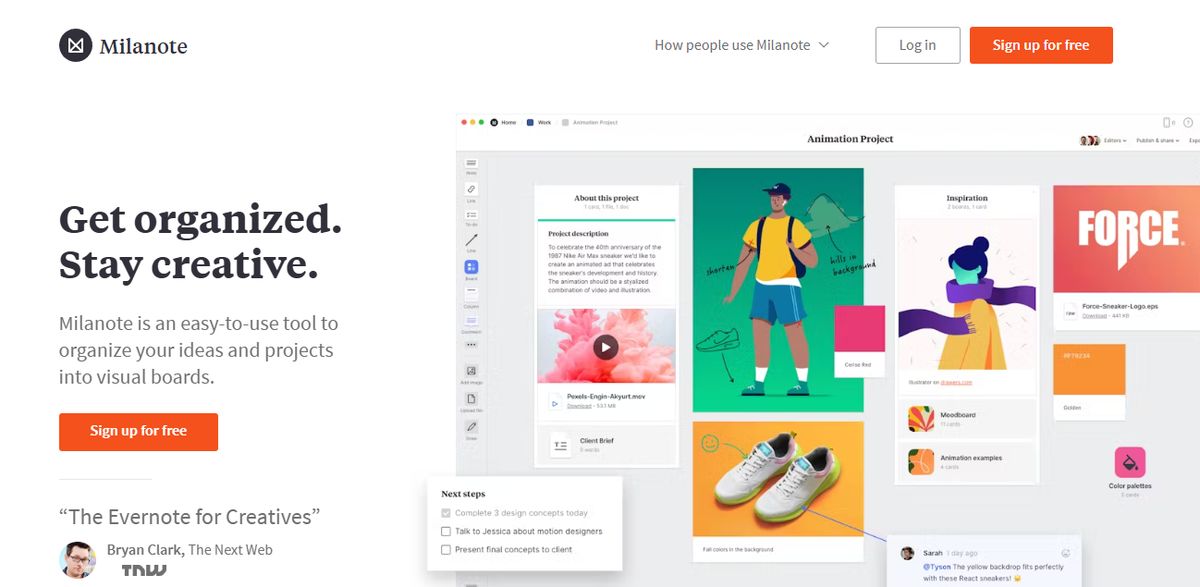
Milanote is a web-based app for visual collaborators like product designers and photographers. It’s a flexible visual workspace for creating mood boards, capturing notes, and getting feedback on design concepts.
The downside is that Milanote might be a challenging program to adjust if you’re uncomfortable with a scrapbook-style layout. You can easily misspend hours organizing notes and figuring out a system not meant for how you think and capture notes.
Milanote Pros
- Notes encrypted both at rest and in transit. Videos, animated GIFs, fonts and more are accepted
- Built-in templates available
Milanote Cons
- Not suitable for text-based or hierarchical outline users
- Limited integrations Learning curve is steep
10. Notability: The Best App for Stylus Users
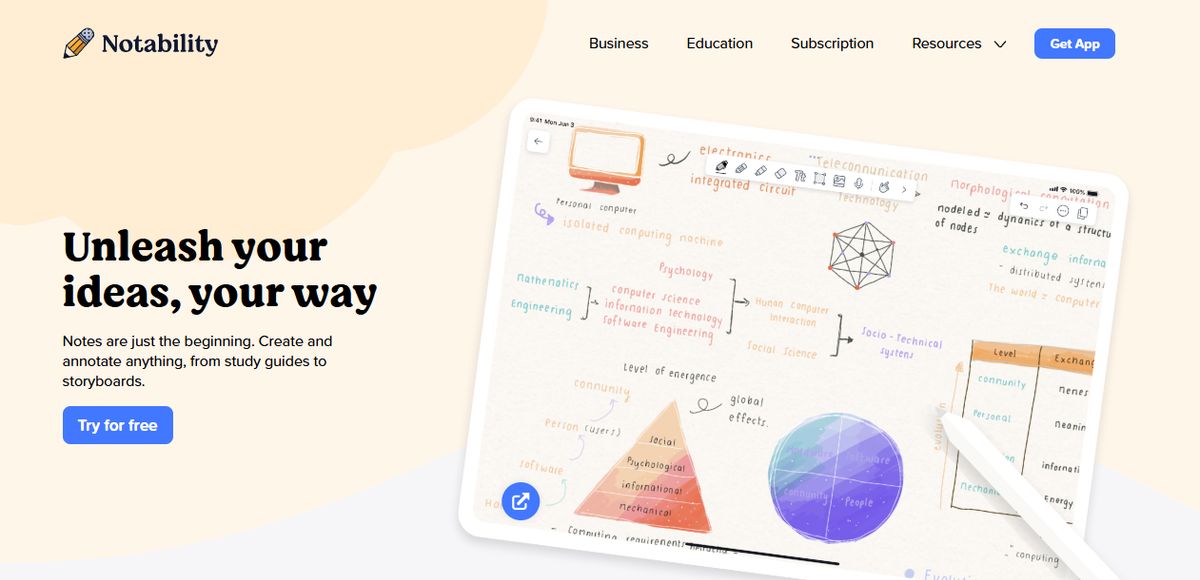
Notability is one of the popular subscription-based note-taking apps for tablet users. Combined with a stylus, this is an excellent option for paperless students taking lecture notes in the classroom. Notability’s clean UI, basic features, and built-in toolset make opening a quick note and drawing in seconds easy.
What will make the switch from OneNote to Notability worth the cost, and why? If you prefer writing with a stylus 75% of the time.
Notability Pros
- Budget-friendly option for stylus users
- Community-made notes available for download
- Mix between text and imagery
Notability Cons
- Not a suitable project management tool
- Auto-backup is a paid feature and an
- Expensive subscription plan
11. GoodNotes: An Intuitive Digital Notebook
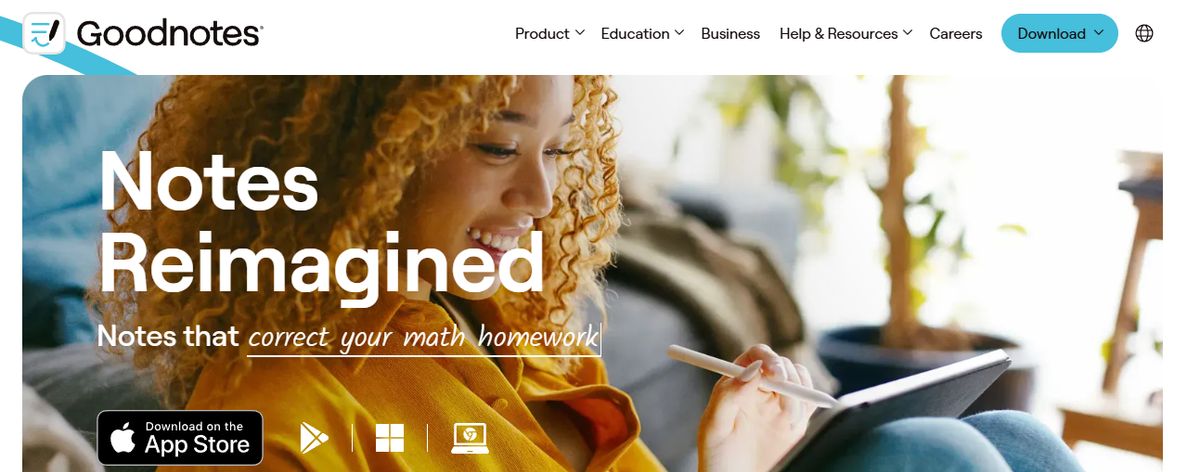
GoodNotes is an innovative digital paper and social app for students who want to create shared notes with others studying the same subjects worldwide. This feature (at no extra cost) called Community allows users to create their own profile so that others can view their documents.
While the Community feature is an incredible tool for people to connect, note-taking features are limited or non-existent compared to Notability.
GoodNotes Pros
- Built-in flashcards study mode
- Shared Documents feature gives you a shareable link to collaborate
- No extra cost for the Mac app
GoodNotes Cons
- Not suitable for high-stakes project planning
- Limited plans available
- No task management features
12. Notejoy: A Collaborative Note-Taking App for Teams

Notejoy is for teams who favor easy, real-time collaboration. Users can quickly integrate features such as note reactions and library overviews into conversations. It can also smoothly import existing notes from OneNote!
If you’re looking for a digital note-taking app for personal use, other OneNote alternatives will support your writing goals.
Notejoy Pros
- Available on multiple platforms, including web, desktop, and mobile,
- Web Clipper is a browser extension
- Rich syntax highlighting across a wide variety of languages
Notejoy Cons
- Not a suitable project management tool
- Text editing options are limited compared to other software on this list
- No drawing tools
13. Google Keep: The Best App for Quick Notes
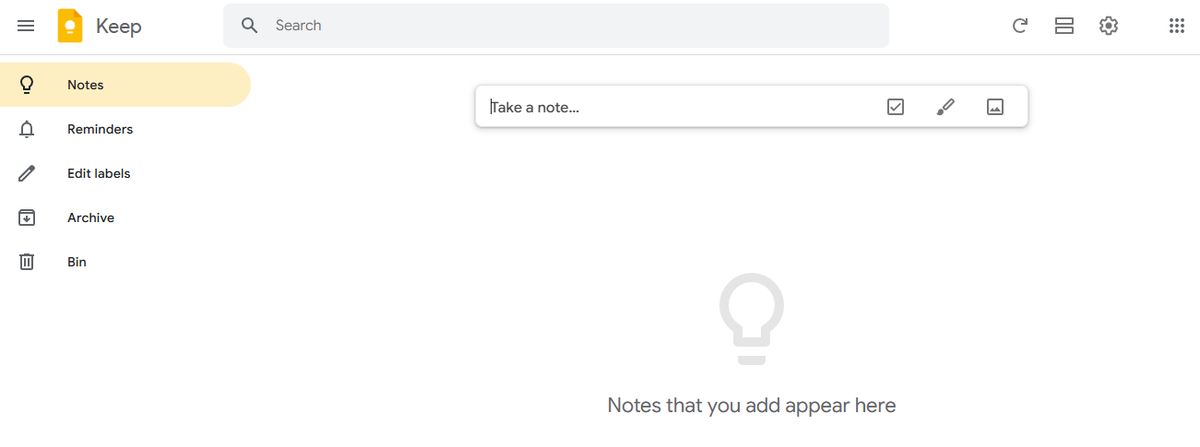
Google Keep is ideal for users who want to store reminders and notes while on the go. Its ability to quickly search for notes by color or list name helps get things done faster.
Google Keep is conveniently next to your Google Calendar or Google Docs, but it’s not a fully-fledged note-taking app to commit long-term use for work-related content. Unlike OneNote, it’s an essential platform for basic needs with no hints of evolving for a modern note-taking experience.
Google Keep Pros
- Color code notes, lists with images, audio notes with reminders, or shared notes
- Opens next to Google Calendar.
- Compatible with Google Maps to set location-based or time-based reminders
Google Keep Cons
- Limited formatting options
- Poor note organization structure
- Not suitable for long-form notes
14. Dropbox Paper: A Collaborative Document Editor
The next OneNote alternative on our list is Dropbox Paper, a smooth collaboration tool for teams of all sizes and industries to edit documents and share all your notes within the program. Users can add annotations to images, mention people from documents, and connect to their calendars to find meeting notes quickly. Its simple but powerful syncing capabilities put everyone on the same page.
On the flip side, if you want to share professional presentation slides, Dropbox lacks advanced formatting features compared to popular word processors. It satisfies the need to get everyone’s thoughts out on digital paper, but not for publishing or your next stakeholder meeting if you aren’t comfortable with formatting.
Dropbox Paper Pros
- Available on the iOS and Android apps Invision, Sketch, or Dropbox files embedded into Dropbox Paper previews correctly
- Variety of media support from other sources
Dropbox Paper Cons
- Not as intuitive compared to top-rated word processors
- Lacks advanced visual formatting
- Poor note organization
15. SimpleNote: The Best App for Minimalists
Simplenote, as its name suggests, is a simple note-taking app that provides a distraction-free environment to brain dump and organize thoughts. Equipped with markdown support, users can write, preview, and publish any note.
Unlike OneNote, SimpleNote lacks collaboration and sharing features that move thoughts into action. As a result, teams can easily overwhelm themselves (and each other) with a running list of notes.
Simplenote Pros
- Available in iOS, Android, Mac, Windows, Linux, or in your browser
- Insert links from one note into another note to cross-reference information
- Write, preview, and publish notes in Markdown format
Simplenote Cons
- Lacks task management
- Notes are not encrypted
- Not optimized for organizations with sensitive data
16. Workflowy: An Outline-Like Note-Taking Tool
Workflowy is a hierarchical note-taking app built to capture, organize, analyze, and share content. Notes are organized into nesting structures that can also convert to Kanban boards. This allows users to view their work at a high level or zoom into specific details. Don’t have enough time to look at a shared note from a colleague? Easily save the note to view later.
This alternative to Onenote is intuitive for anyone to use. Still, select heavy note-takers and businesses that depend on remote collaboration will benefit (and get their money’s worth) from the platform.
Workflowy Pros
- Mobile app for iOS and Android
- Keyboard shortcuts allow organized content to expand or collapse smoothly
- Backlinks to anything
Workflowy Cons
- Monthly bullet point limit in the free plan
- Not suitable for free-form writing
- Limited formatting features
17. Typora: A Markdown Editor with Note-Taking Features
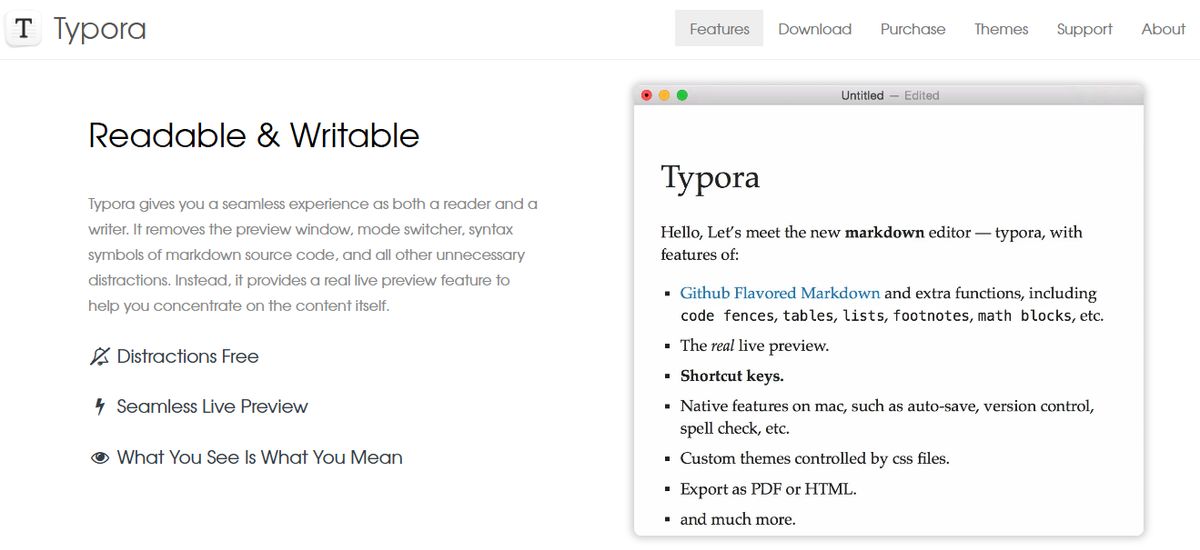
Typora is a smooth markdown editor (text-to-HTML conversion tool) geared towards content creators and engineers who prefer seeing a live preview of the final document to help concentrate on the content. Not only is it a markdown editor, but its powerful outline organization system allows you to quickly go through the document and jump to any section with one click.
The jump from Microsoft OneNote to Typora could shock some users if they’re unfamiliar with markdown editors. It’ll feel like you’re spending too much time figuring out the app instead of doing actual work.
Typora Pros
- Formats such as OpenOffice, LaTeX, MediaWiki, Epub, and more
- Can be imported or exported
- Custom paper themes
- Focus & Typewriter mode
Typora Cons
- No free plan is available
- Not suitable for collaboration with others
18. Zoho Notebook: A Free Note-Taking App
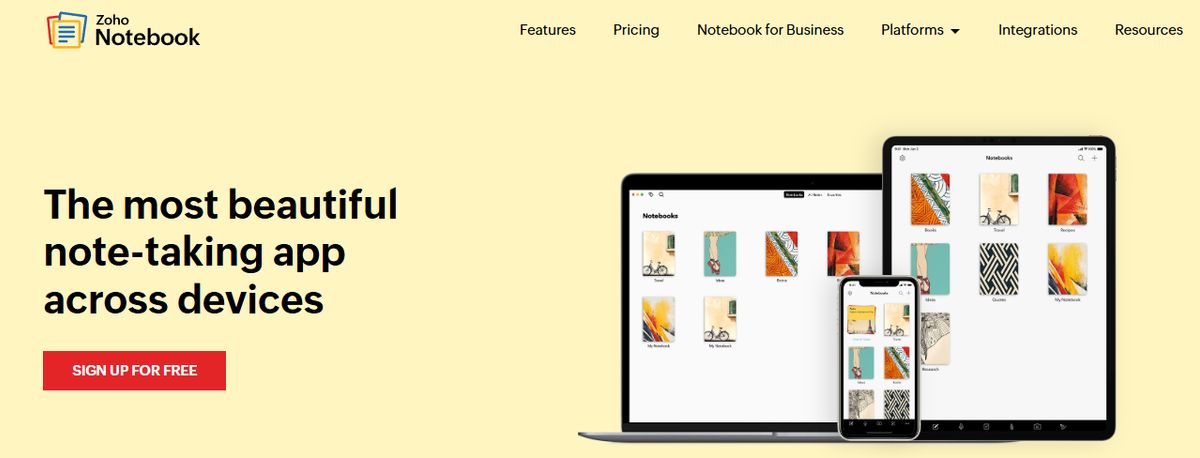
Zoho Notebook is a free note-taking app with an intuitive design suitable for all your devices and operating systems. Zoho Notebook integrates with Zoho Projects and is packed with mobile-friendly features such as Zia, the AI-powered assistant, and notable gestures for searching for information.
Compared to OneNote, this app has more fun with color and personalization for personal use. However, Zoho Notebook might not be for you if you want an app for serious note-taking and work collaboration. The editor is limited to basic functionalities.
Zoho Notebook Pros
- Free app with no ads.
- Apps available for both iOS (iPhone & iPad) and Android devices
- Passcode and Touch ID features for notes and notebooks
Zoho Notebook Cons
- Lacks multiple views
- No handwriting recognition feature
- No collaboration with others in notebooks
19. Confluence: The Alternative for Project Management

The following Microsoft OneNote alternative on our list is Atlassian’s Confluence, a remote-friendly note-taking app that serves as a knowledge management and project collaboration workspace.
Users can create a project plan from scratch or choose from 100+ templates. Roadmaps, Jira issues, and Trello boards are among the features that can be added to Confluence documents for work organization.
Large organizations in terms of team size would benefit the most from Confluence. However, this software would feel overwhelming compared to OneNote for personal use or with a small group of team members.
Confluence Pros
- Open, connected structure for everyone in an organization
- AI-powered note-taking with Atlassian Intelligence
- Compatible with 3,000+ Marketplace apps
Confluence Cons
- Poor in-app Search feature
- Third-party plugins might be necessary for some use cases
- Suitable for teams of ten or more significant to get the most out of the paid version
Related Reading
- Slite Alternatives
- Roam Research Alternatives
- Joplin Alternatives
- Notion Knowledge Management
- Coda Alternatives
- SiYuan Alternatives
- Logseq Alternatives
Pros and Cons of OneNote

Personal knowledge management tools let you take control of your notes and information to track and organize what you need over time. Microsoft OneNote is one of the more popular options for personal knowledge management. However, it’s not without its drawbacks. Here’s a look at the pros and cons of using OneNote for personal knowledge management.
The Pros of OneNote
Interactive and Customizable
OneNote allows for creating fully interactive collections with links to other locations in the notebook and the internet and the ability to embed videos and documents directly into the pages, providing a rich and customizable note-taking experience.
Efficient Collaboration
OneNote's integration with Office 365 Groups and Teams and the Collaboration Space and Documentation Library allows for simultaneous and frequent work on central repositories, enabling efficient collaboration and sharing of materials.
Accessibility and Syncing
OneNote is accessible on both desktop and browser versions, and its syncing feature across various devices ensures that notes are always accessible, improving workflow and efficiency.
Versatile Note-Taking
OneNote's intuitive interface allows for various note-taking methods, including text, drawing, images, and audio notes, catering to different learning and thinking styles.
Superior Note Management
OneNote's note management system, particularly subpages, allows for effective categorization and organization of notes, making it easy to keep track of various subjects and tasks.
The Cons of OneNote
Inefficient Search Function
The search function in OneNote is often criticized for being subpar and failing to yield results, even when users are sure the information exists within their notes.
Mobile App Limitations
OneNote's mobile version has fewer features than the desktop version, which can limit functionality when using the software on a mobile device.
Limited Exporting Options
OneNote has limited options for exporting notes to other formats, which can hinder sharing notes with those not using the software.
Frequent Data Loss
Some users have reported losing a whole day's notes due to frequent syncing to servers, which can be a significant issue for those relying on the software for essential note-taking.
Poor Customer Support
Users have reported negative experiences with OneNote's customer support, including being hung up on and having to explain their issues repeatedly.
Research 10 Times Faster with Constella
Constella reimagines note-taking with an infinite canvas that lets you capture and connect ideas effortlessly, powered by AI search that makes finding information instantaneous. Whether you're a researcher trying to draw connections across numerous papers or someone who wants a more intuitive way to organize your thoughts and files, Constella's AI assistant helps you build and navigate your knowledge base without the constraints of traditional folder structures.
Constella transforms how you capture, find, and connect your ideas, perfect for busy knowledge workers and researchers limited by conventional note-taking tools. Research 10 times faster with Constella's AI notes manager.
Related Reading
Want more insights like this?
Subscribe to get short productivity tips and useful summaries of new tools every week.
Want more insights like this?
Subscribe to get short productivity tips and useful summaries of new tools every week.