
Consider this: You’re staring at a blank page, trying to organize your notes on a complicated subject. You want to make sense of what you learned and see connections so you can jot down your ideas, but you have no clue where to start. If you’ve ever found yourself in a situation like this, you’re not alone.
Many people struggle to organize their notes and understand what they’ve learned. Fortunately, part of the solution uses a second brain code to make, organize, and manage notes with AI. In this post, we’ll compare Heptabase and Obsidian, two popular second brain code applications for creating a second brain to help you understand your notes and improve your learning process.
A handy tool that can help you reach your goals even faster is Constella’s AI notes manager. This application works smoothly with Heptabase and Obsidian to help you make notes, understand them, and learn to manage them with AI.
What is Heptabase?
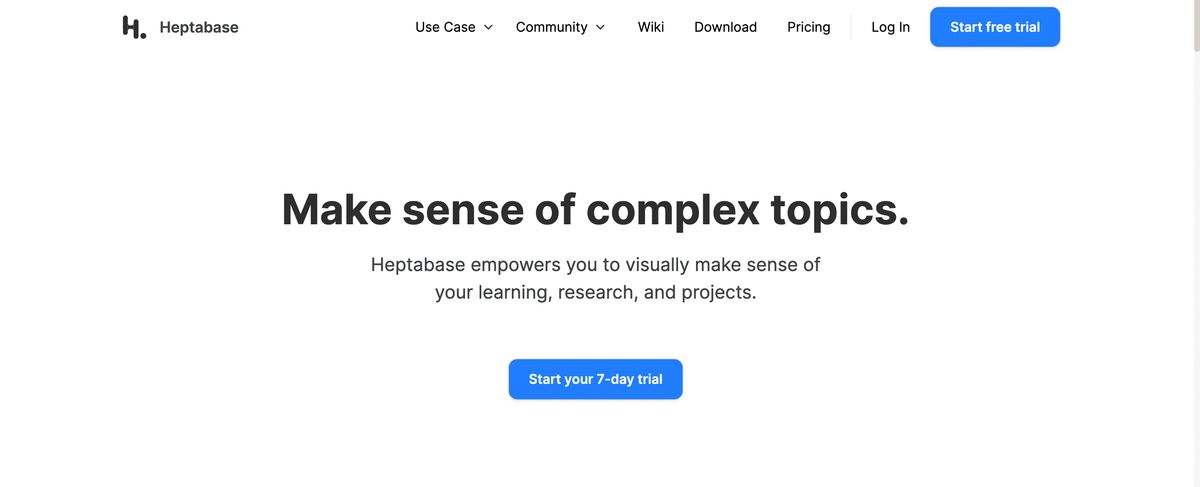
Heptabase is a visual note-taking application with whiteboards, journals, and connected notes. It’s best described as a mix of mind mapping and brainstorming. Heptabase has gained popularity among researchers and students. Many people view tools like Heptabase and Scrintal as a place to store and organize their ideas.
What Are Cards?
The fundamental unit on Heptabase is a “card.” A card can be a standard note or media file like images, videos, and audio. As a note-taking app at its core, we are building note cards with a feature-rich text editor. Knowledge comes from sources, and Heptabase recognizes the importance of easy accessibility to them. Therefore, like other PKM systems, Heptabase allows users to store source files like PDFs and media files directly within the app. Where Heptabase shows its potential is the “highlight” card type.
This feature offers an engaging and flexible design that allows us to link reference sources and notes within the application, enabling contextual retention for our notes. Eventually, they aim to enable users to create program cards that allow custom automation and processing of other cards within Heptabase. This is a fascinating idea, and once they reach that stage, it sounds like a real knowledge operating system or platform.
What is the Whiteboard Feature for?
They also recognize that we don’t think or acquire knowledge linearly, and we do this differently. Therefore, Heptabase offers its main working space as a whiteboard rather than a single document. We place various cards, link them, and organize them on the infinite canvas in a way that makes sense. The overall design feels flexible and has the potential to create a cohesive knowledge platform or operating system that can handle all stages of the knowledge life cycle.
Related Reading
- Second Brain Examples
- How to Build a Second Brain
- Tiago Forte Code
- Second Brain Notion Template
- Roam Research vs Obsidian
- Notion vs GoodNotes
What is Obsidian?
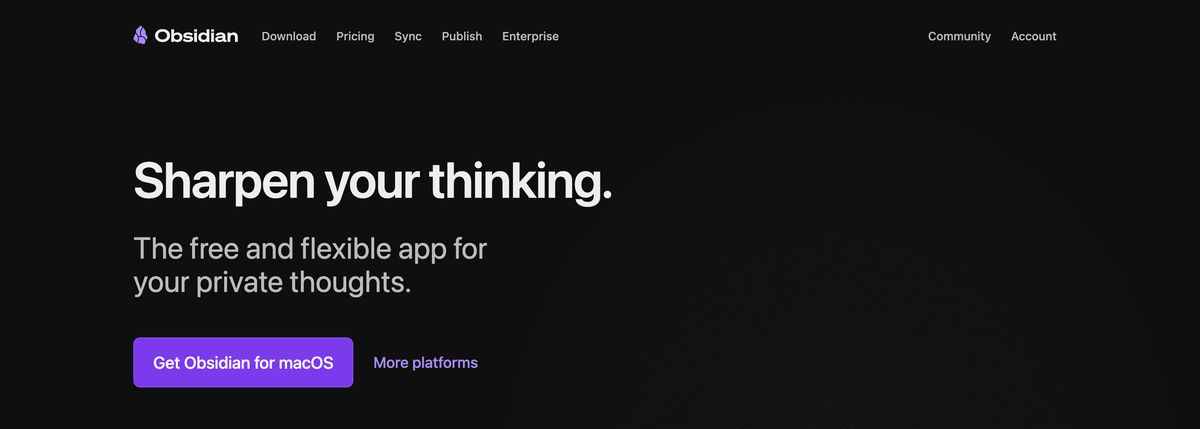
Unpacking Obsidian: The Markdown-Powered Note-Taking App
Obsidian is a markdown-based note-taking application that excels at building a networked knowledge base. It allows users to create, link, and organize notes in a highly customizable environment, making information retrieval intuitive and efficient.
The Potential of Links in Obsidian
Obsidian’s linking feature allows for the creation of direct connections between notes, enabling users to reference and navigate related content easily. You can keep track of text passages by linking them together. Teams will be able to revisit ideas and see other needed information. They will also be able to go back and connect ideas they realize fit together later on. It’s like reference links in a research paper but on a larger scale.
Get Visual with Obsidian’s Graph View
The Graph view in Obsidian provides a visual map of your notes and their interconnections, offering a unique perspective on your knowledge base. It’s a web of connected notes linked together. This is great for seeing relationships, organizing, and mapping ideas for brainstorming. The interactive maps highlight relationships for each note when you hover with your mouse.
Using Canvas to Organize Thoughts in Obsidian
Canvas in Obsidian is a flexible space where users can organize their thoughts and notes visually. The interface is similar to Figma, where you can arrange text boxes and images any way you conceive. You can visually organize and connect your notes in any layout. Teams can manipulate audio, video, photos, and PDFs in Canvas, use the workspace as work views for notes, and nest canvas views inside canvas views.
Unlock Functionality with Obsidian’s Plugins
Obsidian supports a wide range of community-developed plugins that extend the app's functionality. There are over 1,000 plugins to choose from, and there’s quite a variety. They have plugins for exporting, working with HTML, software integrations, AI assistants, annotating, and more.
Keep Your Notes in Sync with Obsidian
Obsidian Sync is a premium service that offers end-to-end encrypted synchronization of your notes across devices. It ensures that your data is securely updated and accessible, whether working from your desktop, laptop, or mobile device.
Publish Your Notes with Obsidian
With Obsidian Publish, users can share their notes and knowledge bases. This service transforms your Obsidian vault into a publicly accessible website where you can share ideas and information on a personal or professional platform.
Heptabase vs Obsidian Detailed Comparison

Data Storage and Privacy: The Foundation of Your Knowledge Base
Obsidian prioritizes your data security and privacy. It does this by storing notes as local Markdown files on your device. This approach gives you complete ownership of your information. You don’t need to worry about a company’s privacy policy, the chance of a data breach, or whether you will have access to your notes if the app shuts down.
On top of that, Obsidian’s local storage option allows you to access your notes offline. If you ever find yourself in a situation where you don’t have Internet access, you won’t be locked out of your information.
Heptabase, on the other hand, syncs notes (called “cards”) to the cloud. This method facilitates access across devices but relies on Internet connectivity. While Heptabase does offer some privacy features, your notes are not stored on your device. Instead, they are stored on a remote server, which means you must trust the vendor with your data.
Organization and Structure: Finding the Right Fit for Your Brain
Obsidian and Heptabase differ significantly in organizing information and structuring notes. Obsidian utilizes a file-based system where notes are organized in folders, supporting a hierarchical structure. This may appeal to users who prefer a more traditional and organized approach to note-taking.
Heptabase, on the other hand, employs a block-based approach similar to Notion. This allows users to organize information in a more flexible, non-linear fashion. Notes can be broken down into smaller sections (or blocks) that can be moved around and categorized to suit the user’s preferences.
Visual Learning and Mind Mapping: Making Connections Clear
Heptabase emphasizes visual learning and organization with mind-map-style organization. This enables users to create visual representations of their notes and ideas. Users can create a card to capture ideas and visualize connections to other cards in an intuitive, graphical interface. On the other hand, Obsidian offers a backlink-driven approach that allows users to interlink notes to visualize connections through a graph view.
User Experience and Learning Curve: Choosing What Makes Sense for You
Regarding user experience, Obsidian and Heptabase provide very different experiences. For one, Obsidian requires familiarity with Markdown for formatting, which might present a learning curve for some users. Heptabase, on the other hand, provides a more user-friendly, block-based interface, making it accessible to users without technical backgrounds.
Customization and Extensibility: Tailoring Your Note-Taking Experience
Obsidian is highly customizable with a wide range of plugins and themes, allowing users to tailor the application to their needs. Heptabase, on the other hand, offers a more streamlined experience with less emphasis on customization, focusing instead on visual organization features.
Community and Support: Finding Help When You Need It
While Heptabase and Obsidian offer community support, Obsidian has a much larger user base and more extensive resources. Obsidian boasts an active community contributing plugins, themes, and support, enhancing the tool's versatility. Heptabase, being newer, has a smaller community but offers dedicated support and resources for users.
Platform Compatibility: Accessing Your Notes Across Devices
Both Heptabase and Obsidian support multiple platforms, catering to users who switch between different devices. Obsidian is available on Windows, Mac, Linux, iOS, and Android, ensuring cross-device compatibility. Heptabase is a web-based application that can be run on any device with an Internet connection.
8 Best Heptabase and Obsidian Alternatives for Note-Taking
.
1. Constella
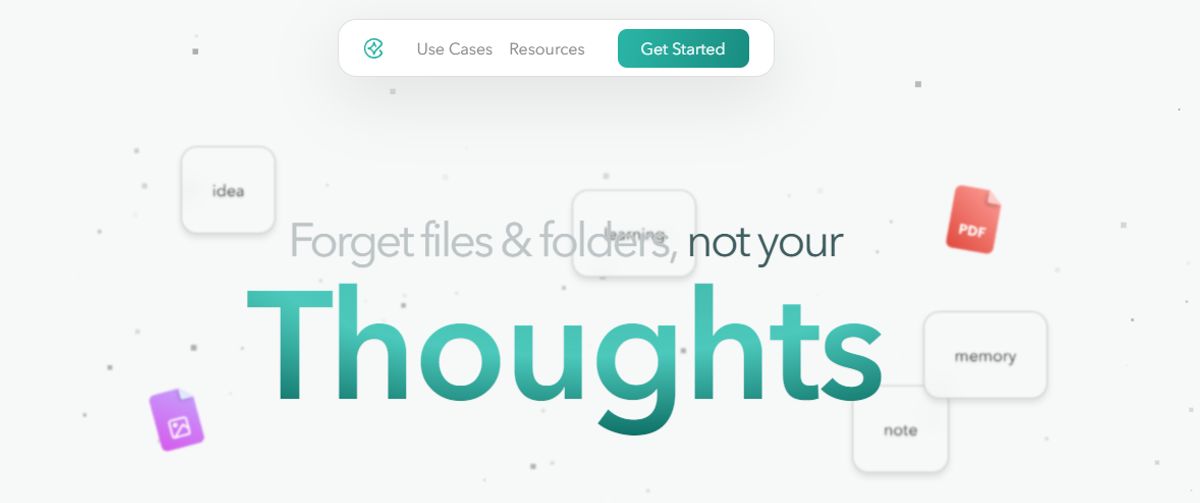
Constella is a knowledge management tool that helps users organize and visualize notes and documents. The platform uses AI to automatically categorize your files and find relevant connections to improve research and documentation processes.
2. Document360
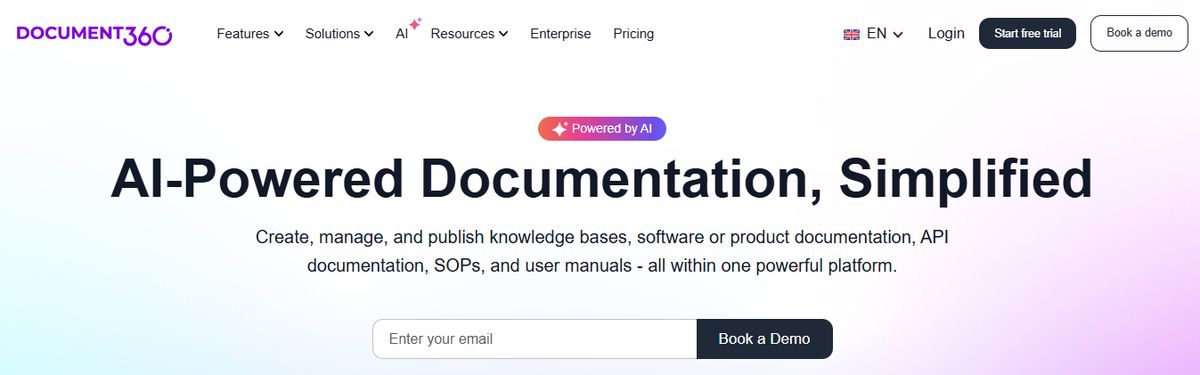
Another all-in-one workspace software for building customizable knowledge bases is Document360. This software helps you personalize your knowledge base with branded colors and create dynamic, searchable, multilingual user manuals, SOPs, how-to guides, and other documents.
Ideal for professionals seeking to streamline documentation processes, Document360 offers a user-friendly interface that caters to technical and non-technical users. It also offers AI functionalities to simplify tackling all documentation needs.
Document360 best features
- Improve the context and relevance of documentation with real-time AI feedback
- Get insights into user behavior and content effectiveness to optimize knowledge management strategies
- Connect with popular tools like Slack, Microsoft Teams, Zendesk, and Intercom to build a cohesive workflow across platforms
Document360 limitations
- A few features are only available through costly add-ons
- New users might require time to leverage the platform’s extensive capabilities fully
3. Evernote
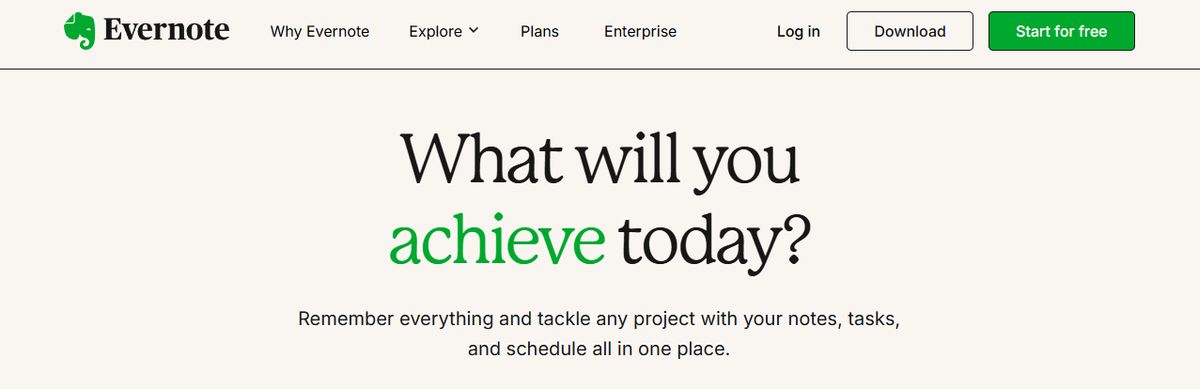
With Evernote, it’s a case of never forgetting your first love. I spent years tinkering with Evernote to build my ideal experience and workflow, but it never came together.
From notes, tasks, and schedules to your favorite resources from the web, Evernote makes it easy to save anything you want on your chosen device. I could quickly integrate Evernote with ClickUp, Google Calendar, Slack, and Microsoft Teams, so all my standups, client meetings, and reminders automatically synced with Evernote.
The tool is also available offline, so it’s comforting to know I’ll still be able to access my notes if I’m camping or traveling without internet access.
Evernote’s AI-powered search functionality is quick and intuitive. It works across PDFs, documents, and images, so searching through many notes and content is never an issue. The Tasks feature lets you outline project steps and assign responsibilities to others—a great way to collaborate with your team on the go.
Evernote's best features
- Save snippets from the web directly into their notes with Web Clipper
- Scan, digitize, and organize paper documents with your phone’s camera
- Edit notes and tasks in real-time and keep all contributors on the same page
Evernote limitations
- A limited free version that pushes users towards a premium subscription.
4. Google Keep
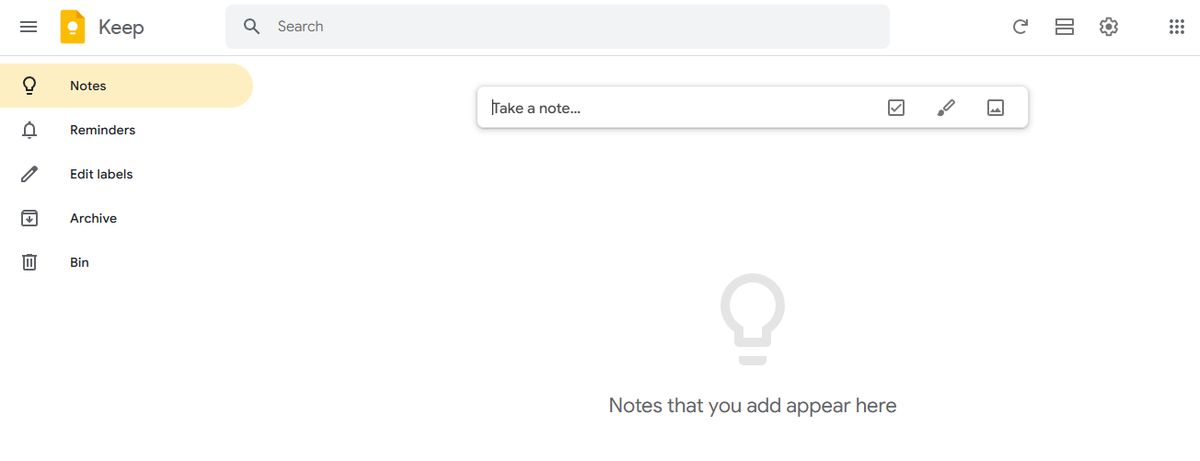
Google Keep allows users to effortlessly capture content, including notes, lists, photos, and audio, and organize it on a digital bulletin board.
Sharing notes among family and friends is simple. For example, you can share a shopping list and see updates in real-time as items are checked off—there is no need for back-and-forth communication.
I like Google Keep’s voice note feature. When I’m in a rush and need to jot down something important, I can record a voice memo instead and transcribe it into text later—fast and efficient!
Like Apple Notes, anything more complex or advanced you want from the tool is a struggle. You might think Google would make more effort to combine the Keep experience with Google Tasks and Calendar, but it’s not happened. They continue to be disparate experiences, which can be frustrating if you want an all-in-one software or expertise.
Google Keep’s best features
- Get reminded of your to-dos at the right place and at the right time with time-based and location-based reminders
- Organize notes using labels and colors
- Integrate your notes smoothly with Google Docs, Calendar, and other apps within the Google ecosystem
- Pin notes to your device home screen and stay on top of priority tasks
Google Keep limitations
- More suitable for quick notes rather than detailed, lengthy note-taking
- The features are too essential for complex note organization
5. Notion
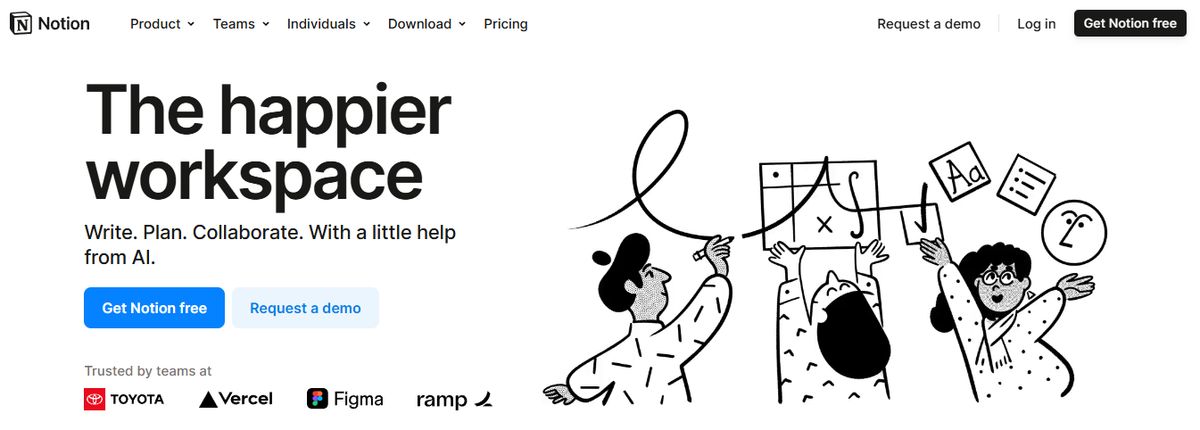
The notion is an all-in-one personal knowledge management tool for teams and organizations. It helps you collectively build a simple and valuable knowledge base with your team.
In addition to text, it allows you to add or drag and drop images, videos, audio files, and even link pages in your knowledge base. From managing client data and brainstorming ideas to tracking project milestones, Notion AI makes finding relevant information from your base easy. I also love how the AI writing tool provides note-editing and summarizing capabilities to enhance your knowledge base.
Notion's best features
- Share knowledge, assign tasks, and collaborate in real-time with built-in tools for teams and projects
- Create and link structured databases to manage projects, track clients, and organize resources
- Access 20,000+ templates for creating company wikis, meeting notes, etc.
Notion limitations
- Limited functionality without an active internet connection hinders productivity during travel or outages.
- Using Notion’s mobile app might feel clunky and slow
6. Obsidian
Obsidian is a helpful note-taking app for people like me that has hundreds or thousands of notes on their devices.
What I love the most about this tool is the interlinking and bidirectional linking—you can connect notes, ideas, people, places, and more.
For example, I saved multiple notes on different marketing campaigns, all for the same product. Linking helped me keep everything integrated and access relevant notes quickly. An interactive graph also identifies hidden patterns within notes and visualizes their relationship.
On that note, I’ve been a big fan of Obsidian and Notion. But if I have to assess Notion vs Obsidian head-to-head, I’ll pick Notion any day, as its note-sharing and collaboration features are way smoother. Obsidian is excellent if you want to spend much time using the tool. If you’re looking for collaboration or integration features where you can push out information or tasks to support your productivity workflow—it’s not built for that.
Obsidian's best features
- Brainstorm, research, and ideate on Canvas—your personal space
- Track version history of notes for up to one year
- Curate a personalized experience with plugins and themes
- Control which files you want to sync with which devices
Obsidian limitations
- Collaborating with others on notes is a complex process
- Primarily a desktop app; the mobile version is not as robust or user-friendly
7. Apple Notes
Apple Notes is a simple but efficient note app that works across all devices. This could become your go-to tool if you’re deep into the Apple ecosystem.
It’s still the most straightforward app if you work within the Apple realm—summon it anytime on your Mac from the bottom right corner, and it pops up earnestly. Syncing is mostly great; copying something on the phone and pasting it on your desktop is magic. It's the little things that boost the experience.
Ask more of the app, and you’ll be disappointed. Moving the text around, formatting and indenting are not easy. Any more advanced use cases are not supported. You can save multiple types of content, including images, web links, handwritten notes, maps, PDFs, and sketches.
I prefer Apple Notes’ scanning feature to scan documents directly from my iPhone—there is no need for third-party scanners! The documents are saved directly within Notes as PDFs.
Apple Notes’ best features
- Create notes, edit lists, organize notes into folders, and manage attachments
- Pin priority notes on top for quick access
- Add tags to sort and find notes easily
Apple Notes limitations
- Limited to users within the Apple ecosystem
8. Logseq
Like most note-taking apps, Logseq is designed to help you organize and manage your knowledge effectively. What sets this AI tool apart is its outline-based structure and linked references that allow you to create dynamic internal links between notes. For instance, you can link meeting notes to project tasks for smooth tracking. This Logseq feature is excellent for building a personal knowledge graph, visualizing connections between ideas, and structuring tasks or projects.
Logseq's best features
- Summarize notes, organize knowledge bases, and optimize workflows with AI tools.
- Organize notes visually with a graph view for better context.
- Manage tasks directly within notes using this markdown note-taking app.
Logseq limitations
- It’s not ideal for real-time collaborative editing and teamwork.
- Some users have reported that its built-in sync feature is unreliable, hindering productivity.
Related Reading
- Roam Research Alternatives
- Amplenote vs Notion
- NotePlan Alternative
- Amplenote vs Obsidian
- Notion vs Evernote
Research 10 Times Faster with Constella
Constella reimagines note-taking with an infinite canvas that lets you capture and connect ideas effortlessly, powered by AI search that makes finding information instantaneous. Whether you're a researcher trying to draw connections across numerous papers or someone who wants a more intuitive way to organize your thoughts and files, Constella's AI assistant helps you build and navigate your knowledge base without the constraints of traditional folder structures.
Constella transforms how you capture, find, and connect your ideas, perfect for busy knowledge workers and researchers limited by conventional note-taking tools. Research 10 times faster with Constella's AI notes manager.
Related Reading
Want more insights like this?
Subscribe to get short productivity tips and useful summaries of new tools every week.
Want more insights like this?
Subscribe to get short productivity tips and useful summaries of new tools every week.