
Writing a grant proposal can feel like an overwhelming task. Whether you’re a novice or seasoned grant writer, the complexities of researching funders, understanding their priorities, and crafting tailored narratives to win their support can be daunting. Fortunately, AI for grant writing can help ease the burden. This article will introduce you to easy, practical AI tools that can help you write winning grant proposals faster and with less stress.
One highly effective solution is Horizon’s AI desktop assistant. This AI assistant can help you tackle grant writing challenges by streamlining the process, offering guidance and suggestions as you write, and even generating text for you based on your prompts.
Can You Use AI for Grant Writing?

Yes, you can use a variety of AI tools to improve or speed up your nonprofit’s grant writing efforts. Nevertheless, AI tools require careful attention and work on your end, both in providing well-contextualized inputs and closely reviewing and improving the outputs. Simply put, you need to collaborate with AI when writing grant proposals, not fully outsource your work to it.
Your Unique Role in Crafting Winning Proposals
Grant writing is a complex undertaking. Creating a winning grant proposal involves combining data and stories in compelling, logical, and highly tailored ways. You’ll always be in the best position to put together the best possible representation of what your nonprofit can accomplish with extra funding.
That said, the amount of work required for you to effectively use AI for writing grant proposals can still be much less than what you’d need to commit otherwise. Master AI grant writing, and you can dramatically speed up your grant workflows while reducing overhead.
How AI Can Help You Write Grants
AI grant writing software can take a few different forms, so it’s essential to understand their distinctions and purposes before investing in any addition to your grant writing toolkit. First, there are purpose-built AI grant writing tools and general AI tools that can help with grant writing:
Purpose-built AI tools are specifically designed and trained to support one or more parts of the grant writing process.
A Mismatch for Grant Writing
General or all-purpose AI tools (like ChatGPT) are the generative AI chatbots you’ve likely used before. These platforms can be beneficial, but are not trained for grant writing or nonprofits. You should understand their limited use cases and potential risks. For example, they’re more likely to produce unhelpful responses and require more intensive review of their outputs.
Within the category of purpose-built AI grant writing software, solutions span a spectrum of functionalities. Most tools on the market offer multiple features or can help with several aspects of the entire grant writing process.
Specialized Tools for Ancillary Tasks
There are also purpose-built AI tools to support other activities, like data analysis, proofreading, and transcription, that can streamline ancillary tasks related to grant writing. This is a much richer field, so there are many options available.
The ROI of a Purpose-Built Platform
So, which type of AI tool should you use? That depends. A purpose-built platform will be a larger investment but will likely yield much better long-term results through saved time, increased output, and improved proposals. Investing in the right AI technology can quickly pay for itself as you begin securing more funding.
Just be mindful of what’s still needed from you—time to learn how to use the tool effectively, attentive inputs and contextualization, and close reviews and refinements of the tool’s outputs.
Reliable for Specific Tasks
Generic AI tools have one significant benefit: They’re free or relatively inexpensive to use. Nonetheless, they require extensive hand-holding, meaning they won’t save you as much time in the big picture as you might imagine if you’ve never used one of these tools before. They’re most reliable in very specific or limited use cases, such as:
- Summarizing documents
- Analyzing datasets
How Do Nonprofits Use AI for Grant Writing?
We mentioned above that different types of AI grant writing tools can be used for various parts of the grant writing process. Where exactly do they fit in, and how are nonprofits using them to research and draft proposals?
Generative AI tools can be used throughout the entire grant writing workflow, helping you:
- Research funders and analyze their giving patterns.
- Quickly draft basic language about your nonprofit’s history and background.
- Generate document summaries and outlines.
- Draft larger sections of your proposals using input notes and documents.
- Organize your proposal’s content into a coherent whole.
- Generate visuals to illustrate your data and support claims.
- Analyze your internal and external data to find trends and insights.
Direct Use and Strategic Guidance
Some of these outputs, such as boilerplate language for background sections of a proposal, can be used as-is. Others, like data analyses and summaries, can guide your planning and narrative. By combining these functionalities and providing the technology with plenty of context, you’ll knock out significant portions of the workflow in just an hour or two instead of a full workday.
What Are the Risks of Using AI When Writing Grants?
The most immediate risks to look out for include:
Incorrect or Inaccurate Responses
AI systems can and do “hallucinate” to produce unhelpful responses. In other cases,they may “misunderstand” your prompts or simply get things wrong. Carefully reviewing and refining AI outputs is essential, especially when your donors and funders will see them!
Privacy and Security Concerns
Generative AI tools that are broadly available are often trained on massive sets of public data and pooled user interactions. Mixing your nonprofit’s constituents’ and/or funders’ data into this pool may be a serious privacy concern. Avoid inputting sensitive or personally identifying information in a large-scale, publicly available large language model (LLM) system.
Many nonprofits today also develop specific AI policies to define their usage protocols and notify stakeholders of them.
Inadvertent Bias
Biases may exist within the datasets that AI tools are trained on. As a result, AI-generated content can unintentionally:
- Reinforce stereotypes
- Exclude diverse perspectives
- Misrepresent marginalized groups
Carefully review AI outputs to ensure they align with your organizational values. Take an active role in identifying and mitigating bias to maintain trust and equity with your stakeholders.
These problems aren’t entirely avoidable. It’s always possible that an AI system will misunderstand your instructions or make assumptions that clash with your values and goals.
Implementing a Review and Approval Workflow
To mitigate these risks, follow a few best practices. First, develop concrete workflows that ensure your team will always review, refine, and approve AI-generated outputs before they’re used in any externally-facing ways.
Create AI usage and privacy policies to establish guardrails and reassure stakeholders that you’re thinking responsibly and proactively. In addition, the easiest way to reduce these risks is to use high-quality AI tools in the first place.
Identifying High-Quality AI Tools for Grant Writing
What should you look for in a high-quality AI tool to support your grant writing efforts? First and foremost, seek out AI tools purpose-built for nonprofits. These tools are designed with your specific needs in mind and often come preloaded with templates, prompts, and functionality that align with nonprofit goals and grant applications.
Specialized Training for Quicker Understanding
They’ll also have been trained using more focused data sets and context to help them “understand” your needs more quickly. Because of this, and unlike general-purpose AI systems, these tools reduce the need for excessive prompting or oversight, helping your team save time while delivering relevant outputs.
Security and Privacy Protocols
Look out for these features and characteristics:
- Published privacy and security protocols and/or credentials.
- Closed training systems, meaning your interactions won’t be used to train a broader AI model accessible to all users.
- Adaptability to your specific needs and voice.
- User-friendliness, including features that simplify collaboration with team members.
A Pragmatic Starting Point with General AI
The top purpose-built AI grant writing tools can check all these boxes. That said, general AI tools can still be invaluable if approached correctly, and they’re often the most accessible way for small organizations to get started with AI. For example, ChatGPT can help:
- Generate brainstorming ideas
- Develop first drafts
- Suggest ways to structure a proposal
Just stay aware of their limitations and take steps to reduce risk, for example, by never inputting sensitive information and only using them for limited use cases.
A Hybrid Approach to AI for Newcomers
Pairing general AI tools with specific workflows or additional tools is often the most effective approach for AI newcomers. By using multiple tools, each specialized for a particular task, you can cover gaps in functionality and reduce the risks of relying on a single solution until you find the right comprehensive solution to support your grant writing program.
Related Reading
- Best AI Personal Assistant
- Best AI Coding Assistants
- Best AI Scheduling Assistant
- Best AI Voice Assistant
- Best AI Tools for Product Managers
- Best AI Tools for College Students
- Best AI Recruiting Tools
- AI Tools for Literature Review
- Best AI for Essay Writing
16 Powerful AI for Grant Writing Tools

1. Horizon: The AI That Makes You a Better Grant Writer Before You Ever Start Writing
Grant writing isn’t just about the proposal; it’s about:
- Gathering input from stakeholders
- Capturing key ideas from the planning call
- Tracking funder requirements
- Organizing deadlines and follow-ups
Meetings to Proposals - Faster. Smarter. Stress-Free
Horizon isn’t just for meetings, it’s your secret weapon for grant writing prep. Whether you're brainstorming with your team, interviewing subject matter experts, or discussing funder feedback, Horizon captures every word, highlights what matters, and turns conversations into clear, actionable insights.
Use Horizon to:
- Capture mission-critical ideas from brainstorming sessions.
- Extract objectives, outcomes, and timelines discussed in calls.
- Instantly generate smart prompts to jumpstart proposal sections.
- Track follow-ups with collaborators or stakeholders.
- Build a grant proposal foundation without losing momentum or clarity.
Proactive Planning Before You Write
Unlike traditional AI writing tools, Horizon works before the writing even starts. It ensures you never miss a funder requirement, an internal decision, or a compelling story angle. No more frantic note-taking or lost details, Horizon’s seamless prompts and confidential notes keep you sharp while staying completely undetectable.
Discover a new level of productivity and confidence in any meeting. Experience Horizon today.
2. Grant Assistant: The AI Grant Writing Tool for Nonprofits
Grant Assistant, one of FreeWill's solutions to diversify your fundraising strategy, is a leading AI grant writing tool that offers a full range of advanced but easy-to-use features for your grant writing workflow. Trained on over 7,000 winning grant proposals, our platform brings deep, nonprofit-specific knowledge that most other AI tools can’t yet match.
- Grant Assistant can help nonprofits: Quickly understand and prioritize grant opportunities.
- Prepare, research, and draft grant proposals: Analyze RFPs and other documents to generate preliminary responses and summaries.
- Infuse their proposals with the correct tone and rich details: Adapt to diverse funder requirements, including federal and international development opportunities.
Grant Assistant’s founding team includes senior USAID leaders and other experienced professionals who understand the diverse grant funding landscape, from complex development proposals to smaller-scale foundation and community programs. The result is an expert-built, adaptive, and highly customizable platform to meet any nonprofit’s grant writing needs.
Completing Proposals in One-Third the Time
Users report researching, drafting, and completing new proposals in just one-third of the usual time using Grant Assistant’s advanced features. Plus, it’s entirely secure and private, with no AI models trained using user data.
3. Grantable: A Flexible AI Grant Writing Platform
Grantable is an AI grant writing platform that also stands out in the market for its ability to streamline several core points in the grant writing process. It offers a range of features to help nonprofits, institutions, and grant writing agencies quickly draft professional grant proposals that adapt to funder requirements and match their correct tone of voice.
Upload files, generate sections, collaborate with the AI, and create a polished proposal in a fraction of the normal time.
Important to Note: Grantable offers fewer built-in research and analysis tools than similar platforms like Grant Assistant. Its website also does not discuss the material used to train the Grantable AI system, meaning it may require more hand-holding to generate consistent, context-specific responses.
4. Grant Orb: An AI Tool for Quick Grant Proposals
Grant Orb bills itself as a tool for quickly generating complete grant proposals in minutes. It offers upload and text generation features similar to those of Grantable, as discussed above. Nevertheless, this platform's full utility and flexibility may be limited, and it’s unclear how its system is trained or whether it has deep nonprofit-specific knowledge.
With these caveats in mind and an understanding that you’ll still need to curate and refine your proposals carefully, it may still be a viable way to streamline your grant writing work.
5. Grantboost: Affordable Grant Proposal Writing
Grantboost offers the same functions as Grant Orb but at a more accessible price point. Its website is light on details, so it brings the same potential concerns about the depth and specificity of its training materials. If you’d like to learn more about Grantboost, we recommend exploring its website and contacting the vendor directly to learn more and see the product in action.
6. Instrumental: The Grant Research Database
Instrumentl has been a longtime leader as a grant research database. Its modern design, intuitive features, and wealth of information help tons of grant writers find, research, organize, and manage their grant projects every day.
AI Trained on Real Grants
Instrumentl has also been working to develop AI grant writing tools. While they still appear to be in development, you should keep this option on your radar. These AI features may ultimately be a wise choice, especially if you already use this platform for grant research, because they will most likely be trained on rich, real information from the database of grant opportunities.
Still, this tool's exact features and comprehensiveness are unclear keep an eye out if you already know and trust Instrumentl.
7. ChatGPT: The AI Text Generator
OpenAI’s ChatGPT is the industry leader in all-purpose generative AI. It excels at helping you quickly generate text, summarize documents, analyze data, and troubleshoot problems.
8. Claude: An Alternative AI Text Generator
Claude is a lesser-known but equally powerful and functional generative AI platform. Some users have found it to provide consistently better outputs when generating text about technical topics.
9. Gemini: Google’s Generative AI Chatbot
Google’s generative AI chatbot, Gemini, is another reliable option for all-purpose AI tasks that can streamline your grant writing, and it works seamlessly with all other Google products like Sheets and Docs. When using broad generative AI tools, pay close attention to how you prompt them for responses, ask for corrections and changes, and carefully review and refine all outputs.
Consider relying on them for your most straightforward tasks, such as visualizing data and helping you come up with ideas rather than finished products.
10. Perplexity: The AI Search Engine
Perplexity is akin to an AI search engine that can quickly generate answers to questions. It stands out among similar platforms because of its diverse training sources and citations, making it generally more reputable and helpful for the grant research process. Use it to learn more about topics and gather information and data to enrich your grant proposals.
11. Coefficient: An AI Tool for Data Analysis
Coefficient is built specifically to help with data analysis and visualization. It can integrate directly with your data tools (or analyze uploaded data) to generate reports, create graphs and live dashboards, and uncover hidden trends. Coefficient’s powerful tools can help you analyze and summarize data for grant proposals and regular reports to funders post-award.
12. Fireflies: AI Meeting Notes Tool
Fireflies is an AI tool that transcribes accurate notes from audio and video. Grant writing often involves meeting with many people internally and externally to:
- Discuss your project
- Ask for documents
- Get answers to key questions
AI can help ensure you capture all the details, and FireFlies even integrates directly with several leading project management platforms like Slack and Asana to create reminders from conversations automatically.
13. Jasper: AI for Content Creation
Jasper is a generative AI platform designed specifically for marketing use cases, so while not directly related to grant writing, it can help quite a bit in some content creation areas. Its top features allow you to closely train the AI model on your organization’s voice and visual identity. Jasper Studio also makes it easy to create your custom AI tools using its underlying system.
With some tech know-how and a clear understanding of what you need, Jasper could be a helpful part of your AI toolkit. Just be aware that it’s trained for for-profit contexts and will need hand-holding to generate consistently valid text for grants.
14. Grammarly: An AI Writing Assistant
Grammarly, the well-known spellcheck plugin, has many built-in AI features that could strengthen your grant writing. Besides checking for typos and grammatical improvements, the system can also screen your text for tone, clarity, and brand alignment.
You can also prompt Grammarly to improve or suggest particular changes, for example, trimming down a section you’ve written to meet a funder’s guidelines.
15. Tome: AI for Slideshow Generation
Tome is an AI platform designed for sales and account management, but comes with one feature that may be particularly useful for grant writers: AI slideshow generation. If you meet with team members and funders to discuss plans and pitch ideas, Tome could be an easy way to boost the visual professionalism of your presentations and streamline your work.
16. Otter: Another AI Meeting Notes Tool
Otter is another notetaking and transcription AI tool that can improve your grant writing workflow. Use it to generate meeting summaries quickly, combine meeting transcriptions with other notes, and send lists of action items. It integrates with top video conferencing tools, Salesforce, HubSpot, and more, making it an easy addition for many organizations looking to improve communication.
Related Reading
- AI Language Learning Tools
- AI Tools for Executive Assistants
- AI Tools for Financial Advisors
- AI Tools for Journalists
- Best AI for Medical Students
- JetBrains AI Assistant vs Copilot
8 Essential Pointers for Using AI in Grant Proposals
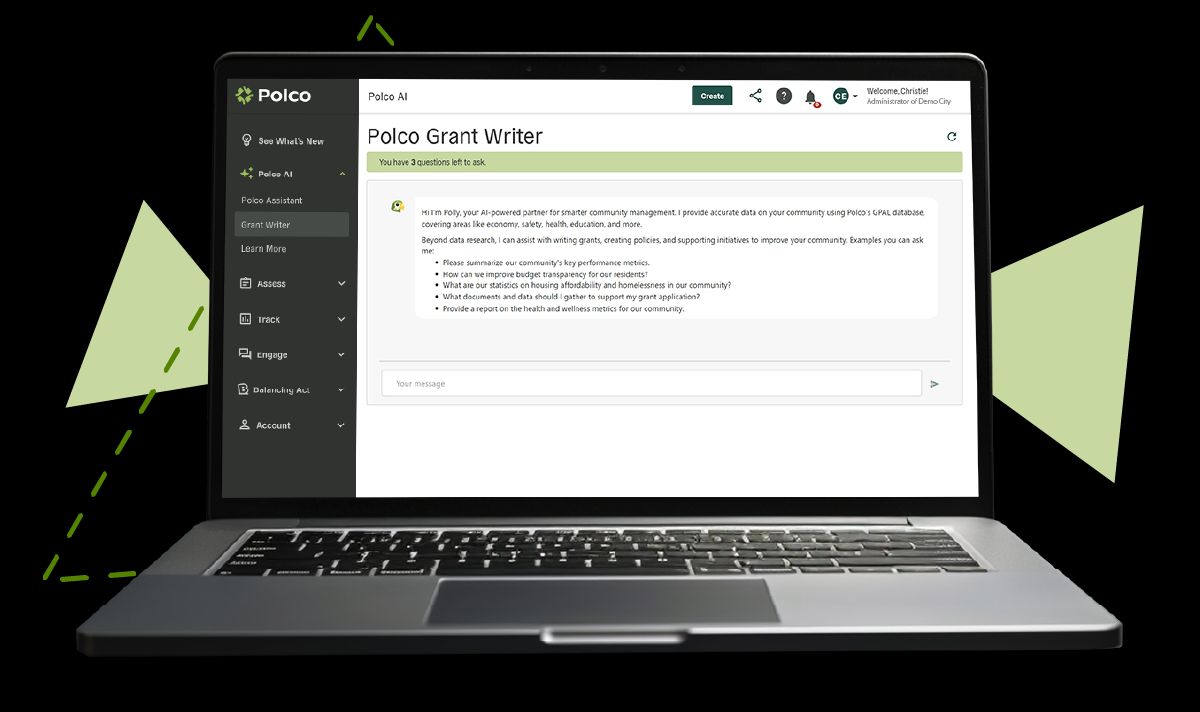
1. Get Good at Prompting AI for Grant Writing
Even the best generative AI isn’t perfect. Remember, it’s an efficiency partner to collaborate with and help speed up rote tasks, not a replacement for human thought and judgment. Follow these best practices to ensure you make the most of your tools while minimizing risk.
Mastering the Art of AI Prompting
Master the art of AI prompting. Especially when using all-purpose tools like ChatGPT, you must provide thoughtful, explicit, step-by-step instructions for what you want it to generate. Think of it this way: Generative AI works by making logical connections between concepts.
If you ask a human to provide an answer to a complex question, they can work through multiple logical steps to reach it. An AI tool will attempt to do the same, but can very easily skip some of those logical steps or get mixed up along the way, leading to incorrect responses.
The Power of Deliberate Prompting
Deliberate, step-by-step prompting helps to combat this challenge. Purpose-built grant writing AI tools reduce this challenge because they’re trained on more nonprofit-specific information and context. Nevertheless, never take for granted that an AI tool fully “understands” what you ask of it when you need a complex output.
2. AI for Grant Writing: The Basics
Use AI to check spelling and grammar when writing grants. The most basic use of AI is to run spelling checks and grammar checks on grant proposals. Let’s call this “Grant Writing AI 101.” You can use simple AI like Grammarly, Word, or even ChatGPT to check on basic spelling and grammar errors.
Integrated Tools for Error-Checking
Grammarly is effective if you have the software already and can use it for any part of your business (such as emails, notes, etc.). This is a paid subscription, but it will automatically underline any grammatical or spelling errors. Word has an integrated spell-check and grammar check built in.
Leveraging ChatGPT for Grammar and Spelling Alternatives
You can review spelling and grammar if you use Word Documents or Google Drive. ChatGPT is effective for giving you alternatives for grammar and spelling. You can just upload it into an AI tool (like ChatGPT) and ask it to run a spelling and grammar check. It will then give you a bunch of recommendations.
Note that ChatGPT is open-sourced, though, so your client’s information may not be entirely secure. Always run your grants through a spelling or grammar check before submitting them! Because first impressions matter.
The “Judgy” Mindset of a Grant Reviewer
When grant reviewers start reviewing your grant, what instantly pops out are spelling and grammatical errors. They will automatically score you lower because the work isn’t professional. Let’s face it, grant reviewers can be snobs. You can say this because I’ve been a grant reviewer for years and have even caught myself being judgmental.
3. Use AI to Help You Write Your Grant Proposal
Using AI for grant writing is all the rage these days, but you need to make sure you first develop a Master Grant Application to utilize AI effectively. You can first develop a Master Grant Application and then use AI to leverage that Master Grant Application to write future grants fast.
Enhancing AI Accuracy with a Master Template
Using a Master Grant Application with AI. If you have written a Master Grant Application or multiple grant applications for the same project area, then this enables AI to provide accurate information. A Master Grant Application Template is something we highly recommend ALL grant writers write for their clients or their organizations.
Aligning Priorities with Proposal Sections
What is a Master Grant Application Template? It highlights one to three priority areas for the organization for the year. Based on those priorities, it includes the following:
- Abstract
- About the Organization
- Needs Section
- Goals, Objectives, Outcomes, Outputs
- Action Workplan
- Challenges, Contingencies, Sustainability Plan
- Financial Capabilities
- About the Board
- Staffing Structure
- Project Narrative
- Logic Model
- Data Management Plan
- Job Descriptions, Resumes
- MOUs, LOIs, LOCs
- Budget
- Budget Narrative
A Robust Framework for Program Planning
The Master Grant Application Template is very robust. This will ensure that you are developing or defining specific programs and understand the gaps and how to address them with a plan and a budget. When you have all this information (this usually turns out to be around 10-15 pages), you have a lot of essential and relevant information to then leverage AI.
An AI-Powered Workflow for Grant Applications
If you are using AI, you now have a relevant copy. Once you find a grant application (directions), you can put those questions in AI, and then drop the Master Grant Application Template in AI and ask AI to pull from it to answer the grant questions. They review this and ensure the answers are accurate and don’t sound scripted, but it helps them save a significant amount of time.
Consistently Review This Thoroughly
When you create a project, as a human first, then the grant writing AI software is more efficient and relevant when using your copy. It won’t read as much as AI (believe me, grant reviewers can tell if a grant application was generated from AI vs. a human).
Training Up AI Tools Like ChatGPT for Grant Writing
Some folks are just training their ChatGPT by utilizing Master Grant Templates and grant instructions (NOFO, NOFA, RFPs). For example, they will just add their Master Grant Template into ChatGPT and then add in the grant application and ask ChatGPT to utilize the Master Grant Template to answer the questions from the application.
This won’t be as nuanced or easy to use for multiple clients or grants compared to specific grant-writing AI software, but it could be an alternative if you are only working on a small grant for one client.
Efficiency and Accessibility for Grant Writers
Note that most of the above grant writing specific AI Software also have free plans for limited grant writing and would be more efficient. Another reason for you to consider utilizing specific grant writing AI software vs. ChatGPT is that most specific software is not open AI, which means there is more privacy.
This is important when you are working on grant applications and have private information about nonprofit organizations or other organizations. We have budgets, plans, and so much more that need discretion.
The Private ChatGPT Solution
In the new world landscape of 2025, grant writers may want additional privacy for the cause areas of nonprofits and organizations they work with that conflict with the 2025 Federal Executive Orders. If you utilize ChatGPT for grant writing, you (at the very least) create a private ChatGPT that will offer more privacy.
4. Avoid Using AI for Grant Research and Citations
As of early 2025, AI is still terrible at citing research for grant proposals. It will give you beautiful citations if you ask for research, but the sources AI generates are usually fake. I cannot emphasize this enough. Citing imaginary research in your grant proposal can easily get even a significant grant disqualified.
With AI, you need to check all reference sources and URLs it provides to see if they even exist or if there is research on the pages they reference. You still need to do your research to find the citations, sources, and references that you need in grant applications.
Using ChatGPT to Sort URLs
Use AI for organizing your grant research citations. Despite this significant gap in AI functionality today, you can still use AI to help you manage the citations from your research. For example, if you found articles, blogs, YouTube videos, and more online and have all the URLs, you can easily drop these URLs into ChatGPT.
Ask ChatGPT to provide APA or MLA citations from each source and create a Works Cited page. If you have a bunch of sources, AI can help put those together in a bibliography or Works Cited document. Just make sure you tell it to do MLA or APA style.
5. Banned Words in Grant Proposals and AI
With the Trump Administration in 2025, we are seeing a radical shift in what words will trigger scrutiny in government grant applications. You can use ChatGPT to review your grant applications and have it cross-reference banned words and replace them with more acceptable alternatives.
For example, if you are writing a grant on an environmental program, and you have been used to using the term ‘environmental justice,’ that may now be a flagged term in specific federal grants.
Automating Terminology with Direct Replacement
So you could upload your grant and then upload the grant instructions and ask it to replace the words ‘environmental justice’ with a synonym phrase from the grant instructions. Or you could simply upload the grant instructions and ask ChatGPT to find the most similar terms to ‘environmental justice’ and then use that term for your grant application.
Once again, make sure it makes sense and that the grant will still fund the essence of environmental justice programs.
6. Run an AI Audit on Your Grant
AI can be a fantastic grant writing partner to ensure your proposal follows all guidelines to the letter. You would be surprised how many grants get turned down simply because the writer does not follow guidelines! Using AI to audit your grant is simple.
Once you have written your grant proposal, you can run it through ChatGPT and then put in the Grant Instructions (i.e., Funding Opportunity Announcement or Request for Proposal) and ask the following questions (prompts):
- Is there anything that is ineligible in my grant application?
- Have I thoroughly answered all the questions?
A Final Check with AI
If your grant instructions have a criteria area (this is where they tell you all the specific questions and how many points per section), be sure to also run this criteria, along with your application, through AI and ask: Have I given specific examples for each of these questions?
The Human Role in Grant Review
AI can help you catch any issues you may have missed in your review. And yes, you should do your evaluation before consulting AI. You still need to read the grant instructions and ensure you adhere to them, align your program with the priorities, and have all required attachments.
7. Do NOT Use AI to Teach You Grant Writing
Grant writing is a practiced skill. ChatGPT will give ‘directions’ on how to write a grant, but it won’t give you the real-world experience or practice in thinking through a grant. This is why grant writers are not losing their jobs during the AI era.
Those learning how to leverage AI can write more grants. But if you only rely on learning grant writing from AI and not from humans, what happens is you probably won’t know.
The Danger of Shortcut Solutions
Follow me here. If you put in “teach me grant writing” in ChatGPT, it will give you directions. And then it will also follow up and ask if you want templates, etc. What happens here is you will start just grabbing templates and using them, instead of learning grant writing.
Mastering the Methodology Through Experience
You need to understand grant writing and write grants from the ground up to learn how. There are nuances to grant instructions, and it’s essential to have experience writing grants and understanding their methodology. We even see this with AI in schools. If teachers just say, “Write a paper on Shakespeare,” many students feed it into ChatGPT without learning anything.
So, if you want to learn how to write a grant, you need to write grants, and not just rely on AI. Once you develop a complete Master Grant Application Template, you can leverage AI to enhance your human-based writing and research.
8. AI and Grant Writing: A Support, Not a Replacement
Think of AI in your grant writing as a support, not necessarily a team member. It’s more of an editor at this point than a writer, even though one of its jobs is to write. In the future, I am sure that AI will become more sophisticated with grant writing and research, but a human still needs to understand how to design effective programs and how they meet needs in real life.
Actively collaborate with AI tech. To echo a key theme of this guide, remember that you should collaborate with AI, not outsource to it. Engage it like a teammate by:
- Providing context
- Asking follow-up questions about its answers
- Calling attention to mistakes
- Giving feedback
Add your unique insights and nonprofit’s voice to your proposal by prompting the AI to do so and manually refining the outputs yourself. After all, you have invaluable expertise and context to contribute, which funders will be looking for!
Try Horizon for Free − Experience the Future of Work Today
Horizon is your invisible meeting notes and real-time intelligence assistant, working behind the scenes to boost your performance in every conversation. It listens to meetings, transcribes discussions live, and instantly generates summaries, thoughtful prompts, and actionable follow-ups, all visible to you alone.
No more frantic note-taking or lost details, Horizon's seamless prompts and confidential notes keep you sharp while staying completely undetectable. Discover a new level of productivity and confidence in any meeting. Experience Horizon today.
Related Reading
Want more insights like this?
Subscribe to get short productivity tips and useful summaries of new tools every week.
Want more insights like this?
Subscribe to get short productivity tips and useful summaries of new tools every week.