
Consider you’re in the middle of a big study session, and your notes are everywhere. Some are in a Word document, others are on sticky notes scattered across your desk. You even have a few printed pages, which you realize you hardly even need. If only there were a more organized way to take and compile these notes. So, how to make study notes?
Well, there is, and it’s something called Microsoft Loop. As exciting as this new feature is, you may wonder how it compares to the popular Notion. If you’re asking yourself, “Which app will help me make study notes faster and more efficiently?” you’re in the right place. In this guide, we'll explore Microsoft Loop vs Notion to help you determine which is right for your study needs.
Before we get started, let me introduce you to Constella's AI notes manager. This tool can help you achieve your goals for making study notes faster and more efficiently. The more organized your notes are, the better. Not only will this help you study for your upcoming exam, but it will also reduce your stress levels as you prepare for the big test.
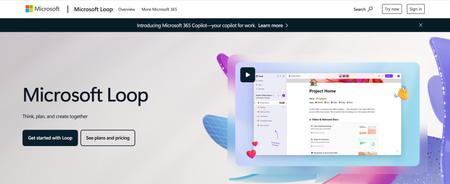
Microsoft Loop is the most recent addition to Microsoft’s array of productivity suite software. It’s designed to work with Microsoft 365 and offers the unique idea of the “loop component,” which can be shared across Microsoft’s productivity apps, including Outlook, Docs, Meet, and much more. It’s also accessible across devices such as mobile (dedicated apps), laptops, or even tabs. In addition, loop components are live, which means any changes made to them are instantly reflected wherever they are shared or embedded.
Microsoft Loop is a new “Office” file type. However, it’s an advanced office file that can improve collaboration, especially for small and medium teams. The core philosophy behind Microsoft Loop is to capture ideas and then invite others to collaborate. It also offers excellent shareability, which we’ll discuss later in the article.
Features of Microsoft Loop
Collaboration and Shareability
The idea behind Microsoft Loop is collaboration. That’s why, here, you get plenty of collaborative features. You can tag people across pages, remind them about their work, and comment on sections. This open approach and Loop components make Microsoft Loop an ideal tool for remote teams. For example, you can nudge people to get their impressions. Then, using it, you can drop an emoji to attract teammates’ attention or show appreciation.
The choice is yours. Apart from these, you can also use the Loop on mobile devices. This makes collaboration easy and on the go. Additionally, users can use the mobile app to take notes. As for shareability, you can share the loop component, the page, or the workspace. You also get a notification about mentions, replies, and assigned tasks. Project and Task Management
Microsoft Loop comes equipped with decent project and task management features. Here, you can access custom labels, project trackers, a to-do list, and a planner.
Copilot
Microsoft is on course to introduce Microsoft 365 Copilot to Loop. It is currently in the testing phase and will soon be released for public preview. Copilot allows users to create content, brainstorm, summarize, and even create a blueprint. Teams can find Copilot game-changing as it can help them improve productivity to new levels.
Related Reading
What is Notion?
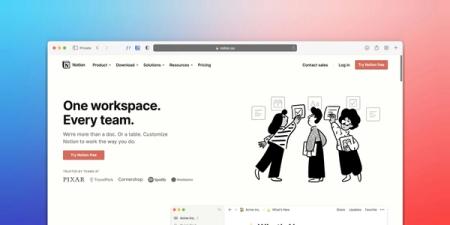
Notion is a cloud-based app that’s anything but simple to describe. Before I get into what Notion is and what it can do, I'll say this: I rely on it. I'm a paying customer. There’s a free tier, but my wife and I each have a paying account because it’s critical to business and household management. Notion has been compared to many applications, but it's its own thing. It has the feel of a wiki, the organizational capability of a database, and the note-taking and data archiving ability of a networked notepad.
Once you understand it, it's easy to set up, but people sometimes have a bit of a challenge getting their arms around it. Notion is customizable and insanely powerful if you can work to configure it. That power and flexibility don’t come without their downsides—it can be hard to get started, and the platform will likely feel messy until you get it right.
Boost Your Note-Taking with AI
Constella reimagines note-taking with an infinite canvas that lets you capture and connect ideas effortlessly, powered by AI search that makes finding information instantaneous. Whether you're a researcher trying to draw connections across numerous papers or someone who wants a more intuitive way to organize your thoughts and files, Constella's AI assistant helps you build and navigate your knowledge base without the constraints of traditional folder structures. Constella transforms how you capture, find, and connect your ideas, perfect for busy knowledge workers and researchers limited by conventional note-taking tools. Research 10 times faster with Constella's AI notes manager.

Core Functionality and Integration: Teamwork Made Easy
Microsoft Loop is built for teamwork and collaboration. It’s deeply integrated into the Microsoft 365 ecosystem, allowing seamless collaboration across Teams, Outlook, and OneNote applications. Its “Loop components” enable real-time updates across different platforms, enhancing dynamic content sharing. This makes it particularly suitable for organizations already utilizing Microsoft services.
Notion, on the other hand, is an all-in-one workspace that combines note-taking, task management, databases, and wikis. Its flexibility allows users to create customized workflows, making it ideal for personal use and diverse team structures.
User Interface and Experience: Clean and Simple vs. Modular and Flexible
Loop offers a clean and minimalist interface, emphasizing simplicity and ease of use. Its intuitive design reduces the learning curve, especially for users familiar with Microsoft products.
Notion provides a modular and flexible interface, allowing extensive customization of pages and dashboards. While this offers greater control, it may present a steeper learning curve for new users.
Collaboration and Communication: Real-Time Teamwork
Microsoft Loop excels in real-time collaboration, with features like presence indicators and synchronized components across Microsoft apps. This ensures that teams can work simultaneously on shared content without conflicts.
Notion supports collaborative editing with granular permissions and sharing options. However, some users have noted that its real-time collaboration isn’t as instantaneous as Loop’s, potentially affecting team interactions.
Customization and Flexibility: Tailored to Your Needs
Notion stands out for its high degree of customization. Users can create unique templates, manipulate page layouts, and embed various content types, tailoring the workspace to specific needs.
Loop focuses more on collaborative flexibility through its components. While it may not offer the same level of customization as Notion, its strength lies in integrating diverse media types into documents and ensuring real-time updates across applications.
Task and Project Management: Tracking Progress
Notion offers advanced task management features, including customizable databases, Kanban boards, and calendar views. Its relational databases allow for complex project tracking and data management.
Loop provides basic task management with checklists and due dates. Its strength lies in integrating tasks within the broader Microsoft ecosystem, facilitating streamlined workflows for teams already using Microsoft tools.
AI Capabilities: Smarter Tools
Notion has integrated AI features that assist with summarizing notes, drafting text, offering writing assistance, and enhancing content creation and management.
Microsoft Loop incorporates AI through Copilot, which aids in intelligent sorting, summarizing discussions, and providing innovative suggestions to streamline task prioritization.
Pricing and Accessibility: Finding the Right Fit
Notion offers a free tier with many features, making it accessible for individual users and small teams. Advanced features are available starting from $8 per user per month.
Microsoft Loop is available through Microsoft 365 subscriptions, with pricing starting from $12.50 per user per month for the Business Standard plan.
1. Constella: The Future of Note-Taking
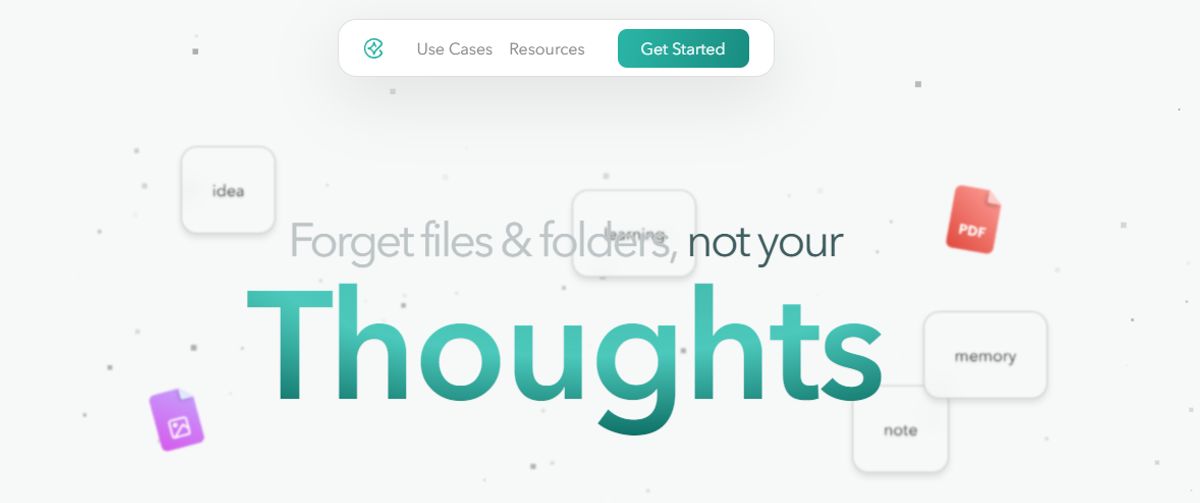
Constella redefines how we make notes with a limitless canvas that allows you to capture and connect ideas effortlessly. With AI search functionality, finding information is virtually instantaneous. Whether you want to organize your thoughts or draw connections across numerous research papers, Constella’s AI assistant helps you build and navigate your knowledge base without the constraints of traditional folder structures. Constella transforms how you capture, find, and connect your ideas, perfect for busy knowledge workers and researchers. Research 10 times faster with Constella’s AI notes manager.
2. Evernote: The Classic Note-Taking App
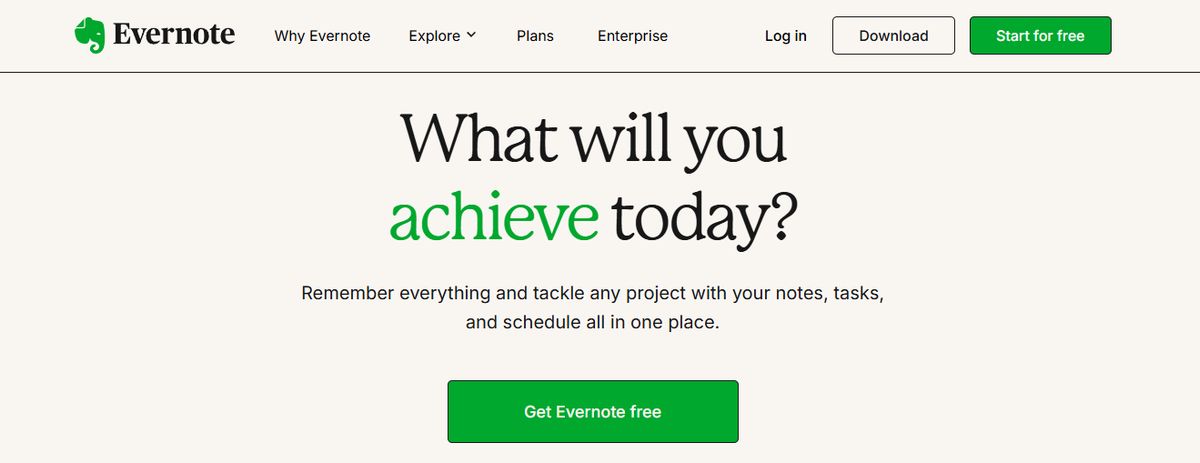
With Evernote, it’s a case of never forgetting your first love. I spent years tinkering with Evernote to build my ideal experience and workflow, but it never came together. From notes, tasks, and schedules to your favorite resources from the web, Evernote makes it easy to save anything you want on your chosen device. I could quickly integrate Evernote with ClickUp, Google Calendar, Slack, and Microsoft Teams, so all my standups, client meetings, and reminders automatically synced with Evernote.
The tool is also available offline, so it’s comforting to know I’ll still be able to access my notes if I’m camping or traveling without internet access. Evernote’s AI-powered search functionality is quick and intuitive. It works across PDFs, documents, and images, so searching through many notes and content is never an issue. The Tasks feature lets you outline project steps and assign responsibilities to others—a great way to collaborate with your team on the go.
Best Features
- Save snippets from the web directly into their notes with Web Clipper.
- Scan, digitize, and organize paper documents with your phone’s camera.
- Edit notes and tasks in real time and keep all contributors on the same page.
Limitations
- A limited free version that pushes users towards a premium subscription.
3. Microsoft OneNote: The Student’s Choice for Note-Taking
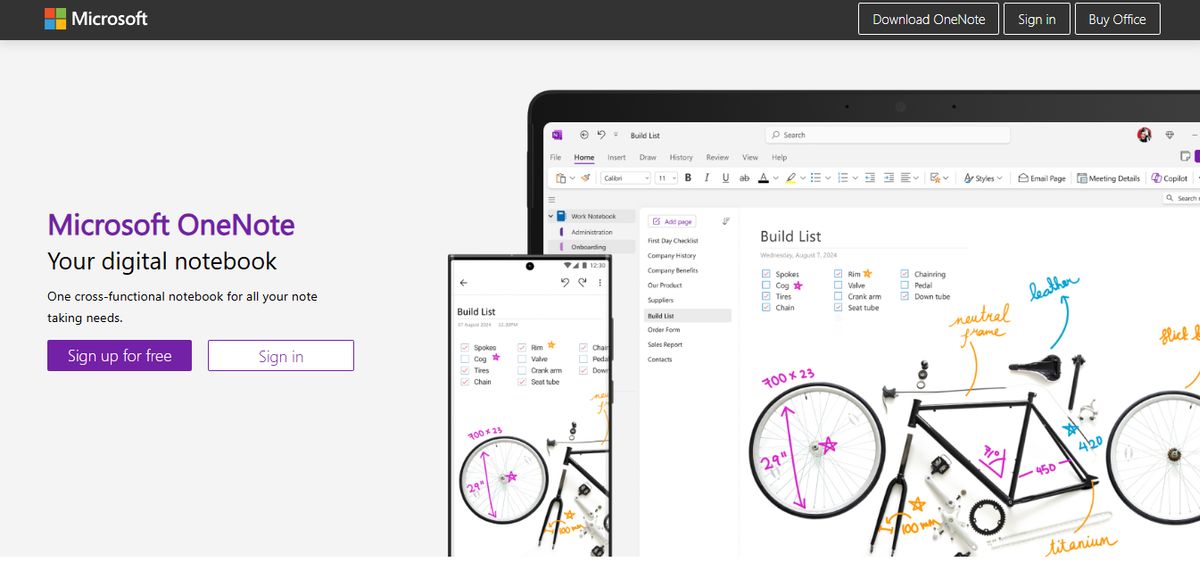
As a student, I used to rely on Microsoft OneNote to keep track of lectures, class notes, and study materials in one place. But even now, as a professional, I can use it for meeting notes or brainstorming sessions. One of my favorite features is voice transcription. I can record meetings or speak my thoughts, and OneNote converts them into text almost instantly. This lets me focus better on the conversation during meetings without worrying about writing everything down.
Best Features
Prompt Copilot (Microsoft’s AI) to draft plans, generate ideas, or create lists based on what you’re working on.
Use the tool as your digital drawing board.
Share your notes and collaborate on them with teammates.
Limitations
- Takes time to sync notes across multiple devices.
4. Joplin: The Open-Source Alternative to Notion

Joplin is an open-source note-taking application that helps you put your thoughts into words and securely access them across Windows, macOS, Linux, and iOS. The tool supports multimedia notes, including images, videos, PDFs, and audio files. Its sharing and collaboration features are seamless. It allowed me to share my notes with friends, family, and colleagues and work alongside them on the notes without hassle.
There was also an option to save a note (on the internet) and share the link with others—an easy way to share task lists, company wikis, or meeting notes with a large group of people. Joplin offers extensive customization options through plugins, custom themes, and text editors (such as Rich Text and Markdown), ensuring you can tweak the tool to your liking. While it’s an open-source app, it maintains data privacy with End-To-End Encryption (E2EE). Your notes will be accessible only to you unless you choose to share them.
Best Features
- Format your notes with Rich Text or Markdown.
- Save web pages or take screenshots directly with the Web Clipper extension (available for Chrome and Firefox).
- Work offline and take down notes on the go.
Limitations
- The interface is not as user-friendly as some commercial options, limiting its appeal to less tech-savvy users.
- Syncing requires more setup than other mainstream note apps.
5. Apple Notes: The Best Free Note-Taking App for iOS Users
Apple Notes is perfect for on-the-go note-taking for iOS users. My notes were seamlessly synced across all my Apple devices, ensuring I could always access them no matter which device I used. One feature I found especially useful is the document scanning tool, which allowed me to quickly convert physical documents into PDFs without needing third-party apps. I also love the Scan Text feature of this notes app. Whether it’s text from a newspaper, a digital screen, or any other surface, it effortlessly detects and copies the text into my notes.
Best Features
- Categorize similar notes into folders.
- Search notes by tags.
- Attach files, recorded audio, photos, and videos to notes.
Limitations
- Lacks basic features for team collaboration.
6. Google Keep: The Quick Note-Taking App
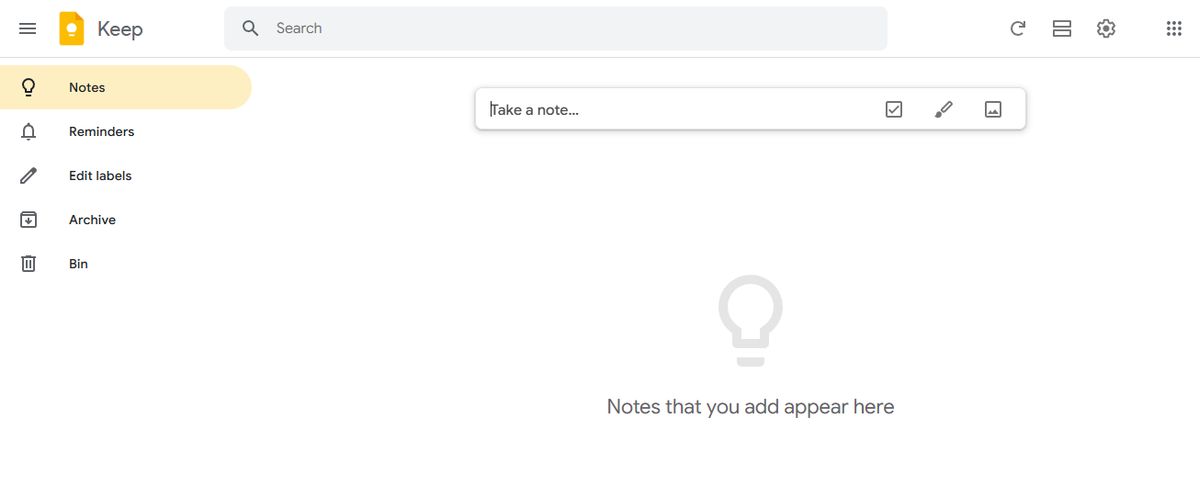
Google Keep allows users to effortlessly capture content, including notes, lists, photos, and audio, and organize it on a digital bulletin board. Sharing notes among family and friends is simple. For example, you can share a shopping list and see updates in real-time as items are checked off—there is no need for back-and-forth communication. I like Google Keep’s voice note feature. When I’m in a rush and need to jot down something important,
I can record a voice memo instead and transcribe it into text later, faster and efficiently! Like Apple Notes, anything more complex or advanced you want from the tool is a struggle. You might think Google would make more effort to combine the Keep experience with Google Tasks and Calendar, but it hasn’t happened. They continue to be disparate experiences, which can be frustrating if you want an all-in-one software or expertise.
Best Features
- Get reminded of your to-dos at the right place and at the right time with time-based and location-based reminders.
- Organize notes using labels and colors.
- Integrate your notes seamlessly with Google Docs, Calendar, and other apps within the Google ecosystem.
Limitations
- More suitable for quick notes rather than detailed, lengthy note-taking.
- The features are too basic for complex note organization.
7. Obsidian: The Best Personal Knowledge Base Tool
With a focus on visual note-taking, Obsidian’s Canvas plugin (available for free for Obsidian users) drew me in. I could draw diagrams to lay out project plans, brainstorm new ideas, and add images and PDFs directly within my notes. Another interesting feature that stood out to me was the ability to visualize relationships between my notes through a graphical presentation. For example, I had written down multiple blog post ideas related to content marketing. With the interactive graph, I could quickly identify similar ideas and locate a pattern within my ideas.
Best Features
- Create connections between multiple notes and create a knowledge repository.
- Access notes offline (Obsidian Sync merges the changes when the internet connection is available).
- Track the version history of notes for up to one year.
Limitations
- Ideal for personal use; not so much for collaborative work.
8. Rodeo Drive: The Best Note-Taking App for Project Management

Rodeo Drive is a project management tool with multiple features that support creative teams. It ends fragmented workflows and guides your projects from beginning to end using one data-driven interface. Rodeo Drive emphasizes organization and financial management. You can take notes on your projects, manage your team’s workload with accurate task scheduling, and use calendar-based project management to keep everyone on the same page.
Best Features
- Streamline team collaboration and project management with straightforward task assignment features, project timelines, and a simple note-taking app.
- Get insights on your projects using the reporting function to oversee tracked time and team performance.
- Integrate with QuickBooks and Xero to streamline your bookkeeping process.
Limitations
- The free plan is limited to 10 users and lacks access to some advanced features.
- Some users report a lack of features compared to other note-keeping apps.
9. Google Keep: The Quick Note-Taking App
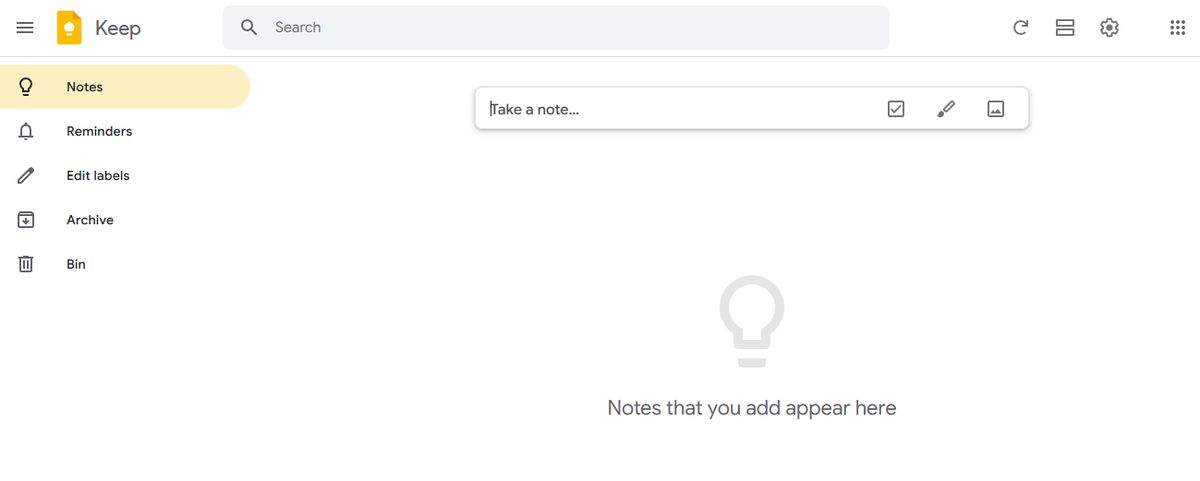
Google Keep allows users to effortlessly capture various content, including notes, lists, photos, and audio, and organize it all on a digital bulletin board. Sharing notes among family and friends is simple. For example, you can share a shopping list and see updates in real time as items are checked off—there is no need for back-and-forth communication.
I personally like Google Keep’s voice note feature. When I’m in a rush and need to jot down something important, I can simply record a voice memo instead and transcribe it into text later—fast and efficient! Like Apple Notes, anything more complex or advanced you want from the tool is a struggle. You might think Google would make more effort to combine the Keep experience with Google Tasks and Calendar, but it hasn’t happened. They continue to be disparate experiences, which can be frustrating if you want an all-in-one software or expertise.
Best Features
- Get reminded of your to-dos at the right place and at the right time with time-based and location-based reminders.
- Organize notes using labels and colors.
- Integrate your notes seamlessly with Google Docs, Calendar, and other apps within the Google ecosystem.
Limitations
- More suitable for quick notes rather than detailed, lengthy note-taking.
- The features are too basic for complex note organization.
10. Document360: The Best Note-Taking App for Knowledge Management
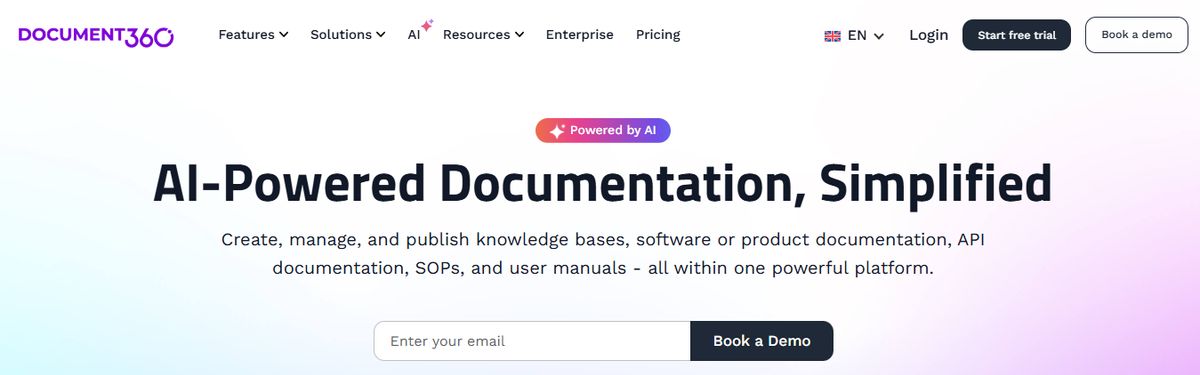
Another all-in-one workspace software for building customizable knowledge bases is Document360. This software helps you personalize your knowledge base with branded colors. It helps create dynamic, searchable, multilingual user manuals, SOPs, how-to guides, and other documents. Ideal for professionals seeking to streamline documentation processes, Document360 offers a user-friendly interface that caters to technical and non-technical users. Plus, it gives AI functionalities to simplify tackling all documentation needs.
Best Features
- Improve the context and relevance of documentation with real-time AI feedback.
- Get insights into user behavior and content effectiveness to optimize knowledge management strategies.
- Connect with popular tools like Slack, Microsoft Teams, Zendesk, and Intercom to build a cohesive workflow across platforms.
Limitations
- A few features are only available through costly add-ons.
- New users might require time to fully leverage the platform’s extensive capabilities.
Related Reading
Constella is changing the way we take notes. This innovative tool features an infinite canvas that allows you to capture and connect ideas effortlessly, powered by AI search that makes finding information instantaneous. Whether you're a researcher trying to draw connections across numerous papers or someone who wants a more intuitive way to organize their thoughts and files, Constella's AI assistant helps you build and navigate your knowledge base without the constraints of traditional folder structures.
Constella transforms how you capture, find, and connect your ideas, perfect for busy knowledge workers and researchers limited by conventional note-taking tools. Research 10 times faster with Constella's AI notes manager.
Related Reading
- Notion vs Apple Notes
- Evernote vs Apple Notes
- Obsidian vs Notion
- Apple Notes vs Google Keep
Want more insights like this?
Subscribe to get short productivity tips and useful summaries of new tools every week.
Want more insights like this?
Subscribe to get short productivity tips and useful summaries of new tools every week.