Bullet journaling has earned a loyal following as an analog organizational system—one notebook, a set of symbols, and the promise of streamlined productivity. The appeal is obvious: you get structure, creativity, and a tangible history of your thoughts. Yet many people find themselves stuck in the same loop—perfectionism creeps in, spreads across layouts, and suddenly the journal becomes intimidating or even abandoned. The complexity of maintaining perfect spreads often overshadows the original intent of clarity and reflection.
A brain-compatible bullet journal shifts this mindset. Instead of forcing your thoughts into rigid templates, it adapts to how your mind naturally captures ideas—messy, nonlinear, intuitive. For anyone seeking a daily reflection or self reflection journal that feels like an extension of your thinking process rather than a chore, this approach offers relief.
This article explores why structured systems like traditional bullet journals can become counterproductive and how you can build a more organic alternative tailored to your brain’s unique workflow.
The Limitations of Traditional Bullet Journals

The original bullet journal method offers an analog system for organizing tasks, events, and notes. Its structure includes several key components:
- Future Log: A space to jot down tasks or events scheduled for upcoming months.
- Monthly Log: A calendar view combined with a task list to plan out the month.
- Daily Logs: Daily entries that use symbols like dots for tasks, circles for events, and dashes for notes.
Benefits of Using a Bullet Journal
Using a bullet journal can provide several benefits:
- Externalizing Memory: Writing tasks and thoughts helps free up mental space.
- Reducing Anxiety: Having a clear visual representation of your schedule can alleviate stress.
- Enhancing Creativity: The process of handwriting engages different parts of the brain, fostering creativity.
Drawbacks and Challenges
Despite its advantages, traditional bullet journaling also has notable drawbacks:
- Time-Consuming: Drawing charts and maintaining the structure can be tedious.
- Pressure for Perfection: The need to keep the journal neat can lead to overwhelm.
- Limited Flexibility: The rigid format may not accommodate spontaneous insights or organic thought flow effectively.
These limitations often make traditional bullet journals less appealing for those seeking a more fluid and adaptable reflection journal. The pressure to maintain an aesthetically pleasing page layout can detract from the primary purpose of self-reflection and organization.
The Problem with Perfectionism in Structured Journals
Perfectionism in structured journals runs deep, especially for those who crave order and clarity but find themselves tangled in the details. Rigid templates and pre-designed spreads often become a double-edged sword. While they promise consistency, these same structures can amplify anxiety about “doing it right.” Missing a day, smudging ink, or deviating from the template can leave your daily reflection journal feeling like a record of failure rather than growth.
Common signs that perfectionism is stifling your journaling practice include:
- Stalling entries: You delay writing because the page setup isn’t perfect.
- Rewriting or erasing: Pages are rewritten for neatness, slowing genuine reflection.
- Guilt over gaps: Missed days or incomplete trackers create a sense of falling behind.
This mindset not only reduces enjoyment but also undermines the sustainability of keeping a daily or self reflection journal. Instead of being a supportive tool, the journal turns into another standard you must meet, increasing mental clutter rather than clearing it.
Structured layouts—grids, boxes, color codes—offer visual satisfaction but can restrict organic thought flow. Genuine insights often emerge in moments of chaos: messy handwriting, half-finished sentences, tangents that veer off prescribed prompts. A rigid format rarely accommodates the unpredictable bursts of creativity or emotional nuance that surface during deep self-reflection.
Your brain doesn’t think in straight lines or bullet points. Forcing ideas into tight structures means valuable thoughts might never make it to the page.
Organic journaling methods allow room for imperfection, capturing fleeting insights that might otherwise be lost to rigidity. Letting go of perfection opens up space for authentic reflection—a critical shift if you want your daily reflection journal to feel like an ally instead of another obligation.
Introducing Brain-Compatible Journaling: A More Natural Approach

Brain-compatible journaling supports natural cognitive processes rather than enforcing rigid structures. Traditional bullet journaling can feel restrictive due to its emphasis on perfection and meticulous organization.
A brain-compatible bullet journal embraces flexibility and spontaneity. This method involves capturing inspiration as it strikes, without worrying about predefined layouts. Simple signifiers like asterisks for important points or spontaneous notes jotted down in the moment foster a more organic flow of thoughts.
Key techniques include:
- Using simple signifiers: Instead of complex symbols, use straightforward markers to highlight key ideas.
- Spontaneous notes: Allow yourself to jot down thoughts as they come, rather than confining them to specific sections or pages.
- Freeform entries: Write in a non-linear fashion, connecting ideas naturally as your thoughts evolve.
This approach aligns with how the brain works, creating a more intuitive and enjoyable journaling experience. It reduces the pressure of maintaining a perfect structure and enhances creativity through unstructured reflection.
From Document-Based Note-Taking to Organic Thought Connections
Traditional document-based note-taking—whether ruled notebooks, A4 sheets, or digital files—locks your thoughts into rigid boundaries. You’re forced to work within the confines of linear pages and static structures. This approach makes it harder to journal for reflection in a way that mirrors how your mind actually works.
Your brain doesn’t operate on a single page. Instead, it thrives on an infinite canvas—a neural landscape where ideas spark across contexts and connect unpredictably. Context-based neurons allow you to jump between memories, link unrelated concepts, and synthesize knowledge through visual and spatial cues.
A paper notebook can’t stretch its boundaries when a thought branches out sideways or backwards; your mind expects freedom to roam.
Digital tools that mimic infinite canvases come closer but often still demand manual tagging and document creation before you can see connections emerge. To truly journal for reflection in a brain-compatible way, your system needs to support organic thought flows instead of boxing them in with document limitations.
Enhancing Reflection with Connected Knowledge Systems
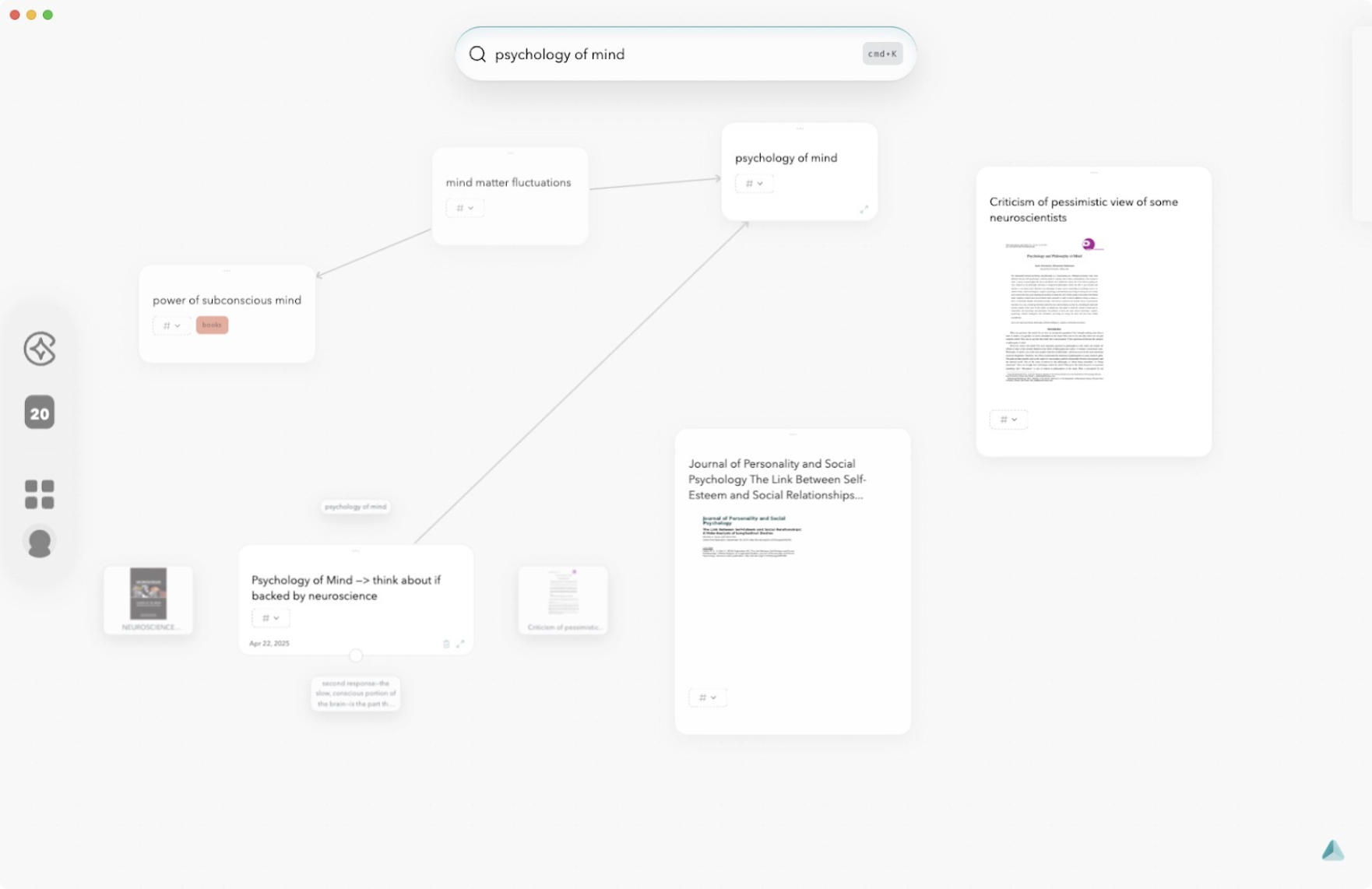
Enhancing reflection with connected knowledge systems shifts the focus from isolated note-taking to creating a living network of ideas. When you deliberately link related thoughts across different entries, journaling transforms from a static record into an evolving map of self-awareness. This approach helps surface patterns, recurring themes, or even overlooked insights that might remain hidden in traditional linear journals.
Techniques for Connecting Thoughts:
- Visual Mapping: Use arrows, mind maps, or branching diagrams in your journal margins or digital tools to tie related concepts together.
- Tagging and Indexing: Assign unique tags or symbols to recurring topics (e.g., #motivation, #setback) so you can trace their trajectory across different dates.
- Conceptual Threads: Write “see also” references within entries to point toward earlier notes on similar topics, drawing explicit bridges between ideas.
“A journal that connects its own contents becomes more than a diary—it’s a personal knowledge system that mirrors the way your brain makes sense of experience.”
With these practices, your reflection process gains depth and flexibility. Instead of compartmentalizing your thoughts by date or page number, you start weaving a tapestry of meaning that grows richer each time you engage with it.
Practical Tips for Creating Your Own Brain-Compatible Reflection Journal

Creating a brain-compatible reflection journal doesn't have to be complicated. Here are some practical tips to get you started:
Start Simple
Focus on capturing key thoughts and ideas without worrying about elaborate layouts or perfect symbols. Allow your journal to be a space for free-flowing thoughts rather than a meticulously structured document.
Personalize Your Trackers
Use trackers that reflect your individual cognitive style. This could include goal charts, emotion logs, or any other personal metrics that help you stay organized and reflective. Customizing these elements can make the journaling process more engaging and relevant to you.
Key Elements to Include
- Spontaneous Notes: Embrace spontaneity by jotting down thoughts as they come to you. Avoid the pressure of fitting ideas into predefined categories or formats.
- Simple Signifiers: Develop your own simple signifiers or symbols to quickly mark different types of entries, such as tasks, ideas, or reflections. This keeps your journal intuitive and easy to navigate.
Examples of Personalization
- Goal Charts: Create visual representations of your goals and progress. This could be as simple as a list with checkboxes or more detailed charts if that suits your style.
- Emotion Logs: Track your emotions daily or weekly to gain insights into patterns and triggers. Use colors, icons, or brief descriptions to capture your emotional state.
By keeping these tips in mind, you can develop a journaling practice that aligns with how your brain naturally processes information, making it both effective and enjoyable.
How the Constella App Supports a Brain-Compatible Journaling Approach
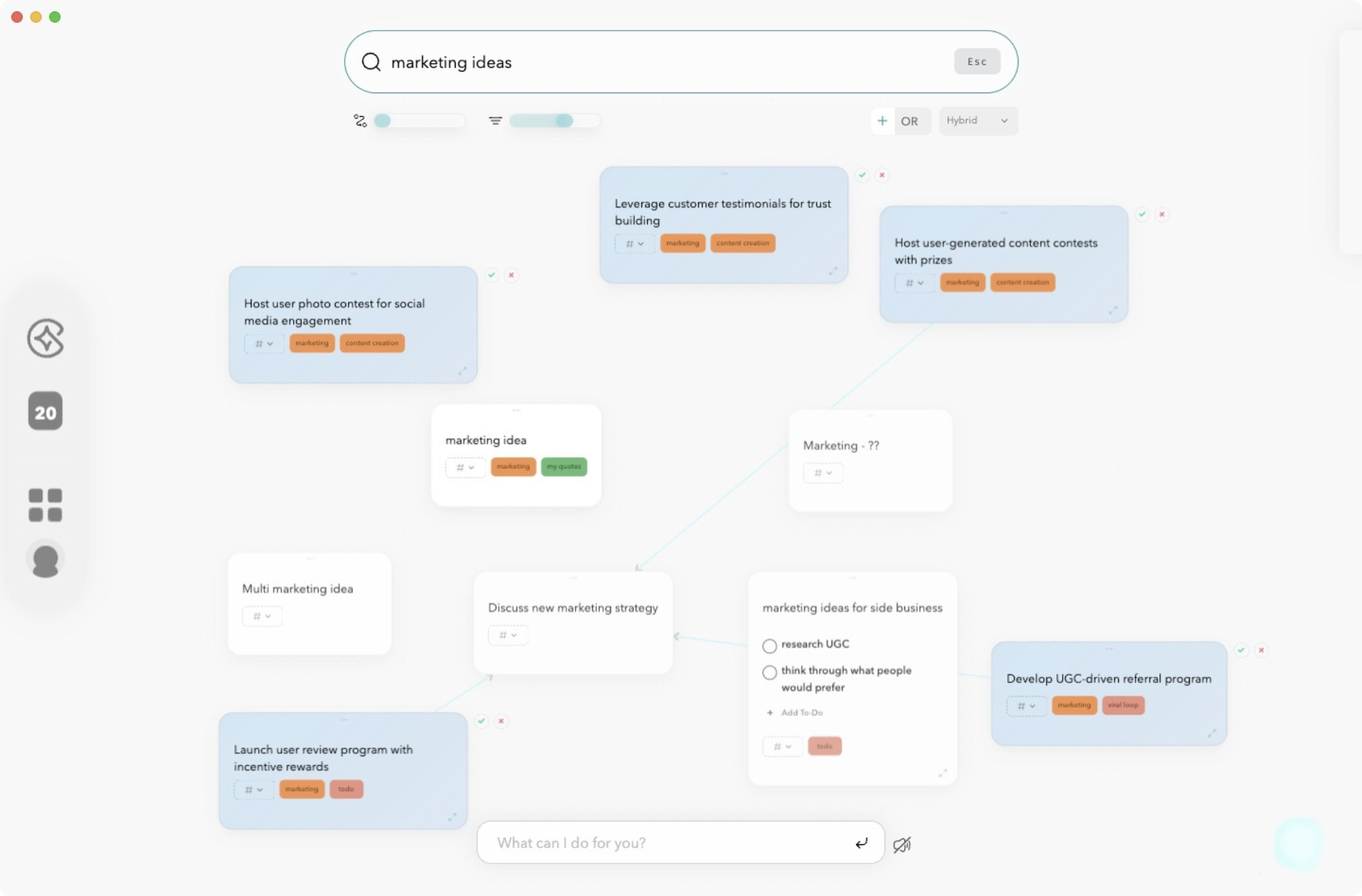
Most note apps force you into rigid structures. Constella does the opposite. It’s designed around how your brain actually works: associative, visual, and non-linear. That makes it an ideal space for capturing thoughts, journaling, and building meaning over time.
Here’s how:
- Graph-first thinking – Instead of rows of disconnected pages, Constella lets you map ideas in a visual graph. This mimics how memory and thought are formed—through connections. You can zoom out, move freely, and follow your thinking wherever it goes.
- Automatic note suggestions – When you write a note, Constella doesn’t just store it. It analyzes your words and suggests relevant links from your existing thoughts—so insights naturally resurface without you needing to remember them.
- Flexible structure, zero pressure – You can drag notes around, cluster related thoughts, or just jot down raw fragments. There’s no right way to do it—and no need to maintain rigid templates. This freedom makes journaling feel lighter and more intuitive.
- Context that grows with you – Over time, your notes don’t just accumulate—they evolve into a dynamic reflection of your interests, patterns, and goals. That makes revisiting them more insightful, not just nostalgic.
Whether you’re journaling for clarity, capturing ideas for a project, or tracking your mental state over time, Constella is built to help you think—not just write.
Conclusion: Rethinking the Bullet Journal
A brain-compatible bullet journal frees you from the constraints of rigid perfectionism, unlocking authentic creativity and sharper self-reflection. When you move past the anxiety of perfect layouts and lean into an organic, connection-driven process, journaling becomes a tool for insight rather than a source of stress.
- Creativity flourishes in systems that allow ideas to flow and connect naturally.
- Mental clarity improves when your notes mirror how your mind organizes memories—by association, not arbitrary structure.
- Analog and digital methods can work together; rapid sketches or pen-and-paper notes are easily complemented by visual, AI-powered tools like Constella.
Let your journaling system serve your brain—not the other way around.
Experiment with integrating flexible analog journaling with graph-based digital solutions. The right approach puts reflection, clarity, and personal growth within reach—no perfect bullet journal templates required.
FAQs (Frequently Asked Questions)
What is a brain-compatible bullet journal and how does it differ from traditional bullet journals?
A brain-compatible bullet journal is an analog journaling approach designed to align with natural cognitive processes, offering a more flexible and organic alternative to traditional bullet journals. Unlike traditional systems that emphasize rigid structures and perfectionism, brain-compatible journals encourage spontaneous note-taking and simple signifiers, supporting natural thought flow and reducing overwhelm.
What are the common challenges associated with traditional bullet journaling methods?
Traditional bullet journaling often involves complex chart drawing, strict layouts like Future Logs and Monthly Logs, and pressure to maintain perfect organization. These factors can lead to perfectionism, increased time consumption, reduced enjoyment, mental clutter, and difficulty sustaining consistent journaling practice.
How can brain-compatible journaling enhance self-reflection and creativity?
Brain-compatible journaling supports natural cognitive functions by allowing spontaneous notes and simple symbols instead of rigid structures. This flexibility facilitates organic thought connections, encourages creativity through handwriting, reduces anxiety by externalizing memory, and enriches self-awareness through linked reflections rather than isolated notes.
What practical tips can help me create my own brain-compatible reflection journal?
Start simple by focusing on capturing key thoughts without elaborate layouts or perfect symbols. Personalize your journal with trackers such as goal charts or emotion logs that reflect your individual cognitive style. Embrace flexibility over perfection to foster creativity and maintain sustainable journaling habits.
How does the Constella App support a brain-compatible bullet journaling approach?
Constella is an AI-powered personal knowledge manager built around a graph-first infinite canvas that mimics organic thought linking. It automatically organizes and connects notes without manual tagging, enabling effortless insight generation. Its visual graph interface allows drag-and-drop connections, enhancing reflection by replicating the brain's natural way of linking ideas.
Why is integrating analog methods with digital tools beneficial for journaling success?
Integrating analog journaling methods with digital tools like Constella combines the tactile benefits of handwriting with advanced organizational features. This holistic approach enhances creativity, mental clarity, and self-reflection by supporting natural cognitive processes while providing powerful tools for connecting ideas and managing knowledge efficiently.
Want more insights like this?
Subscribe to get short productivity tips and useful summaries of new tools every week.
Want more insights like this?
Subscribe to get short productivity tips and useful summaries of new tools every week.