Personal knowledge management (PKM) is how you catch what you learn, keep it, and get it back at the right time. Smart glasses do not replace that system. They help at the two spots where most systems are weakest: catching a thought the moment it shows up, and bringing an old note back while you are still in the room.
Key takeaways
- Personal knowledge management has three jobs: catch, connect and bring back. Most apps are good at the middle job and weak at both ends.
- Display glasses like Even G2 make catching a thought as easy as saying one sentence.
- An AI second brain on the lens can answer a short question from your own notes, which turns "review" into something that happens in the moment.
- Glasses are bad at long notes, editing and deep thinking. Keep those at a desk.
- The safest setup: glasses feed your existing system. They are not the system.
Updated November 2026
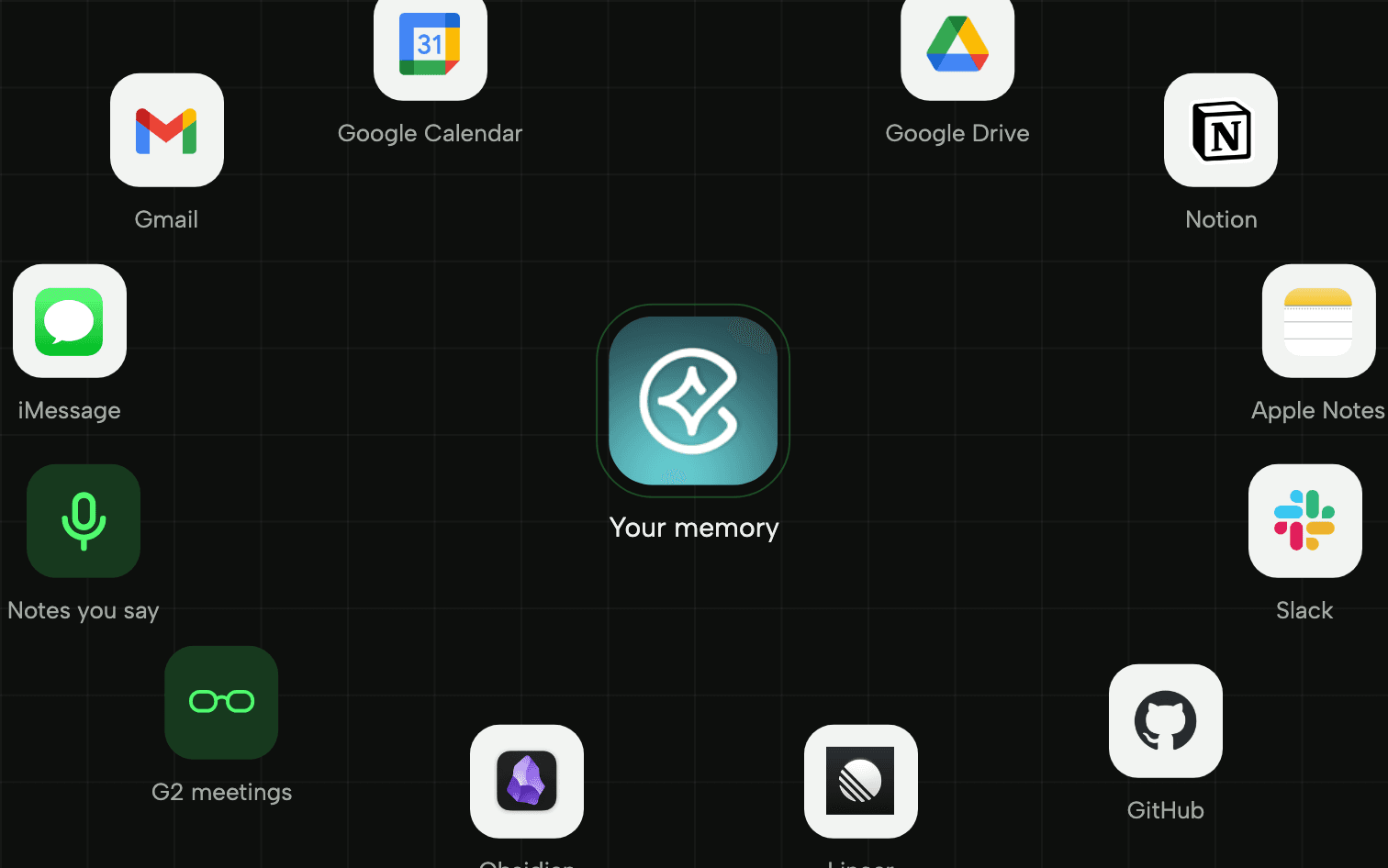
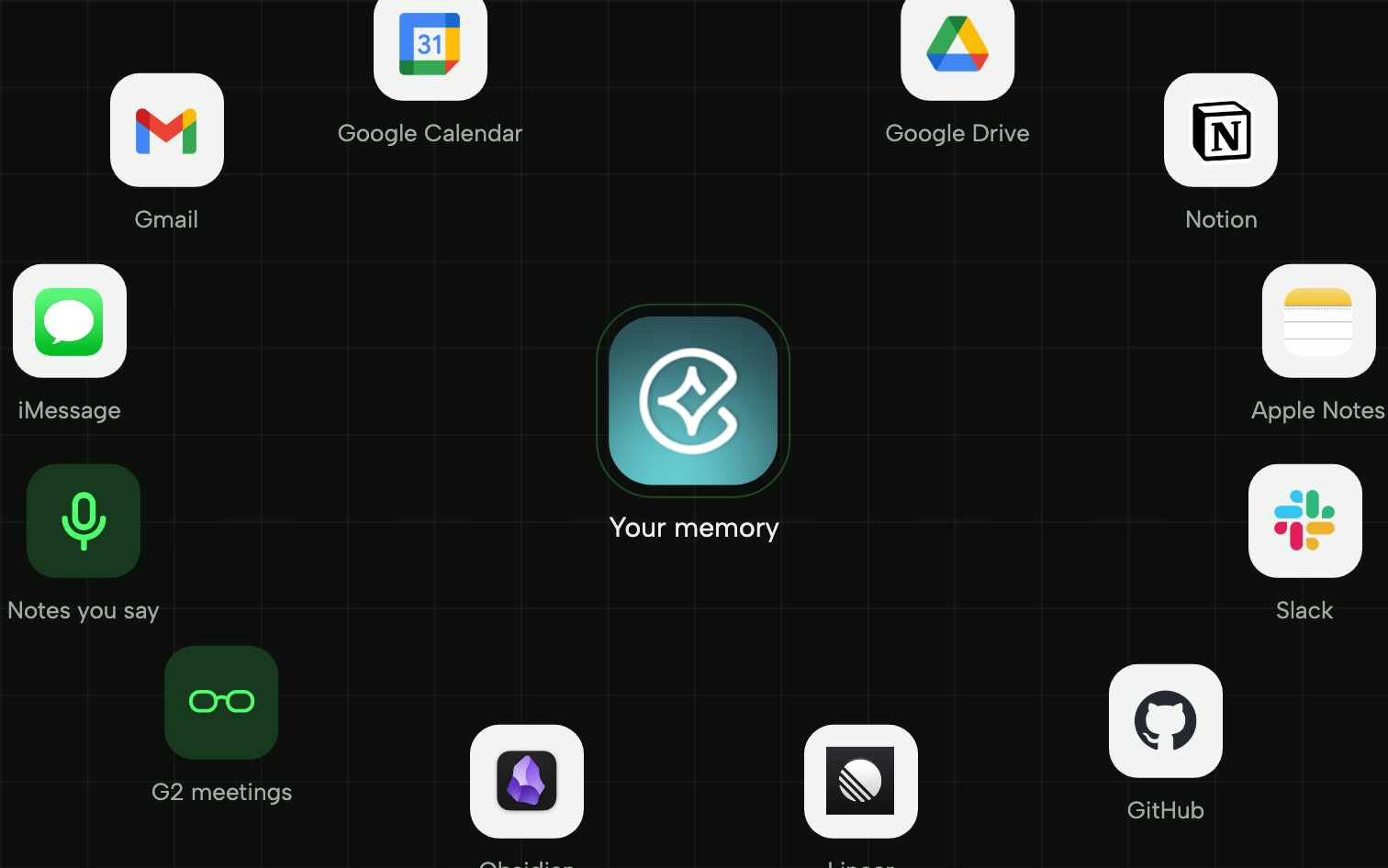 The apps that feed one memory you can ask, Obsidian among them. Source: constella.app
What is personal knowledge management?
Personal knowledge management is a simple habit with a fancy name. You collect things you learn. You keep them somewhere you can find them. You bring them back when they matter. One guide from Tango sums it up as how we "collect, sort, store, search, recall, and share information" (Tango).
The idea is old. In 1945, Vannevar Bush described a desk he called the memex: "an enlarged intimate supplement to his memory" (Wikipedia, Memex). His reason still rings true: "The human mind does not work that way. It operates by association." In the same essay he even pictured a researcher wearing a small camera on his forehead, "a lump a little larger than a walnut." So the first plan for a personal knowledge machine already had something worn on the head.
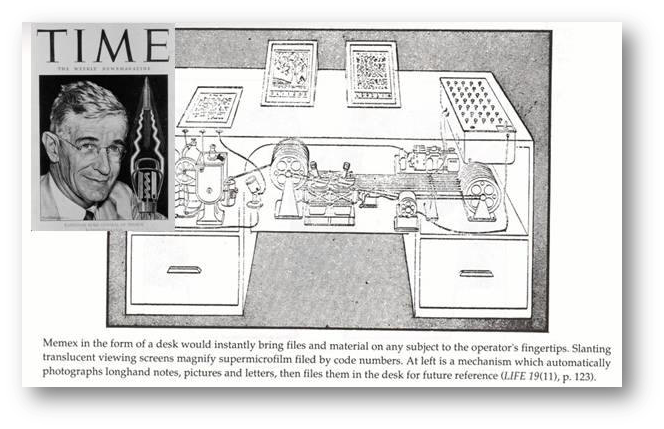 The memex as Life magazine drew it in 1945: a desk-sized memory with screens, levers and a camera. Source: Brown University
Later came paper and then apps. Niklas Luhmann filled about 90,000 index cards over his career and credited that box with helping him write about 50 books (Wikipedia, Zettelkasten). Today people use apps like Obsidian, Notion, Logseq and Readwise. If you want a tour of those tools, see our list of PKM tools.
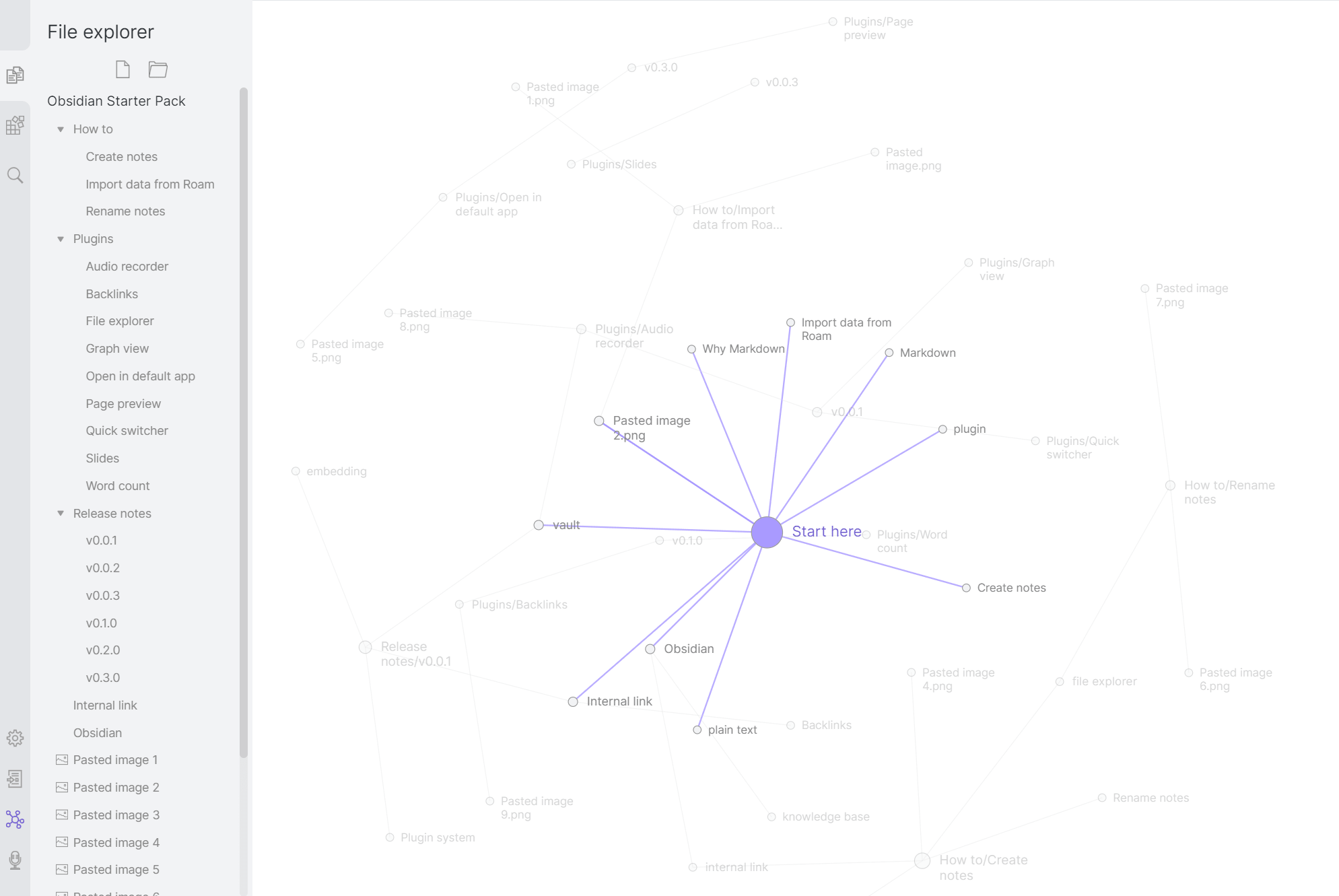 Obsidian's graph view, the picture of a linked vault that many PKM users build for years. Source: Obsidian Help
Let's follow one person through this post. Say you are Maya, a consultant. You keep client notes in Notion and ideas in Obsidian. Today you have four client calls, a coffee chat with someone you met twice, and a long walk between two buildings. Keep her in mind.
What has personal knowledge management always been missing?
Most PKM apps live on a desk or inside a phone. Good ideas do not. Maya's best idea today will show up in a hallway after her second call. By the time she opens her laptop, it will be a blurry shape.
The other end hurts too. Before her coffee chat, Maya needs one fact: what did this person ask about last time? The note exists. But she would have to stop, pull out her phone, unlock it, search and read. In a hallway, with someone walking toward her, that does not happen.
Tiago Forte, who made the phrase "second brain" popular, calls note taking a way to "send it through time to our future self." In a recent video he added a fifth step, review, to his CODE method (Capture, Organize, Distill, Express). Without review, he says, "99% of the value of all those experiences is lost" (Tiago Forte on YouTube).
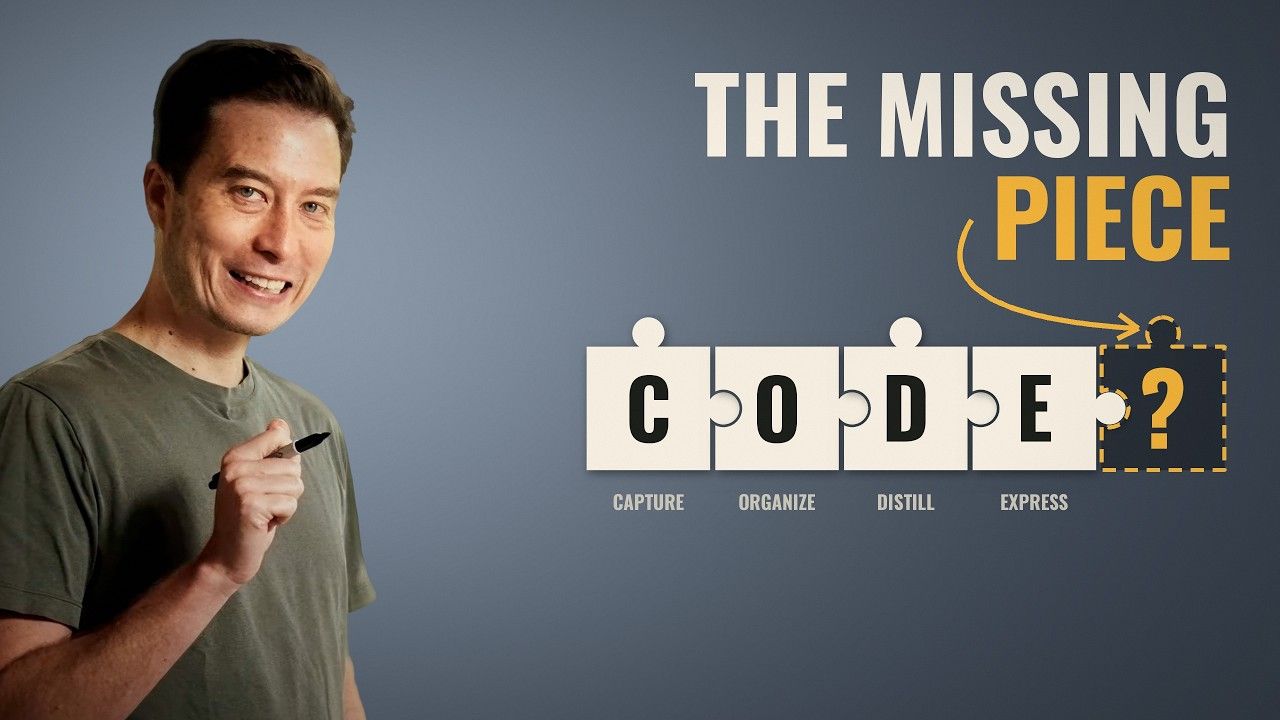 Forte's CODE method, with the missing fifth step he later named: review. Source: Tiago Forte on YouTube
That is the gap. We have great tools for organizing. We have weak tools for the moment a note should come back.
How do smart glasses help you capture ideas?
On display glasses, you do not type. You talk. On Even Realities' first pair, the G1, a long press on the right arm records a voice note of up to 30 seconds. The glasses turn it into text and a short summary.
In a one-month review (sponsored by Even Realities, so weigh it), the TechEdit host says the voice note was the feature he used most. In a loud restaurant it "transcribed it near perfectly." He wrote much of that video's script as short spoken notes, then put them together later (TechEdit on YouTube).
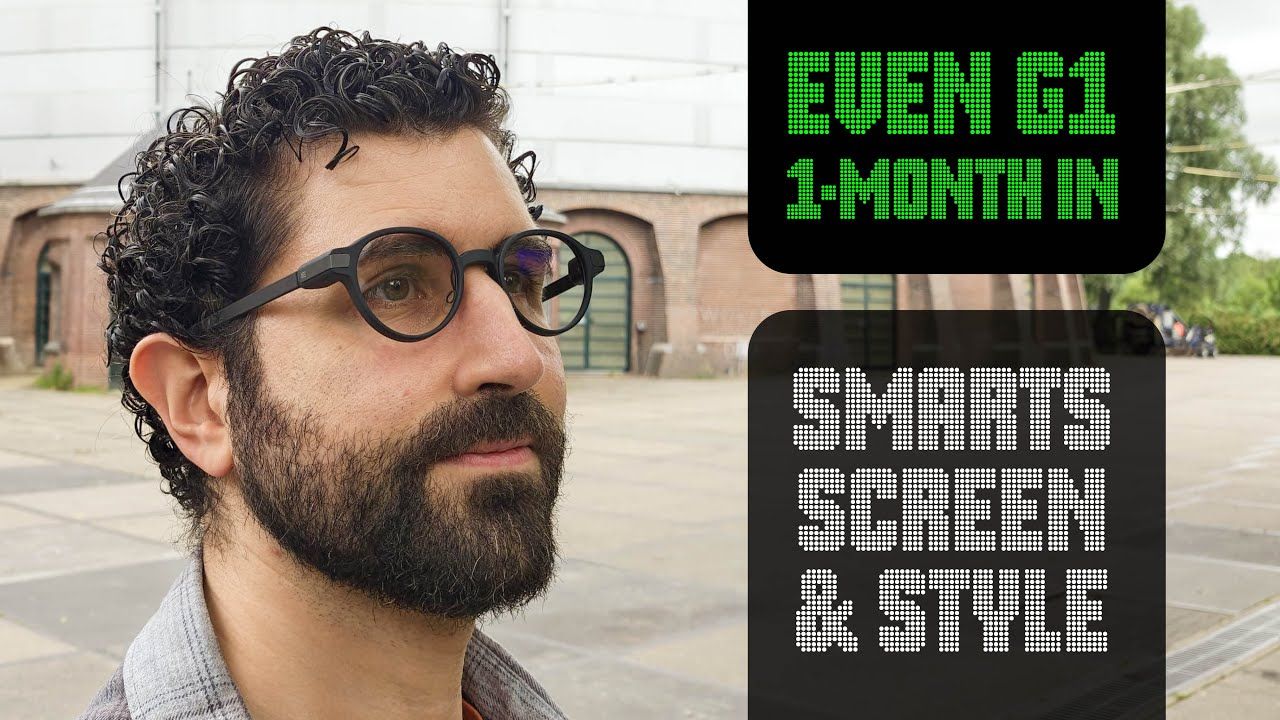 The month-long G1 review where voice notes were the most used feature. Source: TechEdit on YouTube
Back to Maya. The hallway idea shows up. She taps, says one sentence, and keeps walking. The lens shows one line so she knows it was saved.
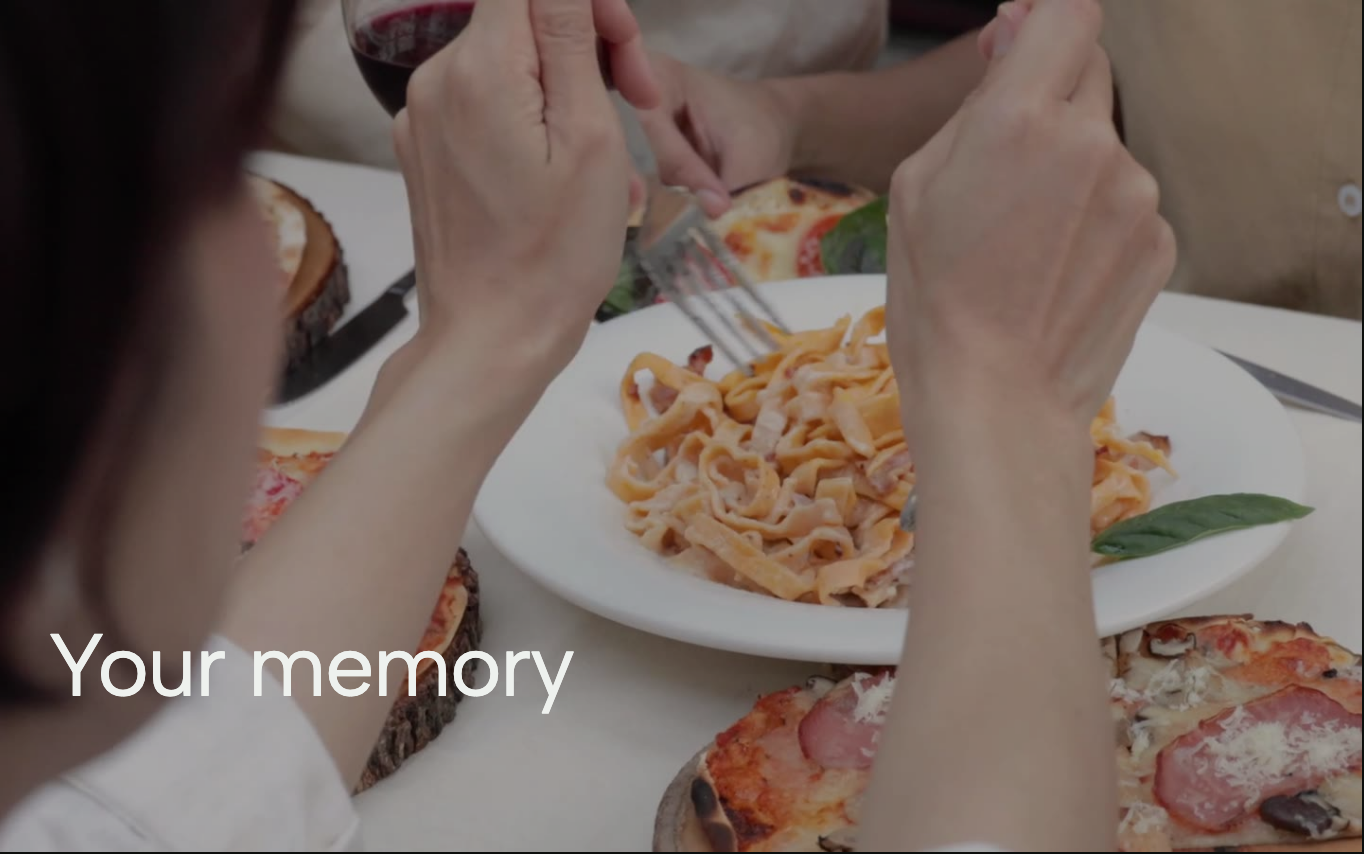 Your memory: ask about anything in your email, calendar, notes and past meetings. Source: constella.app
Now the catch. The same reviewer notes that on the G1 "you're not going to see the full note in your field of vision. Just a truncated preview." Voice notes are fast but thin. You can say a sentence. You cannot rewrite a paragraph or link two ideas by hand. So glasses are great for quick, rough notes and poor for finished ones. Treat them as an inbox.
How do smart glasses help you remember at the right moment?
This is the newer part, and the bigger change. An AI second brain is an app that reads your notes, email and meetings, and answers questions about them in plain words. Put that on a lens, and review can happen in the four seconds before you shake someone's hand.
The screen is small. In Even Realities' own G2 tutorial, the lens shows one green box with your question in dim text and about four short lines of answer below it (Even G2 Tutorial: Even AI). There is no room for a document. There is room for one fact.
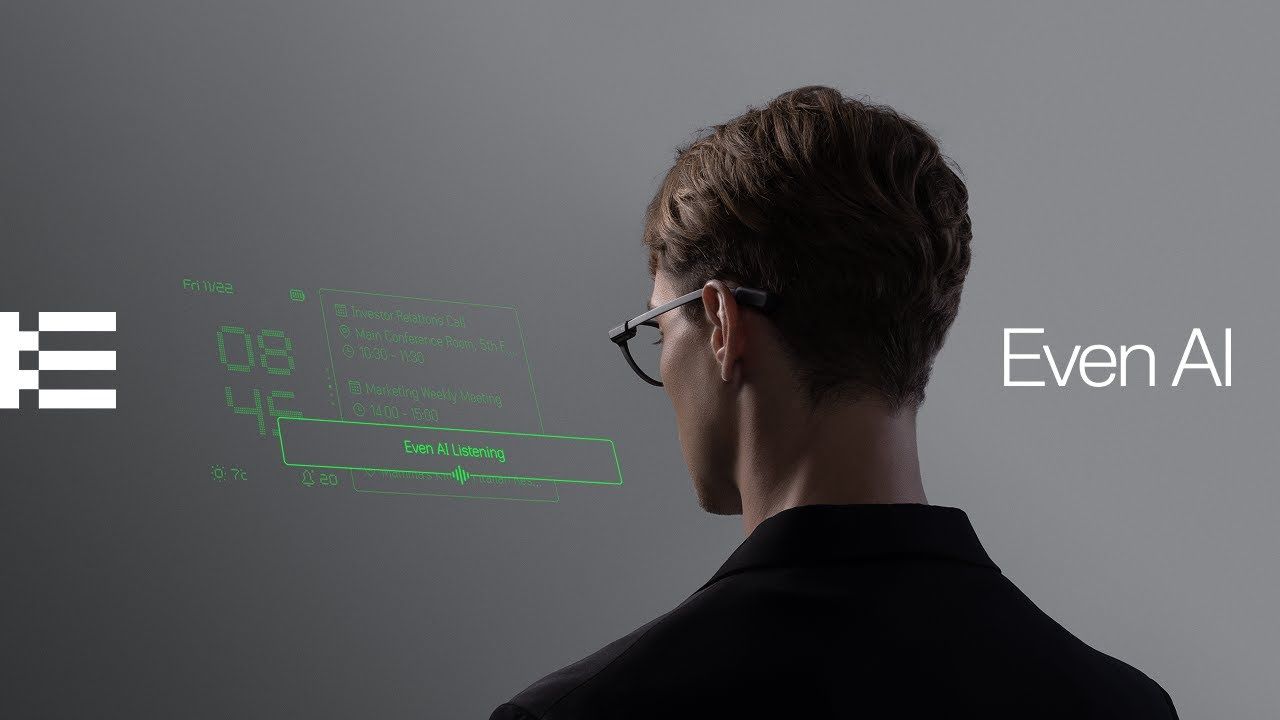 Even Realities' own tutorial: one listening box, then a few short lines of answer. Source: Even Realities on YouTube
Even Realities has been moving toward personal memory as well. Its October 2026 update (V2.4.0) added a Knowledge Base built from past Conversate sessions and uploaded files. As Android Headlines puts it, "You decide what to add, update, or remove" (Android Headlines). Not everyone is sold on the built-in AI yet. Six months in, Tech with Spencer says it "gets by with basic questions, but it still isn't amazing. I would much rather use my own agent" (Tech with Spencer on YouTube).
Here is a worked example of the recall step, using the app we make (so read it with that in mind). Constella runs on Even G2 and links your email, calendar, Drive, Notion and Slack into one memory, and you can bring in an Obsidian vault as an import. Maya taps, asks "what did Diane say about the pilot?", and the answer shows up on the lens from her own notes and email.
The useful idea here is not one app. It is that the "connect" job, which Luhmann did by hand on paper cards, can now happen in the background. People, places and dates get linked across apps, so one question can pull from an email and a meeting at once.
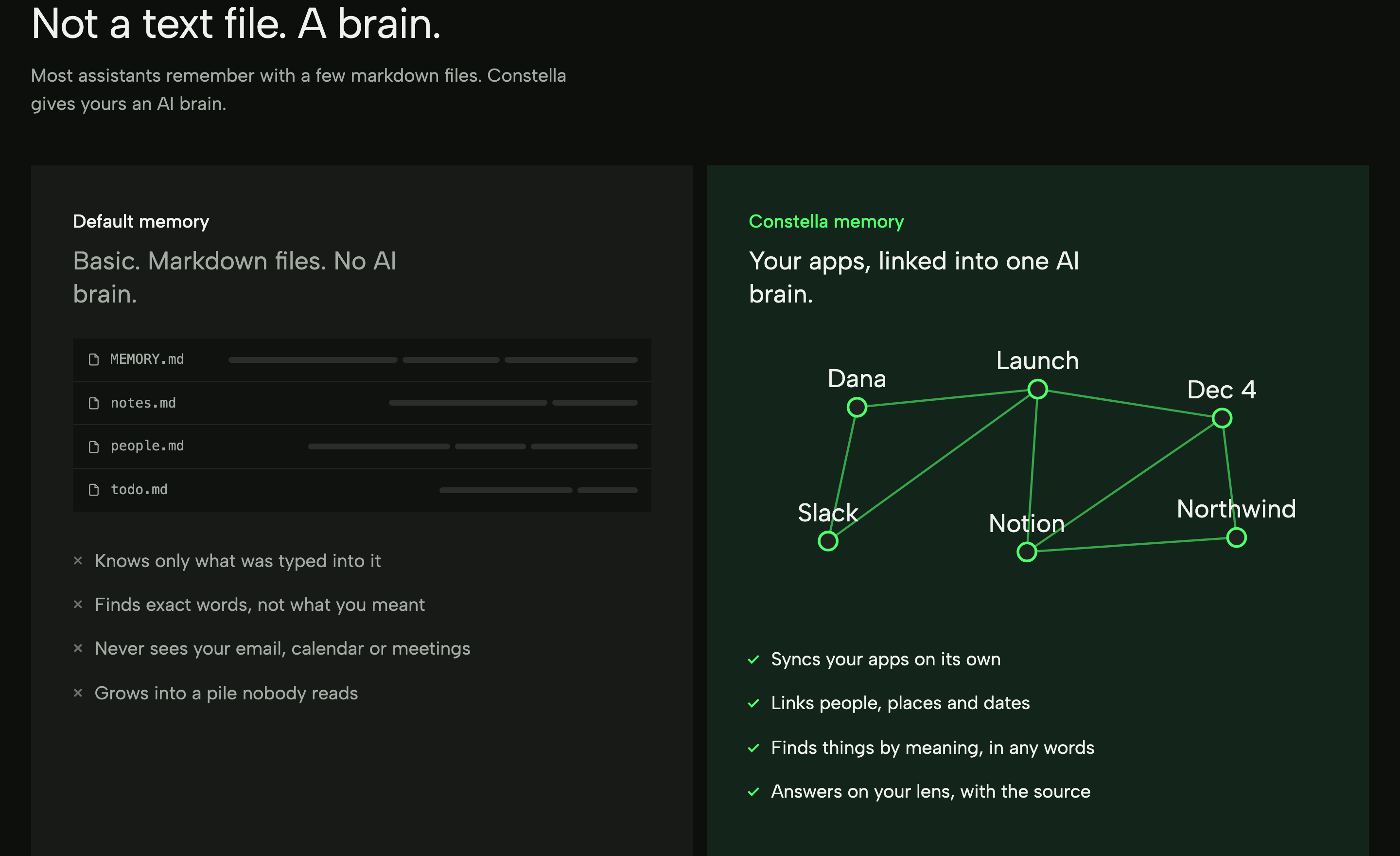 A plain pile of text files versus a linked memory. The linked kind is what makes short questions on a small lens work. Image: our app's page.
Is an AI second brain still personal knowledge management?
This is where PKM fans argue, and they should.
Some say AI finished the job. In a 2023 essay, Dan Shipper predicted "the end of organizing," with AI sorting notes for us (Every). In a r/PKMS thread, one reader said tags only answered "How will I find this later?" and that "AI search solved that." Others pushed back: a lot of PKM is journaling and personal thinking, and AI does not belong there.
Others warn against saving everything. In 2025, writer Joan Westenberg deleted her whole Obsidian vault, thousands of notes. "Instead of accelerating my thinking, it began to replace it," she wrote, and "my second brain became a mausoleum" (Joan Westenberg). Andy Matuschak makes a calmer version of the point: saving things "feels like progress, but we systematically overrate its value" (Andy Matuschak's notes).
Glasses push both ways at once. Saying a note costs almost nothing, so you will save more junk. But getting a note back costs almost nothing too, so review finally happens. Our honest answer: an AI second brain is part of PKM when it feeds your thinking. It stops being PKM when it replaces the thinking.
Where do smart glasses fall short for PKM?
Smart glasses fall short in five places today. Plan around them.
| Weak spot | What it means for your notes |
|---|---|
| No typing or editing | You can say a thought. Long notes and rewrites still happen at a keyboard. |
| Small green text | Even G2 shows short green text. Spencer reports owners getting "tired from reading along" during long captions. |
| Privacy | Even G2 has no camera, which helps. A microphone in a meeting still needs everyone's OK. |
| Needs a phone | Even G2 runs through the Even app on your phone. It is not a stand-alone computer. |
| Cold start | A new AI memory knows little until you connect your apps. A messy vault gives messy answers. |
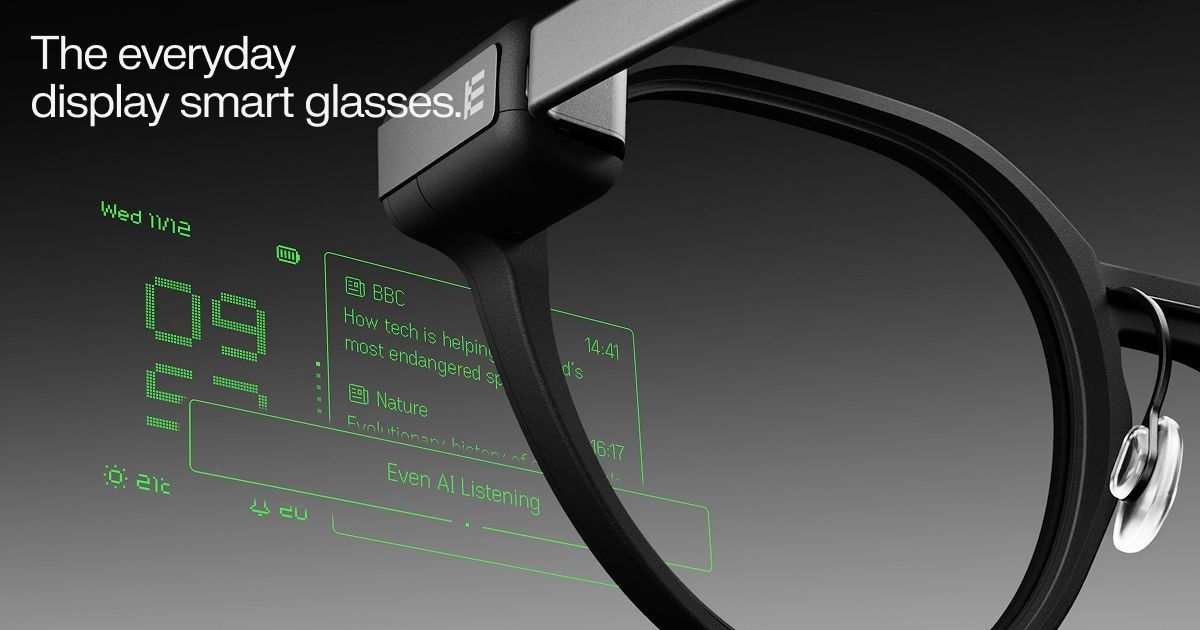 The whole screen is a few lines of green text, which is why long notes stay on a computer. Source: Even Realities
There is a human cost too. In Reddit threads about meeting capture, one person worried that trying to catch every word makes you miss what people mean. A tool for remembering talks can make you worse at having them.
How do you set up glasses so they feed your PKM?
Keep it simple. Glasses catch and recall. Your desk is where thinking happens. Here is Maya's week, step by step.
- Pick what the glasses may catch. Only two things: one-sentence ideas, and meetings where everyone agreed to be recorded.
- Send every spoken note to one inbox. Use a short pattern so notes are easy to sort later, like "Save: who, what, by when." Example: "Save: follow up with Diane before Friday."
- Connect the sources you already trust. Recall only works if the memory has your real material: email, calendar, meeting notes, your notes app.
- Practice three short questions. A four-line lens rewards short asks. Try "What did Diane ask for last time?", "When is my next meeting with Sam, and what is it about?" and "What did we decide about the pilot last week?"
- Keep a weekly review at the desk. On Friday, Maya opens the inbox, deletes what does not matter, and turns the best three ideas into real notes in Obsidian. This is Forte's fifth step. Glasses cannot do it for you.
If you want to know what else the hardware does beyond notes (captions, translation, a teleprompter), see what Even G2 can do.
Are smart glasses the new PKM?
Not quite. They are the new edge of it. PKM has always been three jobs: catch the thought, connect it, bring it back. Paper did the connecting. Phones did the carrying. AI now does much of the finding. Glasses sit right at the two moments every older tool missed, which is why they feel bigger than they are.
They do not think for you. Use them as an inbox and a quick memory, and keep the slow work at a desk. That is close to what Bush wanted in 1945: a memory helper that works by association, in the room where it matters.
One more thing, since we build it: if you already own Even G2 and want to try the recall half of this, Constella for Even G2 answers from your connected notes, email and meetings on the lens, and saves meetings with a title, summary and tags. It is free to install from Even Hub. It needs your phone nearby, and it knows little until you connect your apps, so give it some real material before you judge it.
Frequently asked questions
What is a personal knowledge management system?
A personal knowledge management system is the set of tools and habits you use to catch, keep and find what you learn. It can be paper cards, a notes app like Obsidian or Notion, or an AI second brain app. The tool matters less than the habit of reviewing and using what you saved.
What does an AI second brain do?
An AI second brain reads the things you already have, like notes, email and meeting records, and lets you ask questions in plain words. Instead of filing and tagging by hand, you ask "what did we decide about the launch?" and it finds the answer by meaning, often with the source.
Do smart glasses record everything?
No. Display glasses like Even G2 have no camera at all. Apps on them listen when you start something, such as asking a question, saying a note or starting a meeting. Still, tell people before you record a meeting, and check your workplace rules first.
Can smart glasses answer questions from my own notes?
Yes, with the right app. Even G2's Knowledge Base can answer from sessions and files you add, and third-party second brain apps can answer from connected email, notes and meetings. Answers on the lens are short, a few lines, so they work best for quick facts.
Can I use my Obsidian notes on smart glasses?
Yes, but in a limited way. Community projects for Even G2 let you view or voice-capture Obsidian notes with a self-hosted setup, and some second brain apps can import a vault. You still read and edit long notes on a computer, not on the lens.
Is a second brain app on glasses worth it?
It is worth it if your knowledge is needed away from your desk: in meetings, on calls, on the move, or with people you see now and then. If most of your work is long writing at a keyboard, a second brain app on your laptop will still do more for you.