Journaling for busy minds is not just about writing down your thoughts—it's a strategy for managing quick, overlapping thoughts that can easily feel overwhelming. For many, the challenge isn't coming up with ideas but finding effective tools to manage thoughts before they fade away. Traditional note-taking methods often fall short, especially when your brain moves faster than your ability to capture insights.
If your thinking patterns are fast-paced or nonlinear, the right journal or app can make a world of difference. You need systems that keep up with your mental pace—helping you stay organized without slowing you down.
In this blog, you'll find practical journaling methods and tools designed specifically for busy minds. Whether you prefer paper notebooks or advanced digital solutions, discover how the right approach can help you stay reflective and in control amidst daily chaos.
Benefits of Journaling for Busy Minds
Journaling stands out as one of the most effective methods to support mental well-being, especially for those whose thoughts move at a relentless pace. By dedicating time to journal reflection, you create a structured space where your mind can slow down and process experiences in a healthy way.
Mental Health Benefits
- Stress Reduction: Putting thoughts onto paper or into a digital note acts like a mental release valve. A regular journaling habit helps you offload mental clutter, reducing feelings of overwhelm. Studies consistently show that expressive writing leads to lower stress levels, making it an accessible self-care tool.
- Anxiety Management: Journaling creates distance between you and your worries. When concerns are written down, they often lose their intensity. This shift can lead to better perspective and less rumination—key factors in anxiety reduction.
Emotional Regulation
A busy mind is often marked by rapid emotional shifts and difficulty finding clarity. Journaling provides:
- A safe outlet for emotions—anger, frustration, excitement, or sadness can be explored without judgment.
- Improved self-awareness through consistent journal reflection. Noticing patterns in your mood or triggers over time empowers you to respond more thoughtfully rather than react impulsively.

Reflection Journal: Building Insight
Using a dedicated journal for reflection helps you track progress, spot recurring themes, and celebrate growth. Reflective journaling develops resilience by allowing you to revisit past challenges with fresh eyes and recognize how you've overcome obstacles.
“Writing is the painting of the voice.” — Voltaire
With these benefits serving as a foundation, exploring different journaling methods becomes an opportunity to find the style that best matches your thinking patterns—whether you're driven by free-flowing thoughts or prefer more structured approaches.
Exploring Different Journaling Methods
If your thoughts move fast, you need a journaling method that moves with you. A good system helps you keep track of ideas, manage emotions, and create space for clarity—without slowing your momentum.
Below are four distinct journaling approaches designed to support different moods, goals, and mental states. Try one or combine several to suit your lifestyle and mindset.
1. Stream of Consciousness: Let It All Out
When your mind is noisy, scattered, or emotionally charged, stream of consciousness writing can help you let go of internal pressure. There’s no format, no censoring—just a raw expression of thought.
How it works:
Set a timer (5–15 minutes). Begin writing whatever comes to mind. Don’t pause to edit or correct. If you don’t know what to say, write that until something flows.
Why it works:
- Mental release: Clears mental clutter and reduces overwhelm.
- Insight generation: Often uncovers unexpected patterns, emotions, or creative ideas.
Real-world use:
After a chaotic workday, you write nonstop about everything bothering you. Ten minutes later, you’ve identified the exact conversation that triggered your stress—and feel lighter for it.
2. Journal Prompts: Aim Your Reflection
Prompts help when you're staring at a blank page or trying to process something specific. They focus your attention on themes that matter and invite deeper self-awareness.
How it works:
Choose a question like:
- “What am I avoiding and why?”
- “What gave me joy today?”
- Write a thoughtful response—don’t overthink it.
Why it works:
- Guided reflection: Offers structure for scattered thoughts.
- Emotional clarity: Helps you process experiences with direction and purpose.
Real-world use:
You respond to the prompt, “Where am I playing small in my life?” and discover that fear—not laziness—is holding you back from a goal. That insight becomes the start of real change.

3. Bullet Journaling: Organize Thought + Action
Bullet journaling blends productivity with reflection using simple, efficient symbols and layouts. It’s not just about to-do lists—it’s a personalized system for living intentionally.
How it works:
Use short entries to log tasks, notes, and events. Add modules like habit trackers, goal lists, or mood logs. Organize by day, week, or month.
Why it works:
- Efficient structure: Lets you plan, track, and reflect without long-form writing.
- Mental clarity: Keeps your priorities visible and your mind less cluttered.
Real-world use:
You track daily habits, note your mood, and highlight your top 3 priorities. A few weeks in, you notice consistent energy dips on Thursdays—so you adjust your workload accordingly.
4. Gratitude Journaling: Find the Bright Spots
This method directs your focus toward what’s going well, even in challenging times. It’s a grounding practice that gradually reshapes how you view your day-to-day experiences.
How it works:
At the end (or start) of each day, write 3–5 specific things you’re grateful for—no matter how small.
Why it works:
- Positive focus: Rewires your brain to notice and appreciate small joys.
- Emotional resilience: Builds stability during uncertainty or stress.
Real-world use:
You start noting things like “a kind email,” “a great parking spot,” or “the smell of fresh coffee.” Over time, this shifts your baseline mood—even on hard days.
Tools to Support Fast-Paced Thinking Patterns
For fast-moving minds, the right journaling tools are more than a convenience—they’re essential. Whether you're trying to untangle thoughts, track progress, or make sense of emotional shifts, how you capture your ideas matters. The decision between analog and digital journaling often comes down to how your brain processes information, how quickly ideas come to you, and what level of structure (or freedom) you prefer.
Analog Systems: The Power of Pen and Paper

For reflective thinkers who crave tactile experiences, analog journaling remains a deeply grounding choice. Physical notebooks, sketchpads, and bullet journals offer a sensory-rich, distraction-free environment.
Why it works:
- Unrestricted creativity: You can diagram, doodle, sketch mind maps, or write freely across the page. There are no formatting limits—just a space to think out loud in visual form.
- Slowed focus and presence: Writing by hand naturally slows the pace of thought, helping you process feelings and ideas more intentionally. Flipping through past pages can become a physical timeline of growth and change.
Customization is limitless. Use washi tape, highlighters, sticky notes, or custom layouts to track moods, tasks, ideas, or inspiration. For many, this form of journaling becomes a grounding ritual in a digitally saturated day.
Digital Writing Apps: Speed and Structure for Busy Brains

For fast thinkers or people managing lots of moving parts, digital journaling apps offer real-time speed, searchability, and seamless organization. They're especially useful when ideas come quickly and need to be captured instantly.
Why it works:
- Instant capture and access: Whether on your phone, tablet, or laptop, you can jot down thoughts anytime, anywhere. Many apps offer cloud syncing, so your entries stay organized across all devices.
- Efficient organization: Tag entries, link between ideas, search by keyword, and create folders or notebooks—perfect for those who thrive on structure and digital efficiency.
Popular apps to explore:
- Notion: Highly customizable; great for building a journal that combines task lists, goals, mood logs, and free writing.
- Day One: A dedicated journaling app with a clean interface, photo support, and location tagging—ideal for daily reflections.
- Obsidian: Ideal for networked thinking, using bidirectional links and markdown to connect entries and explore idea relationships.
- Evernote: A classic tool for notes and journaling, with solid search, tagging, and voice recording features.
Some apps support voice-to-text or handwriting input with a stylus—great for merging speed with a more personal, analog-like feel.
Constella App: Enhancing Your Journaling Experience
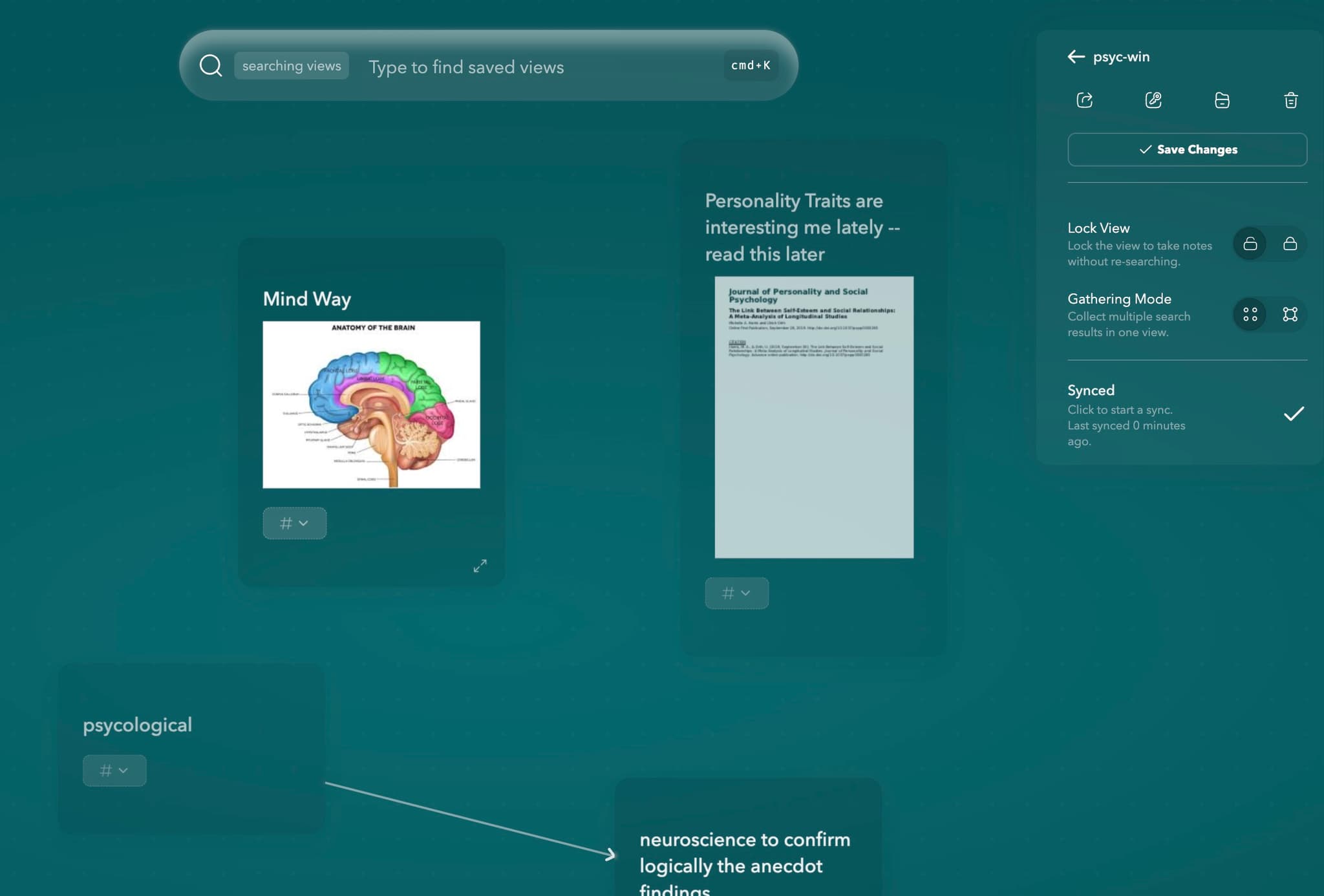
Constella is designed for individuals who think quickly and make rapid connections. It combines AI intelligence, visual mapping, and flexible input methods to help you capture, organize, and revisit your ideas seamlessly. Whether you're reflecting, planning, or brainstorming, Constella adapts to your thought process, ensuring your ideas are clear, connected, and easily accessible.
Key Features:
- Smart Retrieval: As you type, Constella automatically surfaces relevant past entries, allowing you to build upon previous ideas without manually searching through your notes.
- Visual Graph: Your notes are displayed as interconnected nodes on an interactive canvas, enabling you to visualize relationships between ideas and concepts effortlessly.
- Stella Chat: Constella's integrated AI assistant, Stella, can summarize, organize, and respond to your entries, providing contextual insights and assistance directly within your notes.
Constella goes beyond traditional journaling or note-taking—it functions as a living system for your thoughts. With intelligent search, visual thinking tools, and interactive features, it helps fast-paced minds work smarter, stay organized, and discover unexpected insights. Whether you’re managing personal reflections, creative projects, or professional research, Constella keeps up with the way you think.
Conclusion
Journaling tools are more than just a space to unload thoughts—they act as essential allies for busy minds seeking clarity and calm. When you commit to capturing and organizing thoughts, you foster a deeper sense of self-awareness and emotional balance. Whether you gravitate towards analog notebooks or digital solutions like Constella, each method offers unique pathways to support your mental well-being.
- Reduced stress: Consistent journaling helps declutter your mind and process emotions.
- Better organization: Tools with smart retrieval and connectivity features ensure that valuable insights never slip through the cracks.
- Sustained reflection: A regular journaling habit encourages ongoing personal growth and emotional regulation.
Selecting the right tool means choosing one that aligns with your thinking style, pace, and preference. By making journaling an intentional practice, you lay the foundation for a healthier, more organized mind—ready to navigate the demands of daily life.
FAQs (Frequently Asked Questions)
What are the key benefits of journaling for busy minds?
Journaling offers significant mental health benefits for busy minds, including stress reduction, emotional regulation, and enhanced reflection. Regular journaling practice helps calm fast-paced thinking patterns and promotes overall mental well-being.
Which journaling methods are most effective for individuals with fast-paced thoughts?
Effective journaling methods for busy individuals include Stream of Consciousness journaling for free thought expression, Journal Prompts to guide emotional navigation, Bullet Journaling for task management and goal setting, and Gratitude Journaling to cultivate positivity and improve well-being.
How do analog and digital tools support journaling for busy minds?
Analog systems like physical notebooks offer flexibility and creativity, appealing to those who prefer tactile experiences. Digital writing apps such as iA Writer and Scrivener provide features tailored to busy minds, enabling efficient note-taking and organization that complement fast-paced thinking patterns.
What is the minimalist approach to bullet journaling, and how does it help?
The minimalist bullet journaling approach emphasizes simplicity and adaptability by focusing on core components like future logs, habit trackers, daily logs, and affirmations. This method supports daily self-reflection and emotional regulation while keeping the journaling process streamlined for busy individuals.
How does the Constella App enhance the journaling experience for people with fast-paced thinking?
Constella App enhances journaling through features like Smart Retrieval that automatically organizes notes and provides insights efficiently; Visual Graph Connectivity that links related notes visually; and Stella Chat which assists with logical reasoning tasks—making it an ideal digital tool for managing complex thoughts.
Why is journaling important for organizing thoughts and supporting mental well-being in busy individuals?
Journaling serves as a powerful tool to organize scattered thoughts, reduce anxiety, and foster mental clarity. For busy individuals with fast-paced minds, consistent journaling aids in emotional regulation, reflection, and maintaining mental balance amidst hectic schedules.
Want more insights like this?
Subscribe to get short productivity tips and useful summaries of new tools every week.
Want more insights like this?
Subscribe to get short productivity tips and useful summaries of new tools every week.