Is ADHD an Intellectual Disability? This question often arises due to misunderstandings about ADHD's nature. ADHD, or Attention-Deficit/Hyperactivity Disorder, is a neurodevelopmental disorder characterized by symptoms such as inattention, hyperactivity, and impulsivity. It affects how individuals manage attention and control impulses, differing significantly from intellectual disabilities.

Distinction Between ADHD and Intellectual Disabilities
- ADHD involves challenges in maintaining focus and controlling behavior but does not inherently impact intellectual functioning.
- Intellectual Disability (ID) refers to limitations in intellectual functioning and adaptive behavior, typically identified by an IQ below 70.
Recognizing these differences is crucial. Though ADHD is not classified as an intellectual disability, understanding how they relate can improve support strategies. Effective interventions can bridge gaps in care by addressing both the unique and overlapping challenges of these conditions.
Purpose of the Article
Exploring whether ADHD qualifies as an intellectual disability is the primary goal here. This article delves into ADHD's classification, impacts on daily life, legal perspectives, and management strategies, helping readers navigate complexities surrounding ADHD and its distinction from other disorders.
For instance, individuals with ADHD often have unique strengths that can lead to career success when aligned with the right professional paths. This article explores such opportunities.
Additionally, managing ADHD effectively can involve utilizing certain strategies like mind mapping, which enhances creative thinking and brainstorming.
Understanding ADHD
Attention-Deficit/Hyperactivity Disorder (ADHD) is a neurodevelopmental disorder characterized by persistent patterns of inattention and/or hyperactivity-impulsivity. These symptoms interfere with functioning or development, affecting both children and adults.

Core Symptoms of ADHD
Individuals with ADHD often experience challenges in three main areas:
- Inattention: Difficulty sustaining focus, frequent careless mistakes in work, and often appearing not to listen when spoken to directly.
- Hyperactivity: Excessive fidgeting, inability to remain seated in appropriate situations, and an overwhelming urge to move constantly.
- Impulsivity: Hasty actions that occur in the moment without forethought, which might lead to harm or have social consequences; difficulty waiting for their turn.
These symptoms can vary widely in severity and may impact executive functions such as planning, organizing, and managing tasks efficiently.
Diagnosis Process for ADHD
Diagnosing ADHD involves a comprehensive evaluation by a healthcare professional. This typically includes:
- Clinical Interviews: Gathering detailed history from the individual and family members.
- Behavioral Assessments: Using standardized tests and questionnaires to evaluate behavioral patterns.
- Rule Out Other Conditions: Ensuring symptoms are not better explained by other mental health disorders or medical conditions.
Understanding the unique presentation of ADHD is crucial for developing effective management strategies tailored to each individual's needs.
Understanding Intellectual Disability (ID)
Intellectual Disability (ID) is a condition that involves significant limitations in both intellectual functioning and adaptive behavior. It affects a person's overall mental abilities, including learning, reasoning, problem-solving, and judgment. Unlike ADHD, which primarily involves issues with attention and hyperactivity, ID impacts cognitive abilities and daily living skills.
How is Intellectual Disability Diagnosed?
The diagnosis of an intellectual disability is based on specific criteria:
- IQ Score Below 70: An IQ score significantly below average indicates limited intellectual functioning. This benchmark is often used to determine eligibility for certain support services.
- Adaptive Behavior Challenges: These include difficulties in conceptual skills (language, literacy), social skills (interpersonal communication), and practical skills (personal care, job responsibilities). Proficiency in adaptive behavior is crucial for independent living.
Understanding these criteria helps clarify the difference between ADHD and ID. While ADHD involves challenges with focus and self-control, intellectual disability encompasses broader cognitive impairments that affect everyday life functions. Recognizing these differences ensures appropriate support and interventions are provided for individuals facing these unique challenges.
The Relationship Between ADHD and Intellectual Disabilities
ADHD and intellectual disabilities (ID) can exist together, showcasing a comorbidity that highlights the complexity of neurodevelopmental disorders. Despite their co-occurrence, ADHD is not classified as an intellectual disability. These conditions have distinct diagnostic criteria, with ADHD characterized by symptoms of inattention, hyperactivity, and impulsivity, while ID is diagnosed based on significantly below-average intellectual functioning and adaptive behavior challenges.

Statistics reveal a notable prevalence of ADHD among individuals with ID. Research indicates that approximately 30-40% of people with intellectual disabilities also meet the criteria for ADHD. This overlap necessitates careful evaluation to ensure accurate diagnosis and effective support strategies.
A significant challenge in diagnosing these co-occurring conditions is diagnostic overshadowing. This phenomenon occurs when the presence of one condition (such as ID) leads to the misattribution or neglect of another condition (like ADHD). As a result, symptoms of ADHD may be overlooked or misinterpreted as part of the broader symptoms associated with intellectual disabilities. It underscores the importance of comprehensive assessments to differentiate between the nuances of each condition and to provide tailored interventions that address both disorders effectively.
Understanding these dynamics contributes to better support frameworks for individuals navigating the complexities of ADHD and ID.
Legal Perspectives on ADHD as a Disability
Legal Frameworks
The Americans with Disabilities Act (ADA) and the Individuals with Disabilities Education Act (IDEA) are two crucial U.S. laws that define and protect individuals with disabilities. These acts ensure equal rights and opportunities in various settings, including education and employment.
ADHD Under ADA and IDEA
ADA recognizes ADHD as a disability when it substantially limits one or more major life activities, such as learning or concentrating. This recognition provides certain protections against discrimination in workplaces and public services.
IDEA specifically addresses educational settings, where ADHD is acknowledged as a qualifying condition for special education services under the category of "Other Health Impairment." This means students with ADHD may receive individualized education plans (IEPs) to support their learning needs.

Limitations of Federal Benefits
Although ADHD is recognized within educational settings under these laws, it does not automatically qualify for federal disability benefits for ADHD, such as Supplemental Security Income (SSI). Eligibility for these benefits requires evidence of severe functional limitations due to ADHD, which can be challenging to substantiate.
Understanding these legal perspectives helps educators, employers, and families advocate effectively for individuals' rights and accommodations. This legal recognition affirms the importance of addressing ADHD's impact in specific contexts while highlighting the need for continued advocacy in areas where support may be limited.
Differentiating Between Learning Disabilities and ADHD
Learning Disabilities vs. ADHD: Understanding the distinction between these two conditions is crucial for providing appropriate support. Learning disabilities (LD) primarily affect specific areas of academic achievement, such as reading, writing, or math. These challenges arise from differences in the brain's ability to receive, process, or communicate information, yet they do not impact overall intelligence.

In contrast, ADHD focuses on impairments in executive function—the mental skills used to manage time, stay organized, and execute tasks. Individuals with ADHD often experience symptoms like inattention, hyperactivity, and impulsivity that can indirectly impact learning but are not confined to academic settings.
Key Differences:
- Area of Impact: Learning disabilities are specific to academic skills; ADHD affects broader executive functioning.
- Co-occurrence: While LDs can co-occur with ADHD, they remain distinct diagnoses. A child may struggle with reading due to dyslexia (a type of LD) while also exhibiting ADHD symptoms impacting focus and task completion.
Despite overlaps in their effects on education, it's essential not to conflate ADHD with learning disabilities. Addressing each condition appropriately ensures that individuals receive targeted interventions tailored to their specific needs.
It's also important to note that effective strategies can greatly aid those with learning disabilities or ADHD. For instance, note-taking techniques can significantly enhance learning outcomes by capturing information more effectively.
Impact of ADHD on Learning and Daily Life
Effects on Academic Performance
ADHD significantly influences a student's ability to perform academically due to challenges with attention, focus, and organization. In an educational setting, tasks such as completing assignments, adhering to deadlines, and following instructions can become daunting. This often leads to underachievement or fluctuating academic results.

Social Interactions and Quality of Life
Beyond academics, ADHD affects social interactions. Individuals may experience difficulties in maintaining friendships due to impulsivity or inattentiveness during conversations. Such social struggles can contribute to feelings of isolation or low self-esteem, impacting overall quality of life.
Accommodations for ADHD in School
Effective strategies are essential to support students with ADHD. Schools can implement accommodations like:
- Providing Structure: Establishing clear routines helps students anticipate what’s next, reducing anxiety.
- Minimizing Distractions: Creating a learning environment with minimal distractions aids concentration.
- Frequent Breaks: Allowing short breaks between tasks helps manage restlessness.
Understanding these impacts highlights the necessity of tailored support for individuals with ADHD. While not classified as an intellectual disability, recognizing its influence on daily life is crucial for fostering environments where individuals can thrive academically and socially.
Managing Challenges Associated with ADHD
Addressing ADHD requires a multifaceted approach that combines therapy, medication, and lifestyle adjustments. Behavioral therapy can help individuals develop coping strategies and improve their focus. Medication, such as stimulants or non-stimulants, may be prescribed to manage symptoms like inattention and hyperactivity. It's crucial to tailor these strategies to the individual's specific needs, ensuring that both symptoms and functional impairments are addressed comprehensively.
Introducing Constella.App
For those seeking innovative solutions, Constella.App offers a next-generation tool designed to enhance productivity and well-being for individuals with ADHD. This app includes:
- Visual Graphing: Helps users organize thoughts visually, making it easier to follow complex ideas.
- Jotting View: Allows quick note-taking and idea capture, essential for managing impulsivity and staying organized.
The app's innovative design and user-friendly interface have made it an effective resource for many. There's a strong belief in its ability to support ADHD management through its tailored features. In fact, many users have reported significant improvements in their daily lives due to the app's unique functionalities. For instance, one user shared how the Constella App solved their forgetfulness, a common challenge for individuals with ADHD.
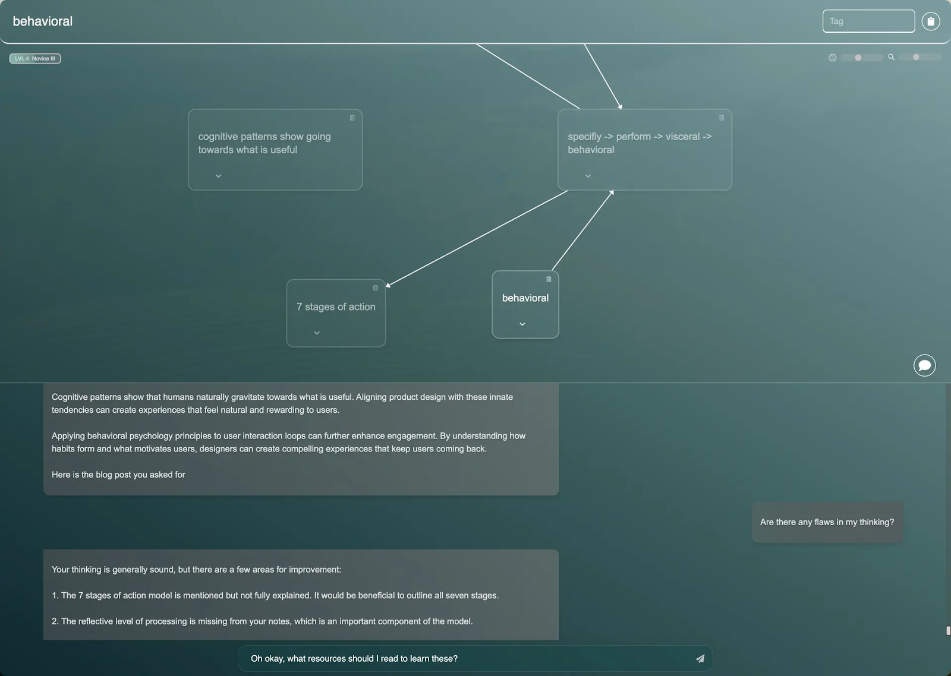
Recognizing the unique challenges faced by individuals with ADHD is crucial in selecting suitable management tools. By integrating technology like Constella.App alongside traditional strategies, individuals can achieve better control over their daily lives. The app not only aids in personal knowledge management but also aligns with the future trends of such tools, providing a comprehensive solution for those struggling with ADHD.
Moreover, the rise of AI-powered note-taking features within the app is a testament to how technology is redefining productivity, making it an invaluable resource for managing ADHD symptoms effectively.
Support Options for Individuals with ADHD
Explore support options for children with ADHD or intellectual disabilities to provide them with the necessary tools for growth and success. A variety of support systems are available, each tailored to meet the unique needs of these individuals.
1. Therapy Options
- Behavioral therapy and cognitive-behavioral therapy (CBT) are effective in helping manage symptoms and improve functioning.
- Occupational therapy can assist with developing fine motor skills and daily living activities.
2. Educational Resources
Specialized educational programs, such as Individualized Education Programs (IEPs) and 504 Plans, offer personalized learning strategies and accommodations. These programs ensure that students receive the support they need to thrive in academic settings. Incorporating technology into these educational resources can also be beneficial. For instance, using productivity apps that outperform traditional note-taking methods like Obsidian could greatly enhance a student's learning experience.
3. Community Resources
Local community organizations often provide workshops, support groups, and family counseling services. These resources empower families by offering guidance and a sense of community.
4. Advocacy Groups
National organizations like CHADD (Children and Adults with Attention-Deficit/Hyperactivity Disorder) advocate for policy changes and provide valuable resources. These groups help families understand their rights and access necessary services.
Engaging with these support systems enhances the quality of life for individuals with ADHD or intellectual disabilities, fostering an environment where they can reach their full potential. Additionally, understanding Personal Knowledge Management Systems (PKMS) can further assist in organizing information effectively for these individuals, making their learning process more efficient.
Conclusion
Understanding the Difference: ADHD and intellectual disabilities are two separate conditions, each with its own traits and difficulties. While they can occur together, it's important not to confuse them, as this might hinder effective support and understanding.
Recognizing the Overlap: There are cases where ADHD and intellectual disabilities share similarities. This overlap requires careful approaches to diagnosis and intervention, making sure that individuals receive comprehensive support tailored to their needs.
Seeking Clarity: Whether dealing with these conditions personally or helping someone else, understanding is crucial. Misunderstandings can lead to ineffective strategies and missed opportunities for growth.
Answering the Question: Is ADHD an intellectual disability? No, it is not. However, appreciating their distinct natures alongside potential overlaps enriches our ability to provide informed care and advocacy.
By understanding these differences and connections, we create environments that promote success for those affected by either condition or both.
FAQs (Frequently Asked Questions)
Is ADHD classified as an intellectual disability?
No, ADHD is not classified as an intellectual disability. While it is a neurodevelopmental disorder, it is distinct from intellectual disabilities, which are characterized by significant limitations in intellectual functioning and adaptive behavior.
What are the common symptoms of ADHD?
Common symptoms of ADHD include inattention, hyperactivity, and impulsivity. These symptoms can affect an individual's ability to focus, control impulses, and manage their activity levels.
How does ADHD coexist with intellectual disabilities?
ADHD can coexist with intellectual disabilities; however, they are not the same condition. Individuals with intellectual disabilities may also exhibit symptoms of ADHD, but each condition has its own criteria for diagnosis and support needs.
How is ADHD treated under U.S. disability laws?
Under U.S. disability laws such as the Americans with Disabilities Act (ADA) and the Individuals with Disabilities Education Act (IDEA), ADHD is recognized as a disability in educational settings. However, it may not qualify for federal benefits unless it significantly impairs daily functioning.
What is the difference between learning disabilities and ADHD?
Learning disabilities and ADHD are distinct conditions that can co-occur but involve different areas of functioning. Learning disabilities primarily affect academic skills such as reading or math, whereas ADHD impacts attention and impulse control.
What support options are available for individuals with ADHD?
Support options for individuals with ADHD include therapy, educational resources, specialized programs, community resources, and advocacy groups that help families navigate challenges associated with the condition.
Want more insights like this?
Subscribe to get short productivity tips and useful summaries of new tools every week.
Want more insights like this?
Subscribe to get short productivity tips and useful summaries of new tools every week.