Introduction
Have you ever said, "I have no idea what I'm doing"? You're not alone. In the hustle of life and work, feeling lost is common, much like being in a maze without a way out. Finding direction and clarity is essential to steer us away from chaos.
So, how can we handle this uncertainty? Enter mind mapping. It's a beacon for those who feel adrift. By transforming chaotic thoughts into structured visuals, mind mapping offers a new approach to eliminate confusion. It simplifies overwhelming tasks into smaller, manageable segments, enhancing understanding and focus.
Think of it as having a special ability to see connections when others only see chaos. That's what mind mapping does—it encourages flexible thinking and inspires creativity. In this article, we'll explore how mind mapping can help you regain control and navigate through life's challenges.
In fact, clear thinking is crucial for navigating daily life effectively. It enhances your ability to make sound decisions, solve problems, and maintain overall mental well-being. Without cognitive clarity…
Understanding Mind Mapping
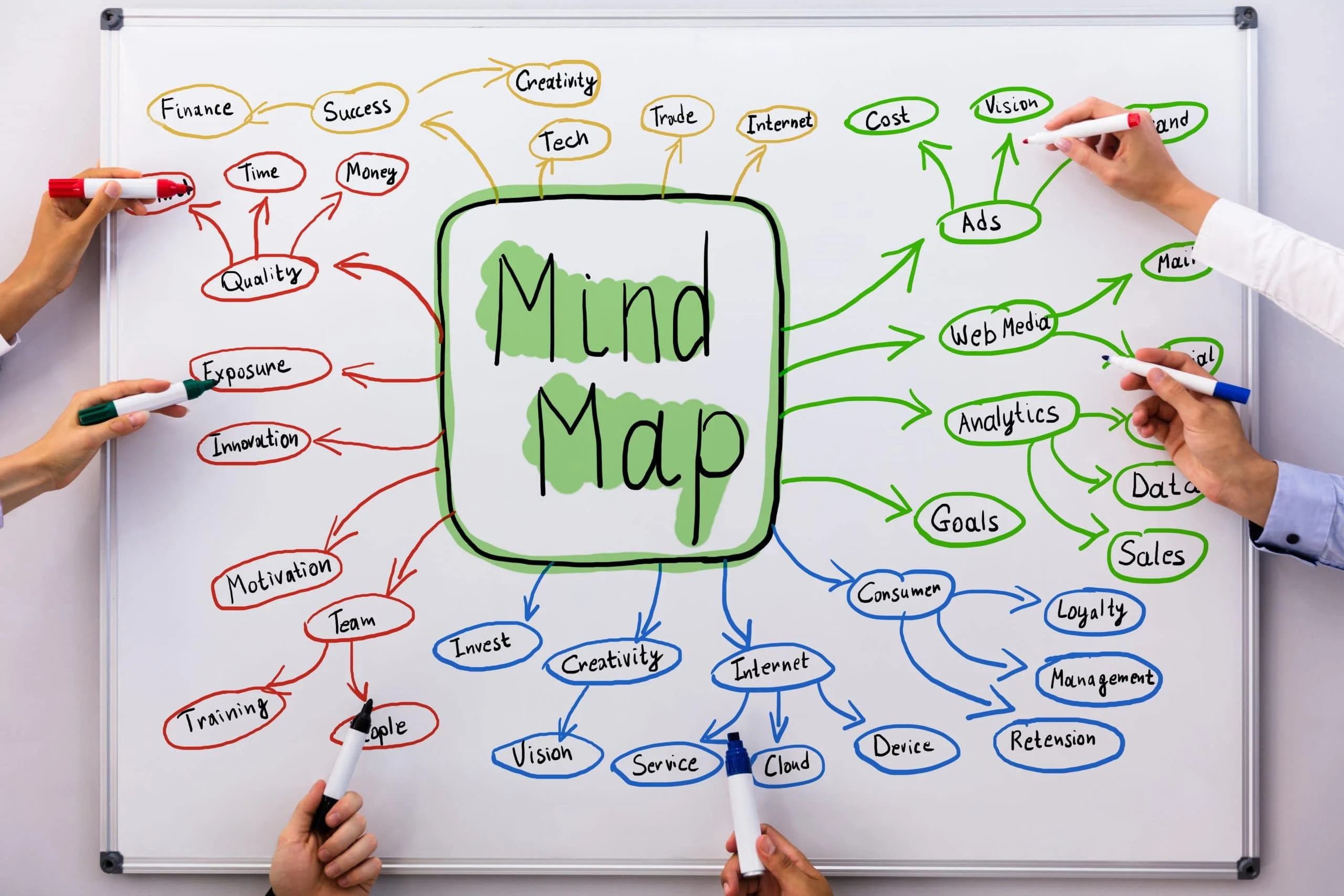
If you’ve ever felt like your thoughts are tangled in a web of chaos, you're not alone. Mind mapping offers a way to untangle that web by visually organizing ideas and information. Picture a tree; the trunk represents a central idea, and the branches symbolize related concepts radiating outward. This method transforms abstract thoughts into structured visuals, making complex topics easier to digest.
The Origins of Mind Mapping
The journey of mind mapping began with Tony Buzan in the late 1960s. Recognizing the limitations of linear note-taking, Buzan introduced this innovative approach to harness both sides of the brain—logic and creativity. His work laid the foundation for what has become an invaluable tool for students, professionals, and creatives alike.
How Mind Mapping Differs from Traditional Note-Taking

Traditional note-taking often traps us in a cycle of lists and bullet points. In contrast, mind mapping liberates our thoughts by allowing them to flow freely across a page. The mind mapping method fosters connections between ideas that might not have been apparent otherwise.
Here's how mind-mapping can help:
- It encourages a non-linear exploration of subjects.
- It makes it possible to see relationships and hierarchies that traditional methods might overlook.
The Benefits of Visual Organization
This visual structure enables individuals to decompose complex information into manageable segments, fostering clarity and understanding—essential for navigating feelings of confusion.
Nevertheless, it's crucial to recognize that traditional note-taking techniques may not work for everyone. For example, individuals with ADHD often find standard methods challenging due to distractions and an excess of information.
The Role of Technology in Note-Taking
Fortunately, technological advancements are transforming note-taking. The emergence of AI-powered note-taking has introduced tools that boost productivity while enhancing flexibility and creativity.
These AI tools can easily integrate with mind mapping techniques, providing a potent combination that greatly enhances our capacity to organize thoughts and ideas efficiently.
The Structure of Mind Maps
Visualizing thoughts as a hierarchical structure might seem abstract until you delve into the tree-like format of mind maps. Imagine a mighty oak tree, its trunk representing the central idea from which all branches extend. Each branch symbolizes a key point related to your main concept, and these branches further split into sub-branches, capturing more detailed sub-ideas.
This tree-like structure transforms the way we comprehend complex subjects. By breaking down vast topics into bite-sized pieces, mind maps enable a clearer perspective on intricate matters. When faced with daunting information, the visual layout offers a roadmap that guides your thinking process, helping to discern relationships between disparate elements.

Components of Mind Maps
- Main Idea: The central node from which all else derives.
- Branches: Key themes or concepts directly associated with the main idea.
- Sub-branches: Specific details or insights that extend from primary themes.
The strength of visual representation lies in its reflection of our brain’s instinct for pattern recognition and association. This approach fosters an intuitive grasp by illustrating how various ideas interconnect within a larger framework. Mapping these connections facilitates an understanding of the overall picture while retaining essential details.
Indeed, linking ideas together is vital for effective communication, both in writing and speaking. This ability helps the audience follow your reasoning, improving comprehension and retention.
Benefits of Mind Mapping
Feeling lost? It's common to think, "I have no idea what I'm doing." But don't worry, mind mapping can help.
Cognitive Benefits
Improved Memory Retention: Mind maps use visual thinking to turn abstract ideas into clear images. This method takes advantage of our brain's natural ability to remember pictures better than words. By organizing information in a visually appealing way, mind maps make it easier to remember and understand.
Productivity Boost
Mind mapping is not merely about aesthetics; it serves as an effective tool for enhancing productivity. Research indicates that individuals who utilize mind mapping in their work are 23% more productive. By deconstructing complex tasks into smaller, manageable components, mind maps establish a clear action plan, facilitating prioritization and concentration on what truly matters.
This method corresponds with the tenets of a personal productivity system, a systematic approach to managing tasks and responsibilities to boost productivity and time management.
Enhanced Creativity
The adaptable format of mind maps fosters creative thinking. In contrast to conventional note-taking, which can constrain creativity with rigid structures, mind maps enable users to freely explore ideas. This flexibility not only ignites fresh concepts but also reveals connections and solutions that may remain hidden.
Mind mapping serves as more than just an organizational tool; it promotes clearer thinking and enhances creativity.
Practical Applications of Mind Mapping

Mind mapping is incredibly useful in various fields, including project management, problem-solving, and decision-making. Let's explore how this technique can be applied practically in these areas:
1. Project Management
In project management, where clarity and structure are vital, mind mapping excels. Here's how it benefits:
- Visual Organization: Mind mapping transforms a chaotic mix of tasks, deadlines, and resources into a clear visual layout, enhancing overall project comprehension.
- Breaking Down Complexity: Project managers often encounter complex projects that can feel daunting. Mind maps enable them to dissect these complexities into smaller, manageable segments.
- Clear Definition of Tasks: Each task can be distinctly outlined through mind mapping, ensuring all participants understand their responsibilities.
- Prioritization: Mind maps facilitate effective task prioritization, helping managers identify which tasks are most critical and require prompt attention.
- Alignment with Goals: It's crucial for every project task to align with overarching goals. Mind mapping visually connects tasks to their respective objectives, ensuring this alignment.
2. Problem-Solving
When faced with a challenge or problem, mind mapping proves to be an invaluable tool for finding solutions:
- Exploring Multiple Perspectives: One of the limitations of linear thinking is that it often restricts our ability to see things from different angles. Mind maps encourage us to explore various perspectives by laying out problems visually.
- Uncovering Hidden Paths: Sometimes, potential solutions may not be immediately apparent. By mapping out different possibilities, we can uncover paths that were previously hidden or overlooked.
- Fostering Creativity: Creative brainstorming sessions can benefit greatly from mind mapping. When teams come together to generate ideas, using mind maps as a visual aid can stimulate creativity and lead to innovative solutions.
3. Decision-Making
Making decisions can be tough, particularly with many options to evaluate. Here’s how mind mapping streamlines the decision-making process:
- Clear Pros and Cons: Mind maps organize the benefits and drawbacks of each choice, helping decision-makers assess their options more efficiently.
- Risk and Consequence Identification: Each decision carries its own risks and outcomes. Visualizing these in a mind map allows for a clearer grasp of future implications.
- Holistic Understanding: Decisions should be informed by a comprehensive view of all relevant factors. Mind maps consolidate various elements into one visual format.
By using mind mapping in areas like project management, problem-solving, and decision-making, we can improve processes, boost team collaboration, and tackle complexities more easily.
Additionally, another effective tool is Personal Knowledge Management Systems (PKMS). PKMS helps individuals organize their knowledge resources—like articles and videos—making it easier to utilize information for tasks such as project management or problem-solving.
Imagine integrating pertinent insights from your knowledge base into your mind maps! This combination could enhance productivity and creativity in both professional and personal contexts.
Whether managing multiple work projects or facing personal challenges, consider exploring mind mapping (with PKMS) to navigate complexities more effortlessly.
How to Create a Mind Map

Creating a mind map is like painting on a blank canvas—only this time, the strokes are your thoughts and ideas, interwoven into a coherent picture. So, how to create a mind map? Let's break it down step by step:
- Gather Your Tools and Materials: Start with a blank sheet of paper or digital tool (like Constella.App). You’ll need colored pens or pencils if you're doing it by hand. The use of colors and images is encouraged as they enhance memory and understanding.
- Identify the Central Idea: Place your main topic or central idea in the center of the page. This acts as the focal point of your map, akin to planting a seed from which all branches will grow.
- Branch Out with Major Ideas: From the central idea, draw lines outward and label them with key ideas or themes related to your main topic. Think of these as the major branches of your tree.
- Add Sub-Branches for Details: For each major branch, add smaller branches that delve into specific details or sub-topics. This hierarchical structure helps in breaking down complex concepts into manageable parts.
- Incorporate Visuals and Colors: Use symbols, images, and varied colors to represent different ideas or categories. Visual elements not only make the mind map more engaging but also aid in retention.
- Review and Refine: Step back and look at your mind map as a whole. Ensure that all branches connect logically and adjust as necessary for clarity or completeness.
By following this guide on how to mind map effectively, you transform chaotic thoughts into an organized masterpiece that reveals patterns and connections previously obscured by cluttered thinking.
Different Methods of Mind Mapping
Feeling lost and unsure about your next steps? Don't worry, mind mapping is here to help! It offers various methods to effectively capture your thoughts and ideas. Two popular techniques among these are spider diagrams and bubble maps.
1. Spider Diagrams
Think of a spider diagram as a web of ideas. The central concept sits at the center, with branches extending outward to capture related thoughts. It's ideal for those who enjoy seeing connections and hierarchies unfold organically, providing clarity when tackling complex subjects.
2. Bubble Maps
This method presents ideas in individual circles or "bubbles," linked together by lines. Bubble maps are excellent for visualizing themes or categories without the constraint of hierarchy, making them perfect for creative processes where free-flowing association is key.
Choosing the right method depends on your specific context and needs:
- For hierarchical information, spider diagrams offer structure.
- When exploring non-linear ideas, bubble maps allow flexibility.
Both techniques cater to different thinking styles, ensuring that whether you're organizing tasks or engaging in creative exploration, there's a mind mapping method that's just right for you.
Overcoming Challenges with Traditional Mind Mapping Techniques
We've all been there, staring at a blank page muttering, "I have no idea what I'm doing." It's a common sentiment when diving into traditional mind mapping techniques. While mind mapping is heralded as a creative savior for complex problems, beginners often face several hurdles. Here’s how mind-mapping can help ease those initial frustrations:
Common Obstacles:
- Complexity for Beginners: The beauty of mind mapping lies in its expansive and non-linear nature, yet this can be daunting. New users might find themselves overwhelmed by the freedom it offers.
- Fear of Imperfection: Many struggle with the notion that their map needs to be perfect or aesthetically pleasing from the start. This pressure can stifle creativity.
- Overcomplication: There's a tendency to overstuff mind maps with information, leading to clutter rather than clarity.
Addressing these challenges requires embracing imperfection and starting simple. Begin with a central idea and allow your thoughts to branch organically without overthinking each step. Tools like Constella.App offer intuitive features that guide users through creating structured yet flexible maps, making the process less intimidating.
Mind mapping isn’t about perfection; it’s about discovery and illumination. Each attempt reveals new pathways and insights, leading you closer to the clarity you seek.
Finding the Right Mind Mapping Tools and Resources for Your Needs
Selecting the perfect mind mapping tool can feel as daunting as finding a needle in a haystack. With countless options available, each boasting unique features and benefits, how do you choose? Here's a mind mapping tools review to help you navigate this decision.
1. XMind
- Pros: User-friendly interface, wide range of templates
- Cons: Limited free version capabilities, can be resource-heavy
2. MindMeister
- Pros: Cloud-based collaboration, integrates with other productivity tools
- Cons: Subscription required for advanced features, potential syncing issues
3. Miro
- Pros: Infinite canvas, supports team collaboration
- Cons: Steep learning curve for beginners, pricey for small teams
4. Coggle
- Pros: Simple and intuitive design, real-time collaboration
- Cons: Limited customization options, basic export functions
5. FreeMind
- Pros: Open-source and free, highly customizable
- Cons: Outdated user interface, lacks advanced features
Each tool offers a distinct approach to mind mapping that caters to different needs and preferences. Whether you're seeking simplicity or advanced features, there's likely a tool out there that aligns perfectly with your goals. Exploring these options might just lead you to your ideal match.
However, selecting the right mind mapping tool is just one aspect of the broader landscape of personal knowledge management. In today’s digital age, managing personal knowledge efficiently is crucial. Understanding the future trends in personal knowledge management tools can significantly enhance your experience and effectiveness in utilizing these mind mapping resources.
Why Choose Constella.App as Your Go-To Tool for Creative Thinking?
Feeling overwhelmed by a flood of thoughts? Mind mapping could be the solution you need. Imagine this: you're in a whirlwind of ideas, each one demanding your focus. It’s like trying to catch a handful of water. This is where Constella.App comes into play, an innovative tool that turns chaos into clarity.
Why Constella.App Stands Out
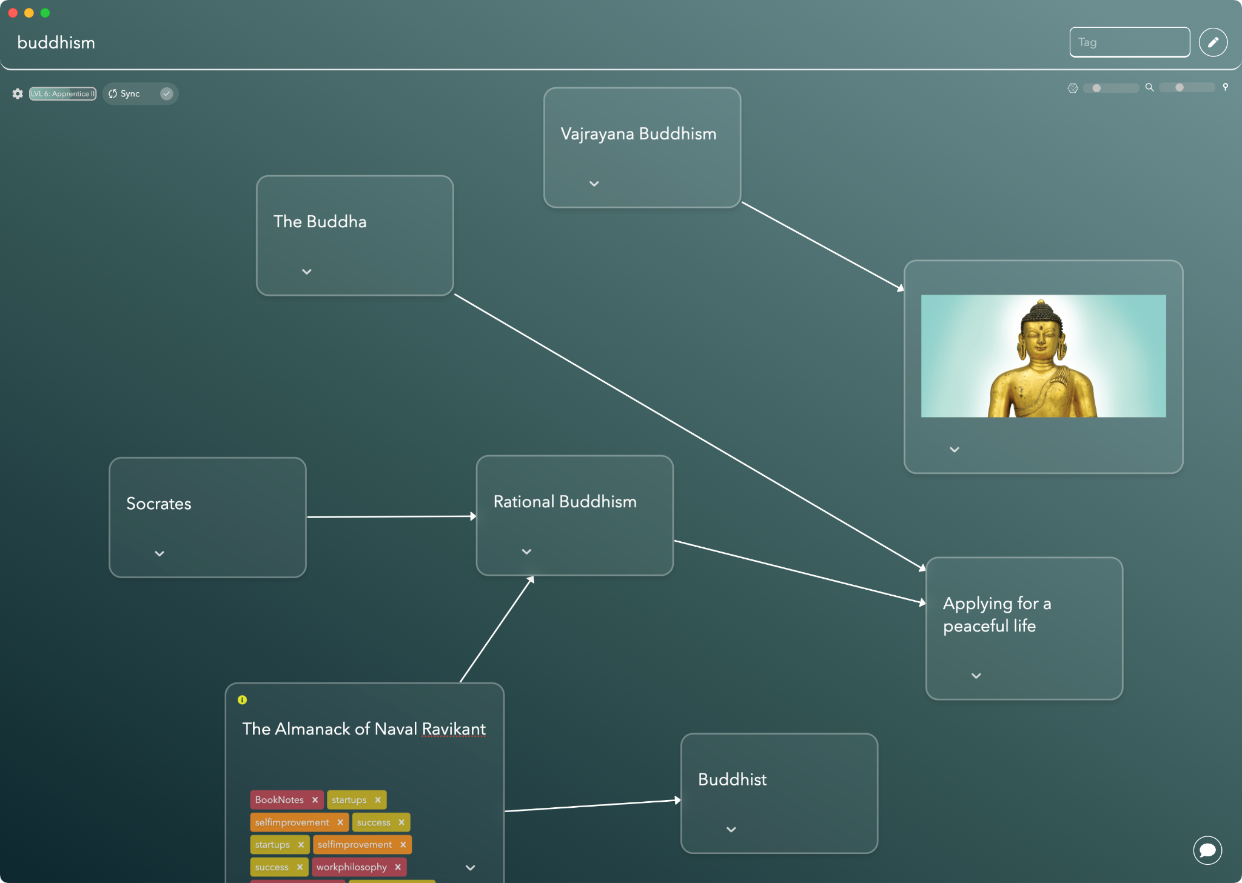
Constella.App stands out as a transformative mind mapping tool. Its infinite graph capability frees you from the limitations of traditional pages, offering an endless canvas for your ideas to flourish and form creative connections.
1. Infinite Graph Capability
Unlike other tools that limit space, Constella.App offers a vast platform that evolves with your thoughts, perfect for capturing every detail when inspiration strikes.
2. Jotting View
Ever lost a great idea because you couldn't write it down quickly? The jotting view in Constella.App prevents that, enabling rapid note-taking to instantly capture insights and organize them effectively.
How does it compare to competitors like Miro or XMind? While they have their strengths, Constella.App's unique features support those who thrive on creativity and innovation. It provides an experience that fuses intuitive design with powerful tools rather than just functionality.
When I first found Constella.App, I was overwhelmed by my thoughts. Now, it feels like a personal assistant guiding me through my ideas. If you need order amidst chaos, this could be the tool for you.
Additionally, Constella.App has helped me manage my forgetfulness, making it easy to keep track of important notes and tasks.
While some might claim that tools like Obsidian excel in note-taking, I contend that there are various alternatives worth exploring, with Constella being one of them.
If you're seeking a solution to enhance your creative workflow and note-taking experience, consider trying Constella.App.
FAQs (Frequently Asked Questions)
What is mind mapping and how can it help me?
Mind mapping is a visual organization tool that helps you structure information in a hierarchical manner. It allows you to break down complex topics into simpler sub-ideas, which can provide clarity and direction in both life and work, especially when you're feeling lost.
Who introduced the concept of mind mapping?
The concept of mind mapping was popularized by Tony Buzan. He developed this method to enhance the way we take notes and organize our thoughts visually, making it easier to understand and recall information.
What are the benefits of using mind maps?
Using mind maps can lead to improved memory retention, a productivity boost of up to 23%, and enhanced creativity through visual thinking. They help in organizing thoughts clearly and efficiently.
How do I create a mind map?
To create a mind map, start with a central idea in the middle of your page. From there, draw branches for main topics, then add sub-branches for details. You can use various tools and materials like paper, colored pens, or digital software to enhance your mind mapping experience.
What are some common challenges faced with traditional mind mapping techniques?
Common challenges include the complexity of creating detailed maps for beginners, which can lead to frustration. Additionally, some users may find it difficult to maintain clarity when adding too many branches or details.
Why should I choose Constella.App for my mind mapping needs?
Constella.App is an innovative tool designed for creative thinking and organizing thoughts effectively. It offers features like infinite graph capability and a jotting view that enhances user experience compared to other tools like Miro or XMind.
Want more insights like this?
Subscribe to get short productivity tips and useful summaries of new tools every week.
Want more insights like this?
Subscribe to get short productivity tips and useful summaries of new tools every week.